Greifenstein Castle: A Medieval Fortress in France


Site at a Glance
- Rating
- 3.8
- Popularity
- Very Low
- Country
- France
- Primary era
- Medieval
- Eras represented
- Medieval
- Civilizations
- Holy Roman Empire
- Site type
- Military
- Remains
- Castle
On this page10 sections
History
Origins and Feudal Control
Greifenstein Castle is a ruined medieval fortress in France, located in the Saverne forest near Saverne in Alsace. The older Grand-Greifenstein, also called Vieux-Greifenstein, probably originated during the first half of the twelfth century. Its development is associated with the knight Meribodo de Greifenstein, who had close links with the Ochsenstein family.
The site first appears in written records in 1156, when a charter of the Bishop of Strasbourg mentioned Merboto de Greifenstein. The fortress was probably an episcopal possession. In 1217, the Ochsenstein family held it as a fief, meaning a territorial holding granted by a superior lord in return for service and allegiance. The lords of Greifenstein held it as a rear fief, received indirectly through another feudal lord.
Expansion and Fifteenth-Century Conflict
A second fortress, Petit-Greifenstein, was built east of the rocky promontory in the late thirteenth or early fourteenth century. The two castles therefore belonged to different phases of the site’s development. The Greifenstein lineage ended in 1457, after which the Bishop of Strasbourg reasserted his rights and transferred both castles to the Count Palatine.
In 1470, during the Count Palatine’s conflict with Frederick the Victorious, Elector Palatine and a ruler of the Electoral Palatinate, troops commanded by Louis of Lichtenberg seized both castles. The Bishop of Strasbourg later reasserted his rights once more, and a Strasbourg military detachment was stationed in Petit-Greifenstein.
Abandonment and Preservation
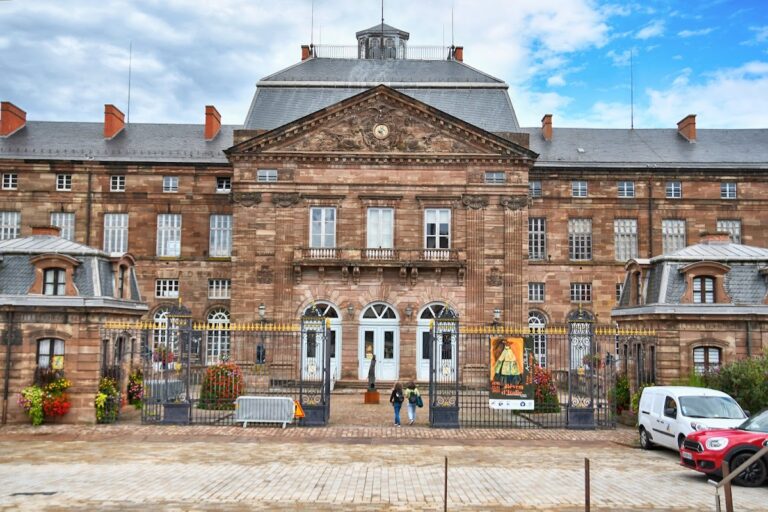
Both castles were gradually abandoned and were described as ruins by 1643. Masonry from the principal keep was later removed for the construction of the Château des Rohan, the episcopal palace at Saverne. The ruins are state property and have been listed as historic monuments in France since 1898.
Remains
Setting and Overall Layout
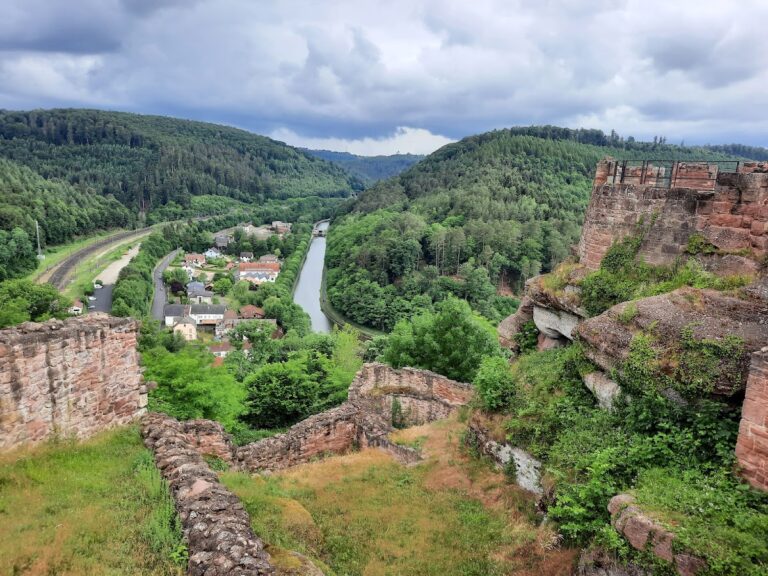
The fortress occupies a rocky promontory on the Schlosserhœhe of the Vosges massif, at about 360 metres above sea level, while the summit reaches 463 metres. From this position, the site overlooks the confluence of the Ramsthal and Zorn valleys and controlled access through them. The complex consists of the older Grand-Greifenstein and the later Petit-Greifenstein, separated by a broad ditch. Its surviving fabric is ruined.
Castle Structures
Grand-Greifenstein Keep
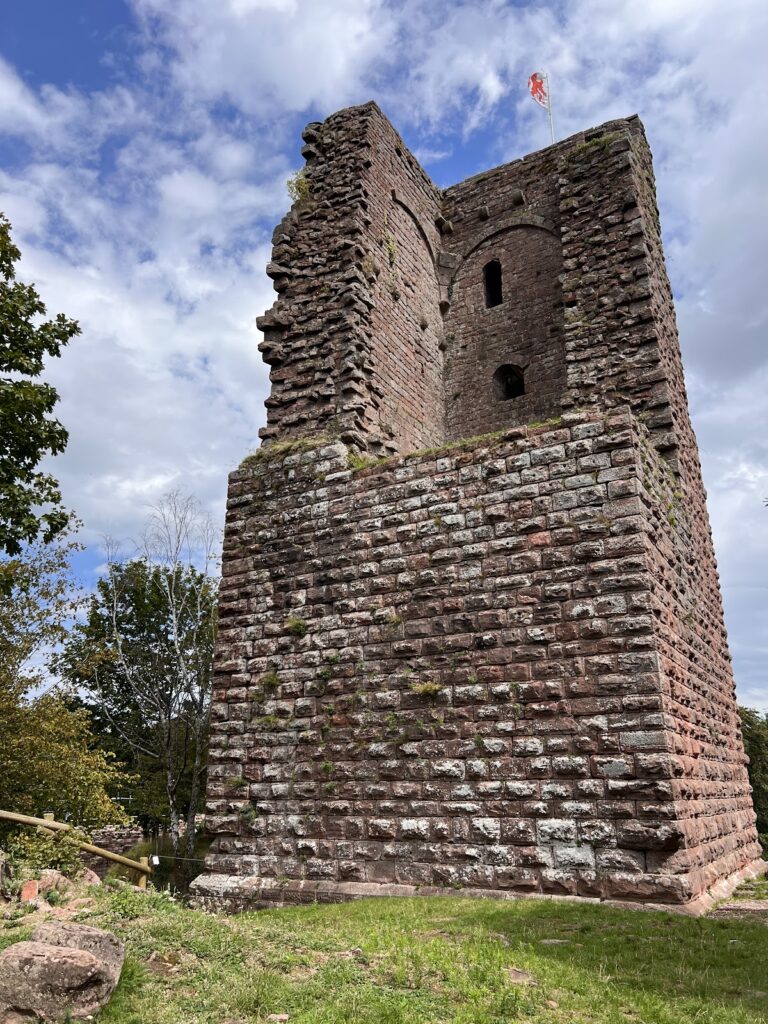
The older castle includes a keep measuring 13 metres on each side. It is described as the largest keep in Alsace. The keep forms the principal surviving structure associated with Grand-Greifenstein, although masonry was later removed from it for construction at Saverne.
Petit-Greifenstein
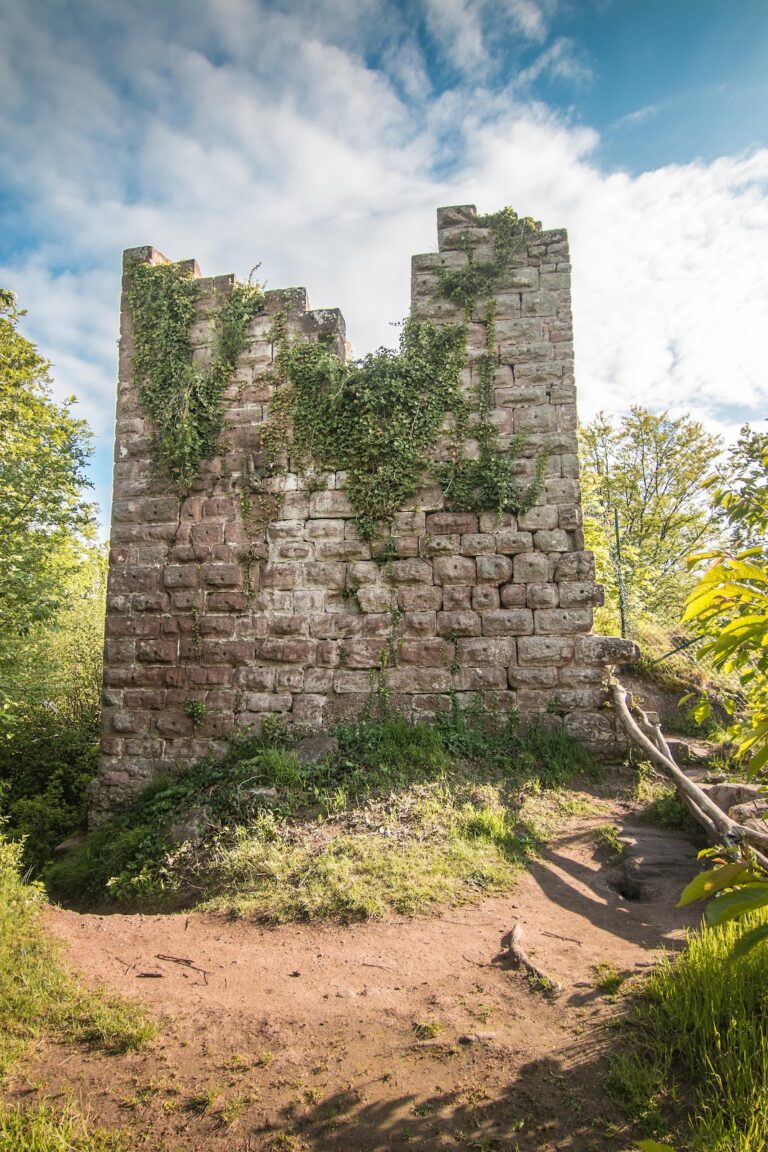
Petit-Greifenstein stands east of the rocky promontory and represents the later phase of construction, dating from the late thirteenth or early fourteenth century. A Strasbourg military detachment occupied this castle after the bishop reasserted control in the fifteenth century.
Central Tower
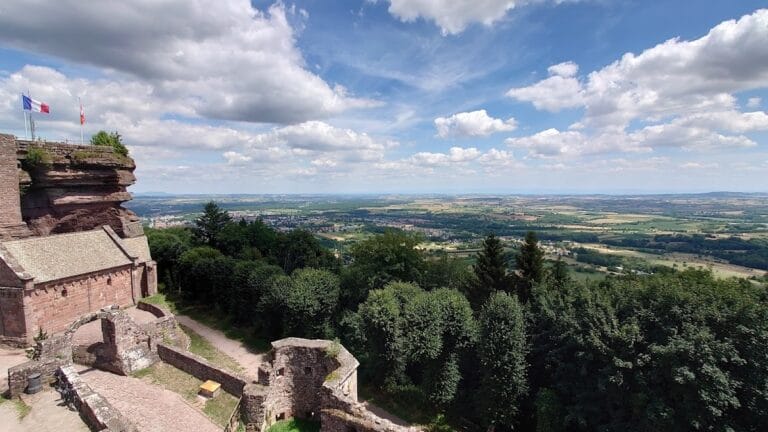
A renovated tower stands between the two keeps at the centre of the complex and was probably associated with Grand-Greifenstein. Its terrace overlooks Saverne, the Château du Haut-Barr, the Château du Grand-Geroldseck, the Zorn valley, and the Saint-Vit chapel.
Nearby sites