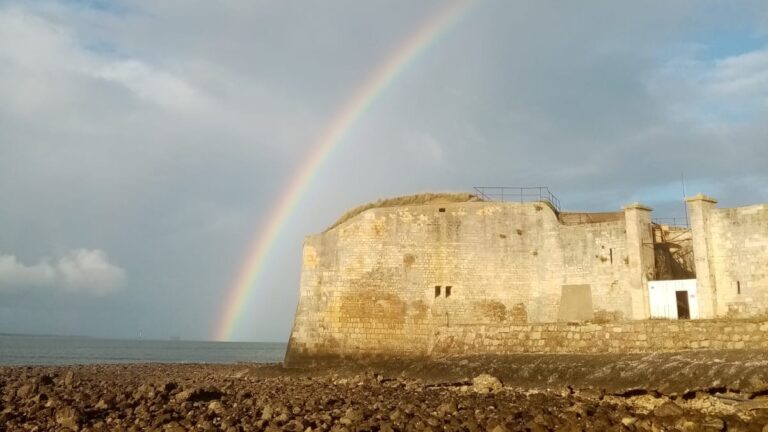
Citadel of Saint-Martin-de-Ré: A Vauban Fortress and Central Prison in France


Site at a Glance
- Rating
- 4.8
- Popularity
- Very Low
- Country
- France
- Primary era
- Early Modern
- Eras represented
- Early Modern
- Civilizations
- French
- Site type
- Military
- Remains
- Citadel
On this page8 sections
History
The Citadel of Saint-Martin-de-Ré is a French fortress on Île de Ré, erected in 1690 as part of the late seventeenth-century expansion of the island’s defenses. Planned by the military engineer François Ferry with the approval of Sébastien Le Prestre de Vauban, the citadel belongs to Vauban’s first fortification system and was built to protect Île de Ré, La Rochelle, and Rochefort from English invasion, including attacks approaching from the sea.
The First Citadel and the La Rochelle Conflict
A first citadel was established in 1625, when the island’s strategic position made fortification necessary against English intervention and later against the Huguenots, French Protestants involved in the religious and political conflicts of the sixteenth and seventeenth centuries. During the conflict surrounding La Rochelle in 1627 and 1628, the citadel was intended to isolate the city from the sea. English forces besieged it in 1627, and it was demolished in 1628.
The Vauban-Era Fortress
In 1681, François Ferry prepared plans for a second citadel and a surrounding urban enceinte, or fortified town wall, with Vauban’s approval. Construction continued during the late seventeenth century. The citadel was erected in 1690, while the wider fortified complex was completed by the end of the century. Its defenses protected the island and the nearby ports of La Rochelle and Rochefort, together with their seaward approaches.
From Military Fortress to Prison
From the eighteenth century onward, the citadel was used as a prison. It held prisoners of war and political opponents before becoming a nineteenth-century depot for convicts sentenced to transportation, the penal practice of sending prisoners overseas to serve sentences in a penal colony.
Between 1873 and 1938, Saint-Martin-de-Ré was the sole French regrouping point for convicts before their departure by sea. Prisoners were sent to New Caledonia from 1873 to 1897 and thereafter to French Guiana, until transportation was abolished in 1938. Voyages lasted about five months to New Caledonia and three months to French Guiana. The depot sometimes held more than 1,000 people in accommodation intended for 500. Among those held there before transportation were Alfred Dreyfus, Guillaume Seznec, Lieutenant Strachwitz, and Henri Charrière, known as “Papillon.”
During the fifteen days before departure, convicts were allowed longer periods of exercise and received meat four times a week and a daily quarter of wine. A final medical examination established their fitness for the voyage, followed by vaccinations against typhoid fever and smallpox.
The Prison in the Twentieth and Twenty-First Centuries
A June 1938 decree-law ending transportation transformed the depot into a penitentiary centre and later a central prison. During the Second World War, the German army used the citadel to imprison members of the resistance. In 1958, the Thoiras Barracks housed Algerian prisoners.
The site remains an active central prison for adult men serving long sentences. It has 485 places and accommodates more than 400 prisoners, supported by 285 staff. It is described as France’s largest central prison and provides approximately one quarter of the places in such institutions. The establishment belongs to the Bordeaux Interregional Directorate of Prison Services and falls within the jurisdiction of the Poitiers Court of Appeal and the La Rochelle judicial court.
The citadel and the fortifications of Saint-Martin-de-Ré were classified as French historic monuments in 1984. Since 2008, they have formed part of the UNESCO World Heritage property Fortifications of Vauban.
Remains
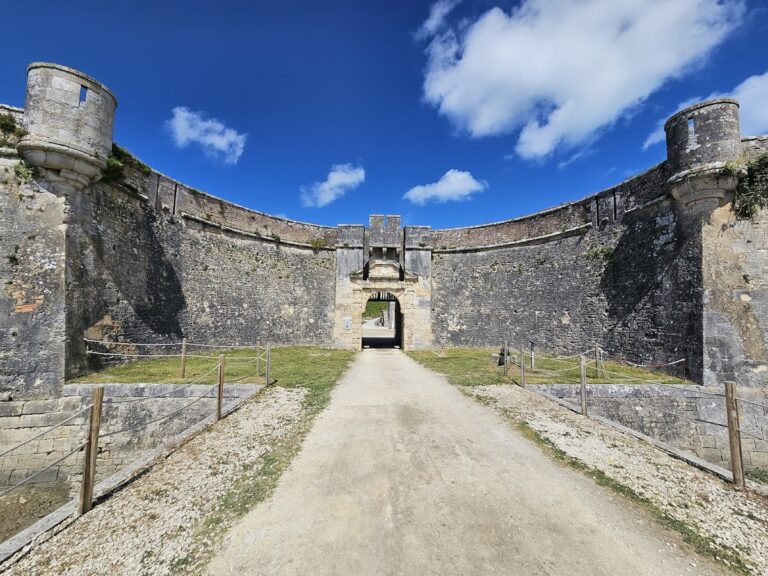
The fortified complex combines a square citadel with a larger semicircular enceinte around the town. A rampart and dry moat define the defensive perimeter, while the glacis, a gently sloping cleared area outside the fortifications, remains free of urban development. The arrangement is identified as an example of Vauban’s first fortification system and of an insular réduit, a fortified inner refuge within a larger defensive system.
The Citadel
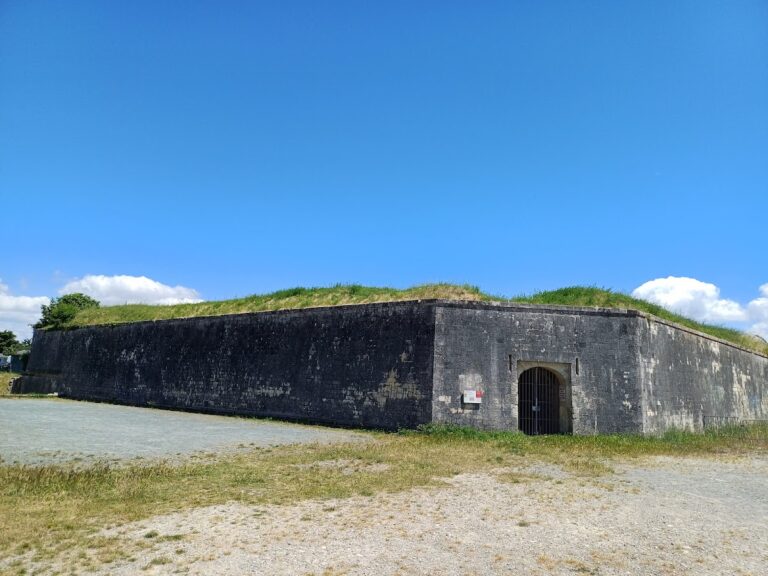
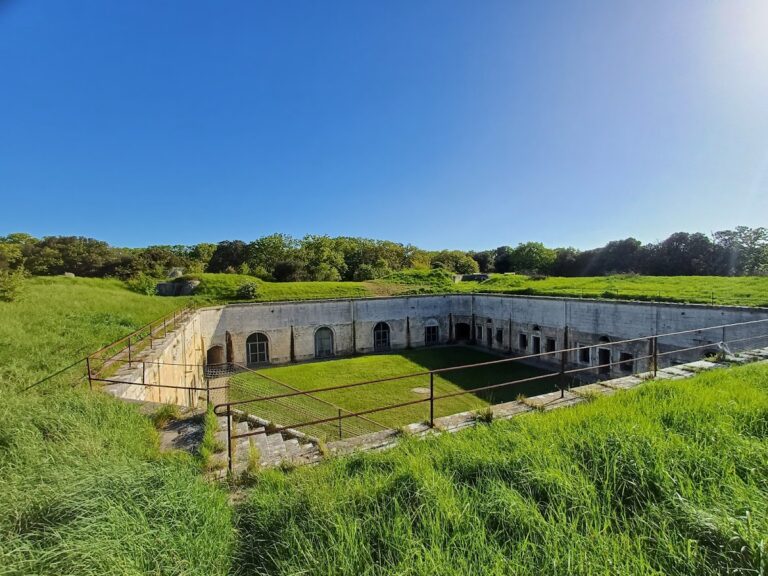
The citadel occupies the northeastern part of Saint-Martin-de-Ré and has a square plan with a bastion, a projecting platform for flanking fire, at each corner. Three ravelins, or outer defenses placed beyond the main wall, fill the intervals between the bastions, while the sea side lacks one. A single monumental entrance, the Royal Gate, opens toward a small fortified harbour. The interior was designed for approximately 1,200 men. Surviving elements include a barracks, chapel, arsenal, officers’ pavilion, and underground passages within the bastions.
The Town Fortifications
The wider town defenses form a semicircle about 1.5 kilometres in diameter, with a perimeter of approximately six kilometres. They include five bastions, five ravelins, and a half-bastion on the coast. The northern side borders the coast and incorporates a harbour. Two gates pierce the enceinte: the La Couarde, also called Campani, Gate, and the La Flotte, also called Toiras, Gate.