Tonhof: A Historic Manorial Farm and Cultural Center in Austria


Site at a Glance
- Rating
- 4.7
- Popularity
- Very Low
- Country
- Austria
- Primary era
- Medieval
- External website
- Open
- Eras represented
- Medieval
- Civilizations
- Holy Roman Empire
- Site type
- Domestic
- Remains
- Manor House
On this page12 sections
History
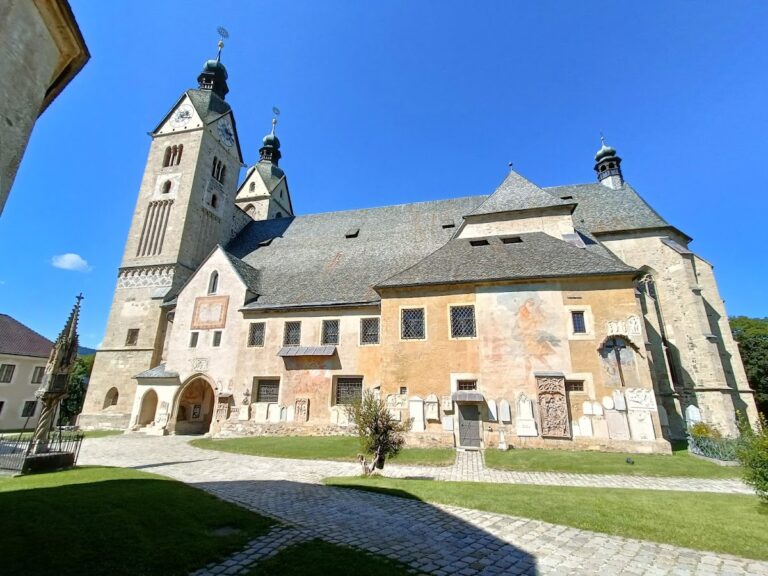
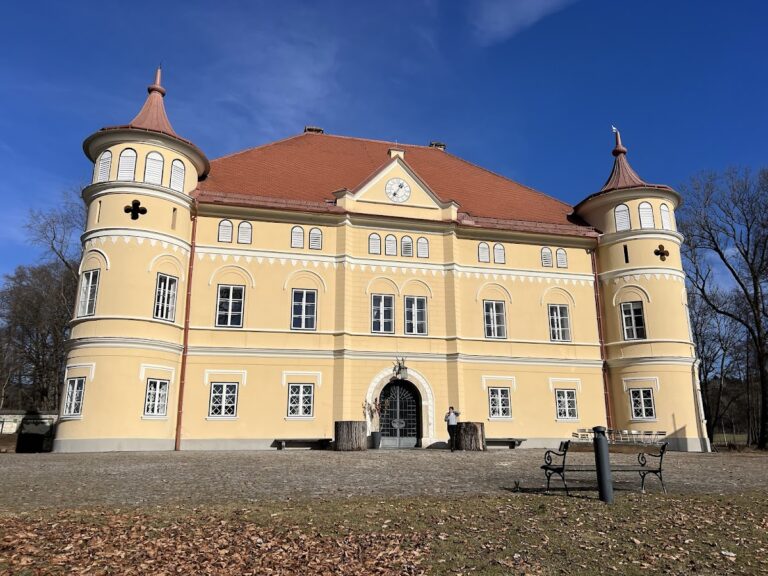
Tonhof is a historic former manorial farm in Austria, located in the center of Maria Saal in Carinthia and first mentioned in 1431–1432 as a tithe farm. The complex later served administrative and judicial functions before becoming a summer residence and cultural center associated with Austria’s postwar avant-garde.
Manorial farm and local administration
Tonhof, also known as Tannhof, was owned by the noble Weis-Ostborn family, whose members used the name Weis Ritter von Ostborn until 1919. Its two buildings later accommodated an administrative office and a court. The former court building was the birthplace of Friedrich Welwitsch, an Austrian botanist and explorer remembered especially for his botanical work in Angola. He was the son of the district judge who served there.
Because Tonhof was entered in the Landtafel, a formal land register for estates with special legal and political status, Marie Weis von Ostborn, née Schnerich, could vote in the large-landowners’ electoral category during the 1909 elections to the Carinthian Landtag. That category gave qualifying property holders representation in the regional legislature.
A family summer residence
Julius Weis Ritter von Ostborn (1862–1927) was a lawyer with a doctorate and a musician who worked in finance in Graz. He used Tonhof as a summer residence. In the years after the First World War, the house regularly received figures from music and culture, including Ernst Décsey, Josef Labor, and the bass singer Wilhelm Wissiak.
In 1954, the singer Maja Weis-Ostborn (1919–2004) received Tonhof as a dowry when she married the composer Gerhard Lampersberg (1928–2002). Through the Wiener Art Club, the couple met artists and writers including Thomas Bernhard, an Austrian writer and dramatist whose work often addressed social conflict, artistic life, and postwar Austrian society.
Thomas Bernhard and the artists’ circle
Tonhof gave Bernhard refuge and a home from 1957 to 1959, or possibly until the summer of 1960. He later broke with the Lampersbergs over his novel Woodcutters (Holzfällen, 1984). The claim that the couple and Tonhof served as models for the novel was disputed by Bernhard.
During the 1960s, Tonhof became a summer artists’ residence and a cultural center for the Viennese avant-garde. Its literary circle included Gerhard Rühm, H. C. Artmann, Wolfgang Bauer, Peter Handke, Konrad Bayer, Jeannie Ebner, Gert Jonke, Christine Lavant, Peter Turrini, Josef Winkler, and Erna Wobik. The visual artists associated with the circle included Maria Lassnig, Jürgen Leskowa, Fritz Riedl, Viktor Rogy, and Sepp Schmölzer.
The cultural circle also included the theater-makers Bibiana Zeller and Herbert Wochinz, composers Friedrich Cerha, Iván Eröd, Anestis Logothetis, Ernst Kölz, Otto M. Zykan, Meinhard Rüdenauer, and Renate Spitzner, and the dancer Joana Thul, the stage name of Elfriede Slukal (1922–1976). Oliver Bentz regarded Slukal’s suicide as probably the external stimulus for Bernhard’s work on Woodcutters.
Theater and local participation
In July 1960, eight evenings at the Theater am Tonhof presented the opera Köpfe and the three one-act works Die Erfundene, Rosa, and Frühling. Thomas Bernhard wrote the libretto or texts, Gerhard Lampersberg composed the music, Herbert Wochinz directed, and Friedrich Cerha conducted.
Maja Lampersberg also opened the house to local children, who became known as the “Tonhof children.” They were able to compose music and paint there, bringing music and literature to a younger generation. The local population was also involved in the cultural life that developed at Tonhof.
Tonhof later became a setting and subject in Peter Turrini’s Bei Einbruch der Dunkelheit (2006–2007), which portrays Thomas Bernhard as a protagonist at the site. The buildings are protected as historical monuments.
Remains
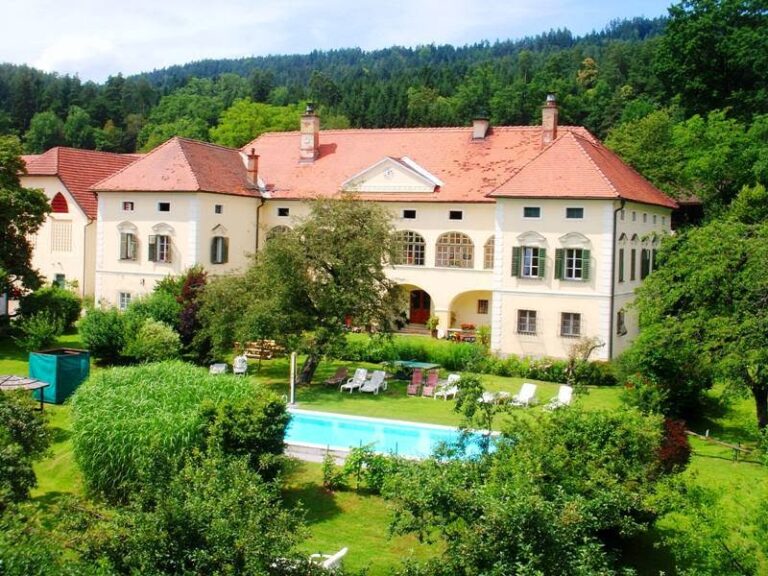
Tonhof consists of two buildings in the center of Maria Saal. The administrative building, known as Tonhof in the narrower sense, retained its historic appearance and includes a ground floor constructed in the Gothic style. The former court building forms the second part of the complex and is the place where Friedrich Welwitsch was born.
Buildings and cultural spaces
Administrative building
The administrative building preserves the historic appearance associated with Tonhof. Its ground floor is Gothic in construction, linking the surviving fabric of the building with the site’s medieval beginnings as a tithe farm and its later role in local administration.
Former court building
The former court building was used as a judicial building and is the birthplace of Friedrich Welwitsch. Its identity as both a historic court building and a place connected with the botanist forms one of the site’s recorded historical features.
Tonhof barn
During the 1960s, the Tonhof barn was used to exhibit works by artists associated with the cultural circle. The barn therefore formed part of the complex’s artistic life alongside the residential and administrative buildings.
Theater am Tonhof
The Theater am Tonhof provided the venue for the eight-evening program staged in July 1960. Its performances combined Bernhard’s texts, Lampersberg’s music, Wochinz’s direction, and Cerha’s conducting in an opera and three one-act works.
Spaces for the Tonhof children
The house also provided space where local children could compose music and make paintings. These rooms supported the initiative associated with Maja Lampersberg and connected the cultural activity of the residence with the participation of the local younger generation.