Randøya Fort: A Coastal Artillery Fort in Norway


Site at a Glance
- Rating
- 4.6
- Popularity
- Very Low
- Country
- Norway
- Primary era
- Modern
- Eras represented
- Modern
- Civilizations
- German, Norwegian
- Site type
- Military
- Remains
- Fort
On this page7 sections
History
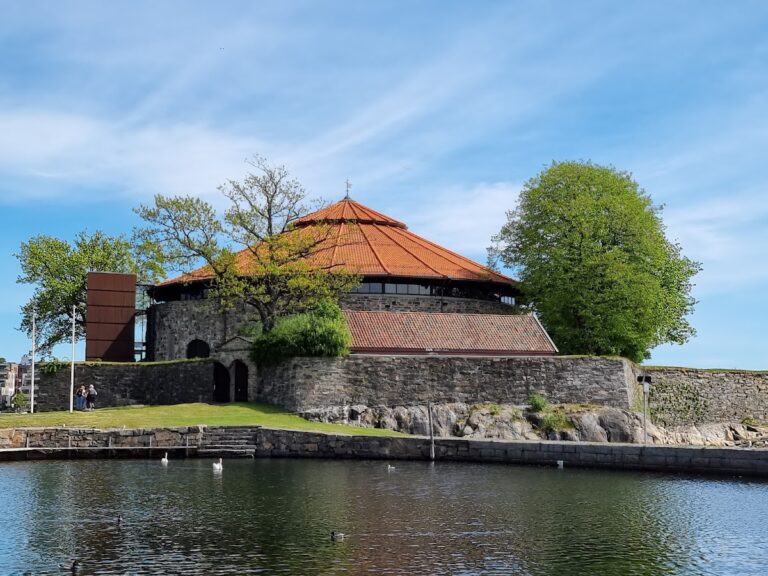
Randøya Fort is an abandoned coastal artillery fort on Østre Randøya in Norway, approximately 13 kilometres east of Kristiansand. German forces built it during the Second World War as part of the Atlantic Wall, the German coastal-defence system intended to resist an Allied seaborne invasion along the occupied European coast. The fort guarded the approaches to Kristiansand and later continued as a Norwegian coastal-defence installation until the late 1990s.
Planning and German construction
The earliest plans for a fortification on Randøya date from 1891, but surveying of the area was not completed until spring 1940. German construction followed, and the first guns were installed in April 1941. The fort was designated MKB 1./502, an abbreviation for Marine-Küsten-Batterie, or naval coastal artillery battery, and came under the Commander of Naval Defence Kristiansand South.
Three 15 centimetre Armstrong guns transferred from Oddeøya Fort formed part of the wartime armament. They remained at Randøya until 1944, when they were removed and taken out of the country.
Norwegian service
Norway took over Randøya Fort in 1945. In August 1947, the Unneberg Committee judged the installation essential for blocking the main approach and warned that inadequate defences would otherwise make local defence “illusory.” Since 15 centimetre guns were unavailable, a temporary 10.5 centimetre battery was installed and completed in April 1949.
New guns were installed between 1951 and 1953, and the battery remained in service until the fort closed in the late 1990s. The last shot was fired on 19 June 1999. At the time of the Norwegian takeover, the installation contained 13 barracks and 14 other buildings. Some of these structures remain intact and are used by the University of Agder, schools in Randesund, and nonprofit organizations. The island now also includes a recreational area.
Remains
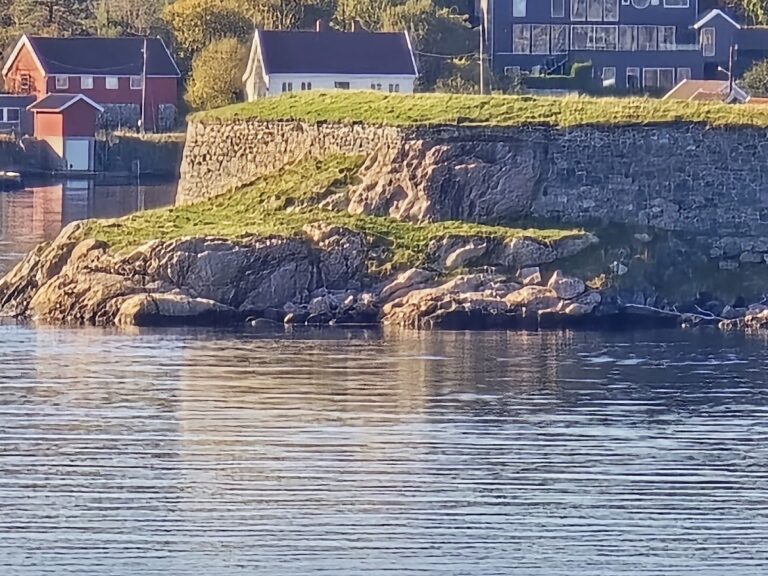
Randøya Fort extends through the island’s defensive positions and a tunnel system running through the hill. Its surviving features include gun emplacements, a fire-control station, an observation bunker, underground operational spaces, searchlight equipment, and former military buildings. Together, these elements show how observation, command, communications, and artillery were arranged within the coastal fort.
Gun positions and artillery
The northern gun position, facing Randesund, held two 40 mm L/60 anti-aircraft guns intended to prevent smaller vessels from passing through the Stanggapet sea strait. The wartime position for the three Armstrong guns was later followed by the temporary 10.5 centimetre battery installed in 1949. Between 1951 and 1953, nine 12.7 centimetre SK C/34 guns, manufactured at the Skoda works in Czechoslovakia in summer 1943, were installed and remained until closure. In the late 1950s, Guns I, II, and III received splinter-resistant shields, protective armour designed to reduce damage from shell fragments, together with a plastic cover for camouflage. The fourth gun stood in an open position. A bunker with an observation slit lies between the gun positions.
Fire control and underground spaces
A fire-control station coordinated observation, calculation, and the transmission of targeting data to the guns. Its central console gave the commander an overview of an engagement, while two side consoles held radar, optical instruments, and laser-control equipment for sending data directly to the guns. The guns could also be fired individually as a last resort.
A tunnel system approximately 200 to 300 metres long runs through the hill. Its innermost section contained the communications centre, operations centre, and fire-control station. The operations centre was divided into naval-defence, air-defence, and gunfire-operations sections, allowing different forces to be mobilized rapidly. A 60 centimetre searchlight was positioned farther out in the fjord.
Barracks and service buildings
The fort’s buildings were uninsulated. Stoves heated the barracks and common rooms, while the medical building had electric heating. Each barracks had running water and shared washrooms, with hot water available only at designated points. Several of the barracks and other buildings survive and continue to serve civilian educational and nonprofit uses.