Øyestad Church: A Medieval Parish Church in Norway
Site at a Glance
- Rating
- 5
- Popularity
- Very Low
- Country
- Norway
- Primary era
- Medieval
- External website
- Open
- Eras represented
- Medieval
- Civilizations
- Norwegian
- Site type
- Religious
- Remains
- Church
On this page7 sections
History
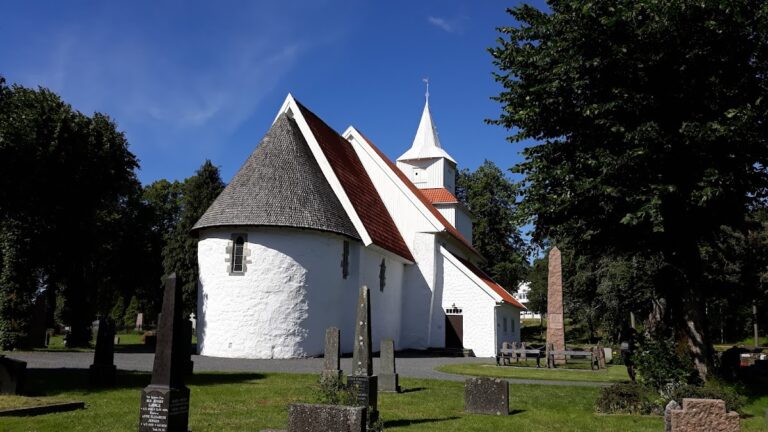
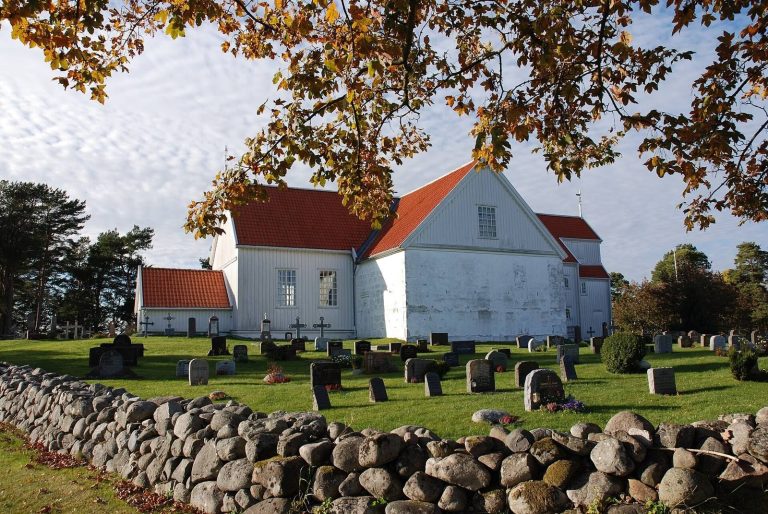
Øyestad Church is a medieval parish church in Rykene, Norway, probably built around 1200 in a Romanesque form, a medieval style associated with rounded arches and substantial masonry. It is now an Evangelical Lutheran church of the Church of Norway, Norway’s Lutheran church, and belongs to Øyestad parish, Arendal deanery, a subdivision within a diocese, and the Diocese of Agder og Telemark, an ecclesiastical jurisdiction. Its earlier affiliation was Catholic.
The earliest surviving historical reference to the church dates to 1338.
Medieval standing
In the late 15th century, the church’s priest was designated a canon, a member of cathedral clergy. The church held an important place within its diocese and was described as “the bishop’s other seat at Christianssand.”
A polling place and a growing parish
In 1814, Øyestad Church served as a polling station for Norway’s first national election. Parishioners elected local electors, who then chose representatives to the Norwegian Constituent Assembly. The Assembly met at Eidsvoll Manor to draft the constitution.
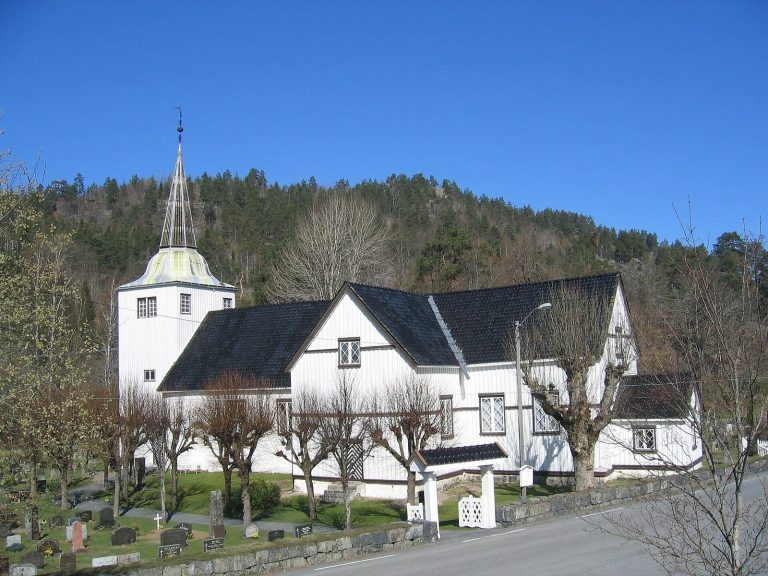
By the late 19th century, the church could no longer accommodate its growing parish, which was close to the rapidly expanding town of Arendal. Plans for a replacement nearby were approved in 1882. Based on the design of nearby Stokken Church, the new building at Bjorbekk was consecrated on 23 July 1884.
The new building was first officially named Øyestad Church, while the older building became Old Øyestad Church. Local people continued to call the older church Øyestad Church and referred to the new one as Bjorbekk Church. The official names were later changed to reflect this usage. After 1884, the older church was used less often.
Fire and restoration
A wildfire severely burned Øyestad Church on 18 May 1900. The damaged building was rebuilt to resemble its pre-fire appearance.
An extensive restoration inside and outside took place from 2006 to 2008. The church remains active and is automatically protected as a Norwegian cultural heritage site.
Remains
Plan and medieval alteration
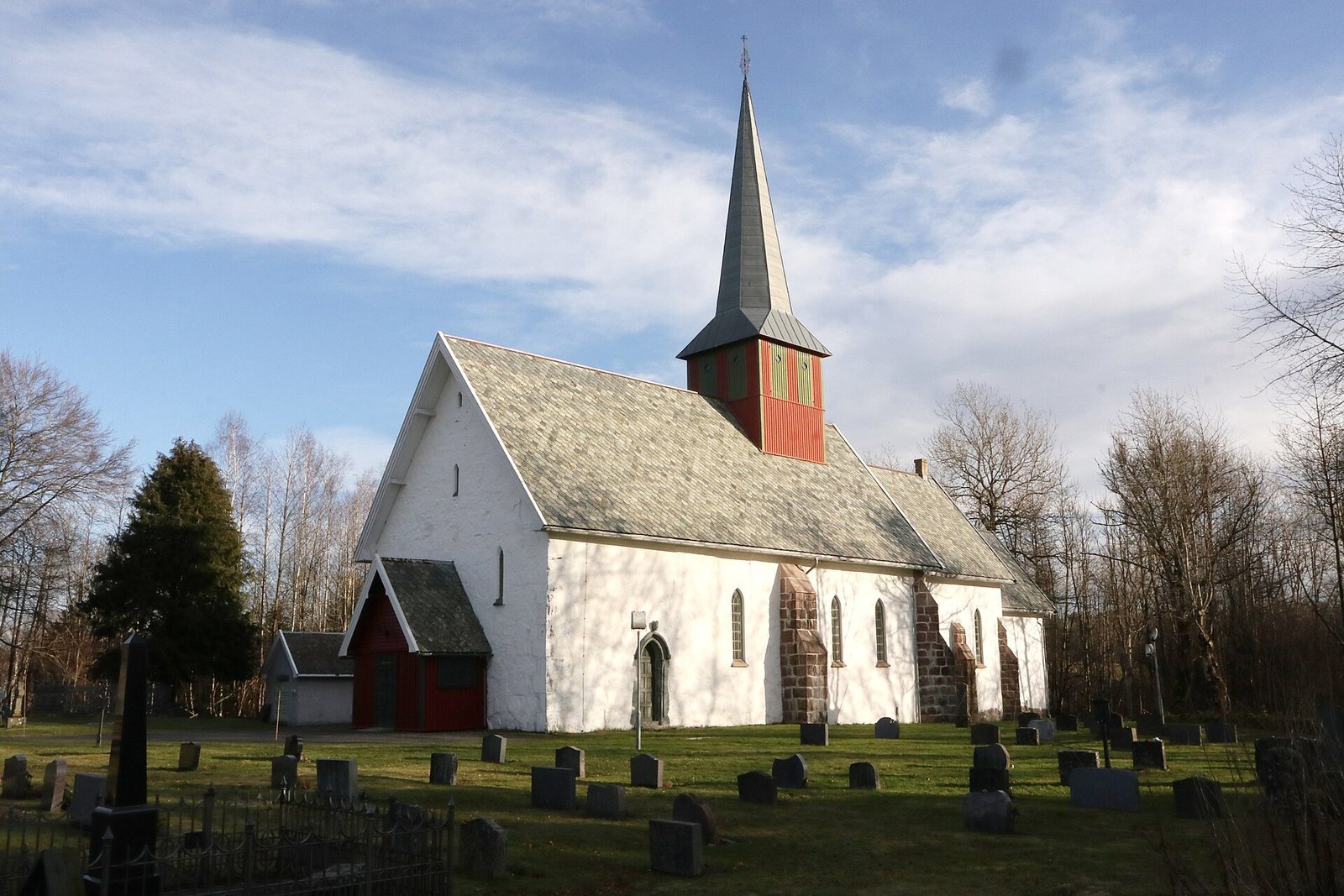
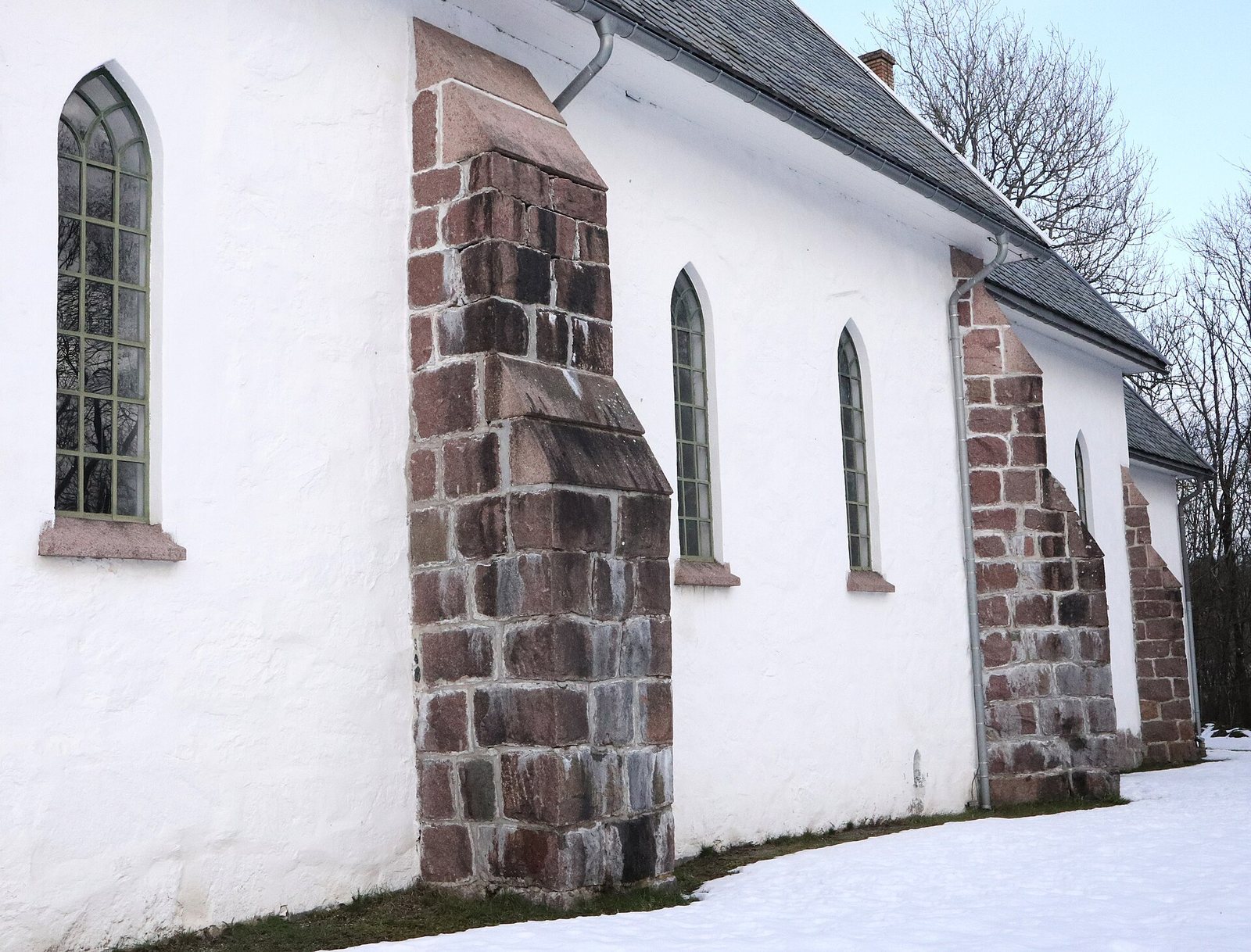
On the north side of the Nidelva River in Rykene, the church is a stone long church, with its main spaces arranged lengthwise. Its nave, the main area for the congregation, and choir, the area near the altar, follow this plan. The main body is whitewashed stone, while the entrance and tower are wooden and painted red. The building has seating for about 250 people. During alterations in the late 15th century, the earlier choir was removed, the nave was lengthened, and a new choir was built. Gothic elements, associated with pointed arches and ribbed vaults, were also added.
Rebuilding and surviving furnishings
After the fire, only the stone walls and foundation remained. Drawings by Jørgen Berner guided the rebuilding, which was completed in 1902 and designed to reproduce the church’s earlier appearance. Objects rescued from the fire include a baptismal font dated to 1540, altar silver, and two candlesticks.