Castle of Corniana: A Medieval Hilltop Fortress in Italy


Site at a Glance
- Rating
- 4.6
- Popularity
- Very Low
- Country
- Italy
- Primary era
- Medieval
- Eras represented
- Medieval
- Civilizations
- Holy Roman Empire
- Site type
- Military
- Remains
- Castle
On this page9 sections
History
Castle of Corniana is a medieval hilltop fortress in Italy, built probably in the early thirteenth century on the initiative of the episcopal authority of Parma to defend the settlement. Occupying a rocky spur near Corniana, a hamlet of Terenzo in Emilia-Romagna, it served both defensive and residential purposes. Its history reflects the struggle for control of a fief, a territory granted by a superior lord to a subordinate holder in return for recognized obligations.
Episcopal foundation and the Parma dispute
The castle was established when the Diocese of Parma, the bishopric that administered the territory, held authority over Corniana. In 1218 and 1219, Emperor Frederick II intervened in a dispute between the diocese and the city of Parma over the fief. After Bishop Obizzo Fieschi appealed to Pope Honorius III, papal action restored the diocese’s authority over territories it had previously governed. An agreement between the city and the bishopric was ratified in 1221.
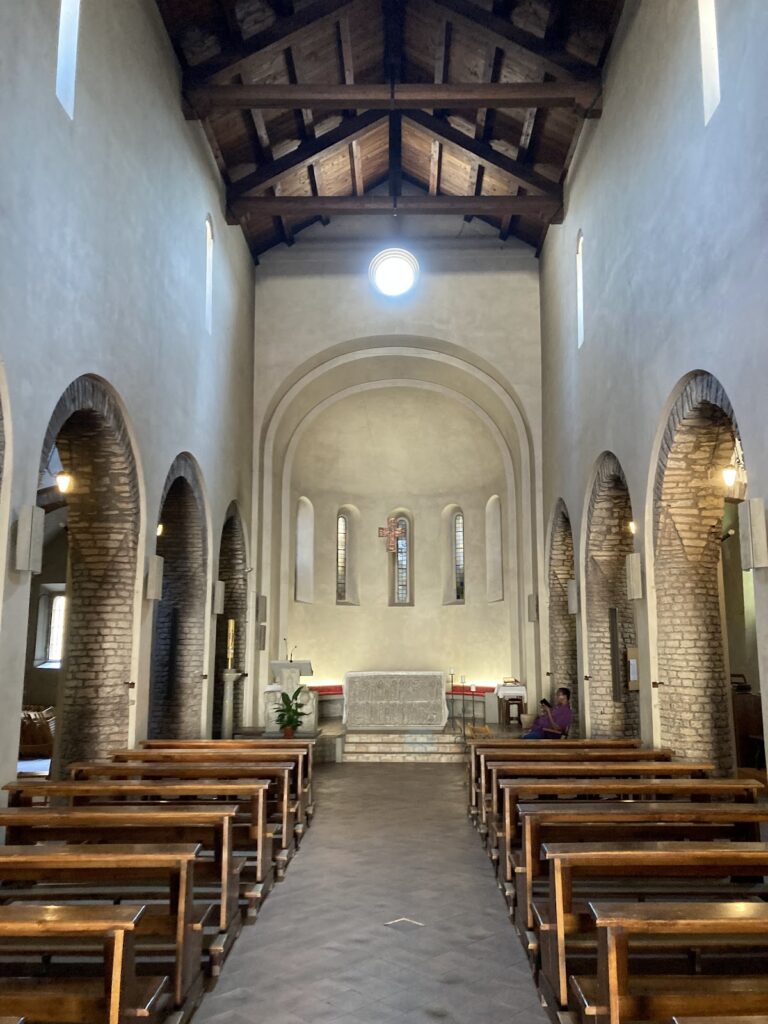
During this period, a chapel for the settlement was built within the castle’s second circuit of walls, at the foot of the rocky spur. The chapel formed part of the fortified settlement rather than standing apart from it.
Transfer to the Rossi family
On 13 April 1355, Bishop Ugolino de’ Rossi transferred the fortress to his nephew Giacomo and great-nephew Bertrando as compensation for an unpaid debt. The Rossi family, a powerful feudal and signorial dynasty based in the Parma region, did not obtain formal possession of the fief until 1400, when Pope Boniface IX invested them with it. An investiture was the formal act confirming possession of a fief.
At the beginning of the fifteenth century, the inhabitants of Corniana probably constructed a wooden tower to protect the settlement during conflicts between the Rossi family and Ottobuono de’ Terzi. The Rossis later replaced the wooden structure with a masonry tower or stronghold. Emperor Sigismund confirmed their rights to the fief in 1413.
Fifteenth-century confirmations
In 1448, Bishop Delfino della Pergola of Parma unsuccessfully attempted to recover Corniana and other castles that had formerly belonged to the diocese. Pier Maria II de’ Rossi then received further confirmation of his investiture from the dukes of Milan in 1449 and 1470.
During the later fifteenth century, Pier Maria II assigned the castle to his son Bertrando by testament. Bertrando died without children in 1502, and the fief passed to his nephew Troilo I de’ Rossi, Marquis of San Secondo. Troilo’s heirs were invested with Corniana by Emperor Charles V in 1530.
Confiscation, sale, and decline
In 1635, Duke Odoardo I Farnese, ruler of the Duchy of Parma, declared Troilo IV de’ Rossi guilty of rebellion and confiscated his lands, including Corniana. In 1653, Troilo’s brother Scipione I de’ Rossi secured the annulment of the confiscation with the assistance of King Philip IV of Spain. Heavy debts nevertheless forced Scipione to sell the Apennine fiefs, including Corniana, to the Ducal Chamber of Parma in 1666.
The deed of sale, dated 6 November 1666, described the castle as already being in very poor condition. A landslide, the movement of earth and rock down a slope, had caused part of the rocky elevation to collapse. In 1689, the Ducal Chamber granted the fief of Corniana to Gian Simone and Lelio Boscoli, Marquises of Ravarano.
Remains
Rocky spur and fortifications
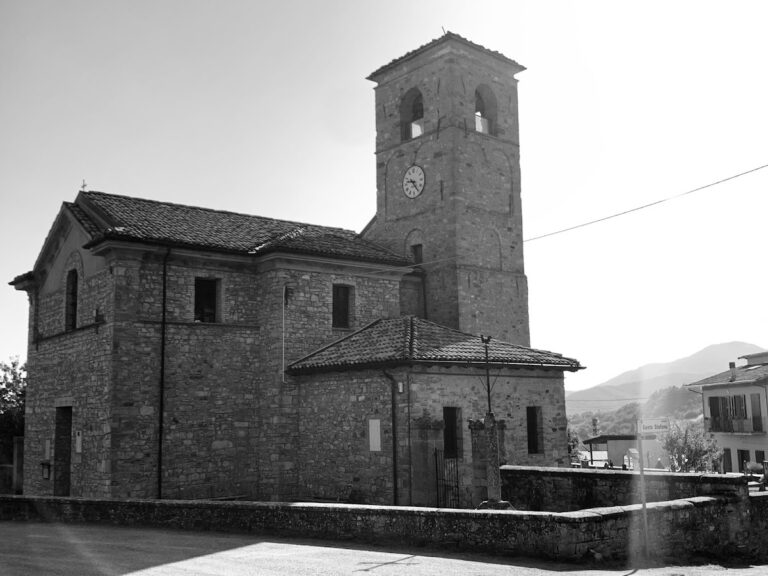
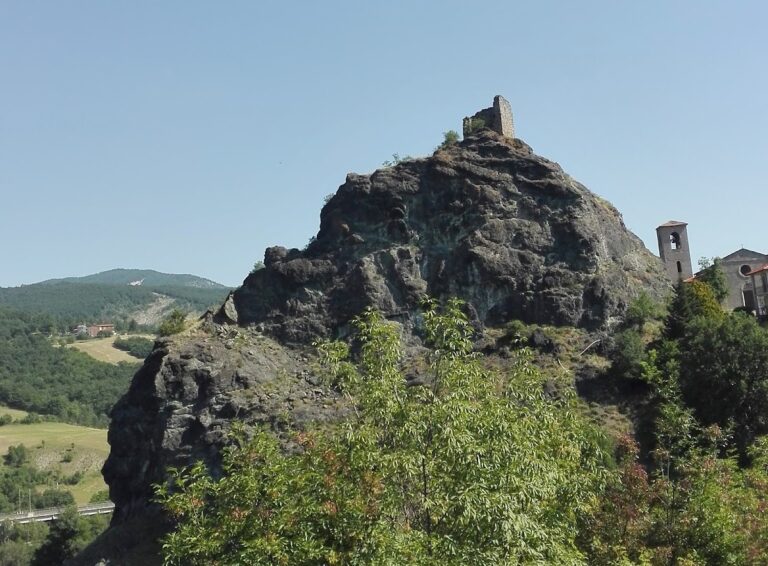
The castle occupied the summit of a rocky spur at approximately 572 metres above sea level, near the former Church of San Michele Arcangelo in Corniana. Built of rubble stone, the fortress followed the elevated ground and combined defensive and residential functions. The settlement was enclosed by at least two circuits of walls, while the landslide described in the 1666 deed altered the rocky elevation and contributed to the site’s later ruinous condition.
Chapel and defensive tower
The service chapel stood inside the second wall circuit, at the base of the rocky spur. It was built during the early thirteenth-century phase associated with episcopal control and served the settlement within the fortified enclosure.
A wooden defensive tower, probably raised by the inhabitants in the early fifteenth century, was later replaced by a masonry tower or stronghold by the Rossi family. Only a few ruins now survive on the summit of the rocky spur.
Fifteenth-century visual record
The castle’s former monumental appearance is preserved in a detailed 1462 fresco in the Golden Chamber of Torrechiara Castle. The Golden Chamber is a richly decorated interior room, and the fresco provides a visual representation of Corniana before the later damage and decline described in the seventeenth-century sale deed.
Nearby sites