Fortunfortet: A Danish Fort in the Copenhagen Defenses


Site at a Glance
- Rating
- 4.1
- Popularity
- Very Low
- Country
- Denmark
- Primary era
- Modern
- External website
- Open
- Eras represented
- Modern
- Civilizations
- Danish
- Site type
- Military
- Remains
- Fort
On this page8 sections
History
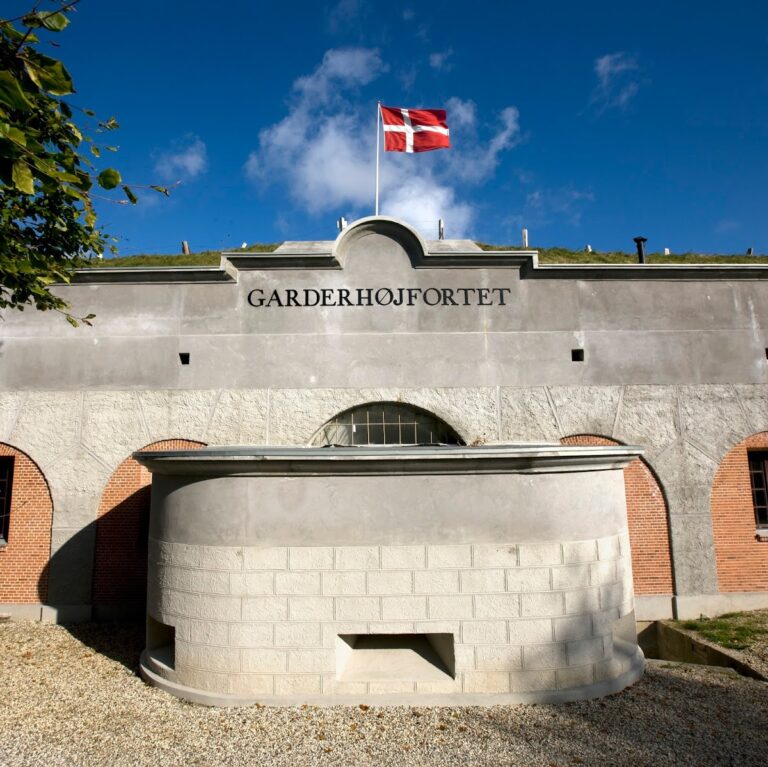
Fortunfortet is a late nineteenth-century Danish fort in Kongens Lyngby, Denmark, built as part of the Copenhagen Fortifications to protect Dyrehaven and the northern approaches to Copenhagen. Construction began in 1891, and the fort entered service on 20 December 1892.
Construction and military service
The fort was designed by Lieutenant Colonel E. J. Sommerfeldt, while Captain Edvard Rambusch supervised its construction. The work cost 550,000 Danish kroner. Fortunfortet formed a northern component of the defensive system built around Copenhagen, occupying a position about 10 kilometers north of Kastellet, the historic citadel in Copenhagen, and about 4 kilometers northeast of the neighboring Lyngby fort.
During the First World War, a conflict fought from 1914 to 1918, Fortunfortet was mobilized and accommodated approximately 110 men. The army abandoned it around 1920, after which it passed into private ownership. Its later uses included mushroom cultivation, reflecting a shift from military service to civilian reuse.
Accident, protection, and preservation
In May 1945, several young people entered the fort. Fireworks stored inside ignited through carelessness, killing four people. Fortunfortet was protected as a monument on 3 January 1992, but insufficient maintenance later left the structure severely deteriorated.
An association founded in 2007 took up the task of preserving the fort and developing it as a local cultural center. This effort forms the latest phase in the site’s history, following its construction for defense, military mobilization, private reuse, and prolonged deterioration.
Remains
Fortunfortet has a triangular plan enclosed by a dry moat. Its northern point faces the enemy, while its southern base is directed toward Copenhagen on the protected side. The fort was built from brick and natural stone, and its layout combined defensive positions with accommodation and service rooms.
Moat defenses
Northern caponniere
A caponniere is a fortified position projecting into or beside a moat, allowing defenders to fire along it. At Fortunfortet, one occupies the northern point of the triangle and helped cover the surrounding dry moat with machine guns and light cannon.
Southern caponiers
Salient caponiers, fortified positions set at projecting angles or points, stand at the southern base. Together with the northern position, they allowed the moat to be swept by defensive fire from several parts of the fort.
Interior spaces
The interior contained accommodation for troops, a kitchen, a machine room, storage rooms, and ammunition stores. These spaces supported the garrison’s daily needs and the operation of the fort’s weapons. Their arrangement reflects the combination of residential, technical, storage, and defensive functions required during military service.