Čertův hrádek: A Gothic Castle Ruin in Czechia

Site at a Glance
- Rating
- 4
- Popularity
- Very Low
- Country
- Czechia
- Primary era
- Medieval
- Eras represented
- Medieval
- Civilizations
- Holy Roman Empire, Kingdom of Bohemia, Margraviate of Moravia
- Site type
- Military
- Remains
- Castle
On this page4 sections
History
Čertův hrádek is a Gothic castle ruin in Czechia, historically known as Olomučany and built in the second half of the thirteenth century. Medieval pottery found at the site indicates this period of construction, although the castle’s first owners are unknown.
Medieval ownership
The estate was probably acquired in the early fourteenth century by Jindřich of Lipé. He had exchanged Žitavsko with King John of Luxembourg for estates in Moravia. When Jindřich’s property was divided in 1346, Olomučany was assigned to his sons Jindřich, Pertold, and Čeněk of Lipé.
Vilém of Opatovice subsequently held the castle, probably from 1374 to 1391. Documents identify Jan Bidlo, whose residence was in Otradice, as its owner from 1406 to 1437.
Disappearance and later tradition
Olomučany probably ceased to exist during the Hussite Wars, religious and political conflicts in the Bohemian lands and neighboring regions during the fifteenth century, or shortly before them. Its disappearance is generally placed in the fifteenth century.
The name Čertův hrádek arose later through popular tradition. The castle’s historical name was Olomučany, while the proposed derivation of Čertův hrádek from either Hynek Suchý Čert or Jakub Čert of Bořitov remains an unsupported legend. Another local story tells of an unknown knight who built the castle unusually quickly. In the legend, the Devil carried off women from nearby villages and imprisoned them there.
The ruin has been protected as a cultural monument of the Czech Republic since 1964.
Remains
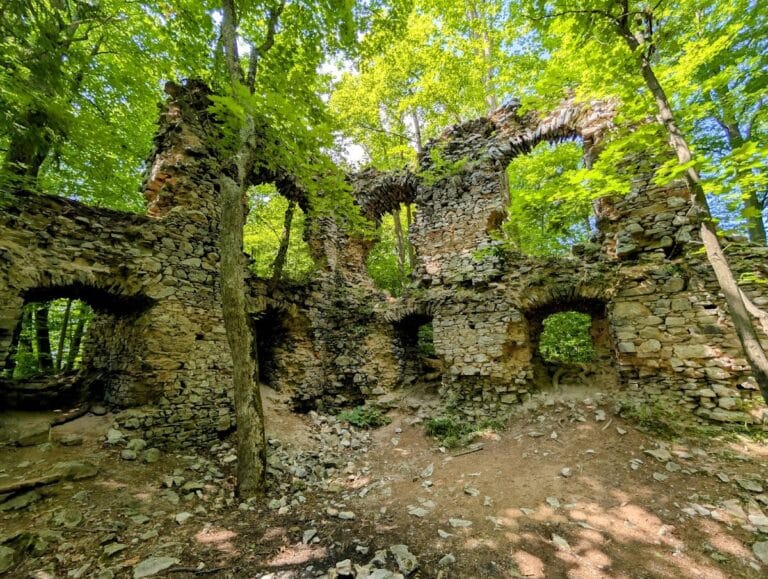
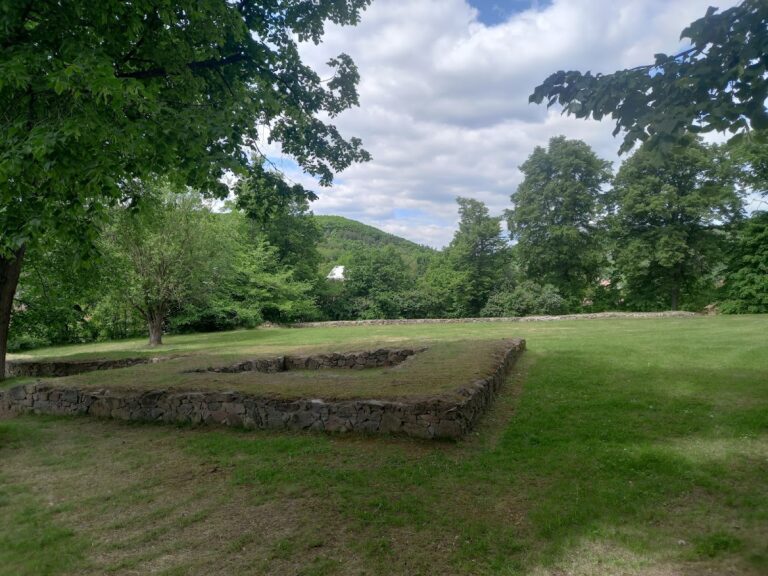
Čertův hrádek is a Gothic castle ruin above the valley of the Svitava River in the Drahany Highlands, within the officially defined land unit of Olomučany. The surviving remains include an exposed section of the courtyard wall, which forms the principal visible part of the ruined castle.
Nearby sites