Zámek Černá Hora: A Medieval Castle Transformed into a Château

Site at a Glance
- Rating
- 4.2
- Popularity
- Very Low
- Country
- Czechia
- Primary era
- Medieval
- Eras represented
- Medieval, Early Modern, Modern
- Civilizations
- Habsburg, Holy Roman Empire
- Site type
- Domestic
- Remains
- Castle
On this page6 sections
History
Zámek Černá Hora is a former castle converted into a château in Černá Hora, Czechia. Matouš of Černá Hora built the original castle between 1279 and 1298, during the Gothic period. As Moravian chamberlain, a senior administrative official in medieval Moravia, he held an important position in the region. The castle later became the seat of successive noble owners and was transformed several times before reaching its present form.
Medieval Lords and the Hussite Wars
After Matouš died without a male heir, the castle passed in 1305 to Arpád of Florence, a royal mintmaster responsible for operating a royal mint and producing coinage. Jindřich of Lipé owned it in 1320, and in 1330 it was associated with his son Jindřich, known as “the Iron.” The lords of Boskovice acquired the castle before 1348. Vaněk Černohorský of Boskovice is explicitly recorded as its lord in 1390.
Vaněk attached his seal to the protest against the burning of Jan Hus at Constance. Hus was a Bohemian religious reformer executed at the Council of Constance in 1415. During the Hussite Wars, fifteenth-century conflicts connected with the religious reform movement associated with Hus, Vaněk supported the Moravian Hussites against Jan Železný, Bishop of Olomouc. Forces of the bishop probably captured the castle around 1423. Vaněk recovered it only after converting to Catholicism.
Boskovice and Liechtenstein Ownership
Vaněk’s son, Beneš Černohorský of Boskovice, supported Matthias Corvinus during the Bohemian-Hungarian Wars, conflicts over control and influence in the Bohemian lands. In 1471, Corvinus, the fifteenth-century king of Hungary and Croatia, gave Beneš the newly conquered Nový hrad. After Beneš, Černá Hora passed to Jaroslav Černohorský of Boskovice. Jaroslav had no male descendants, so his four daughters inherited the estate and sold it in 1550 to Václav Bučovický of Boskovice.
Václav’s son, Albrecht Bučovický of Boskovice, carried out Renaissance alterations to the castle. Jan Šembera of Boskovice, the last male descendant of the Černohorský line, died in 1597. The estate then passed by marriage to Karel I of Liechtenstein. His son, Karel Eusebius, held it from 1627 to 1684. The Liechtensteins did not live at the castle, which was administered by a castellan, an official responsible for managing a castle.
Fire, Abandonment, and Nineteenth-Century Transformation
The castle was damaged during the Thirty Years’ War, the major European conflict fought from 1618 to 1648 amid religious and dynastic struggles. Repairs did not fundamentally alter the residence. In 1719, the Černá Hora estate passed by marriage to Jindřich Josef of Auersperg. A fire damaged the castle in 1726, after which it received provisional repairs. The building was abandoned in 1818.
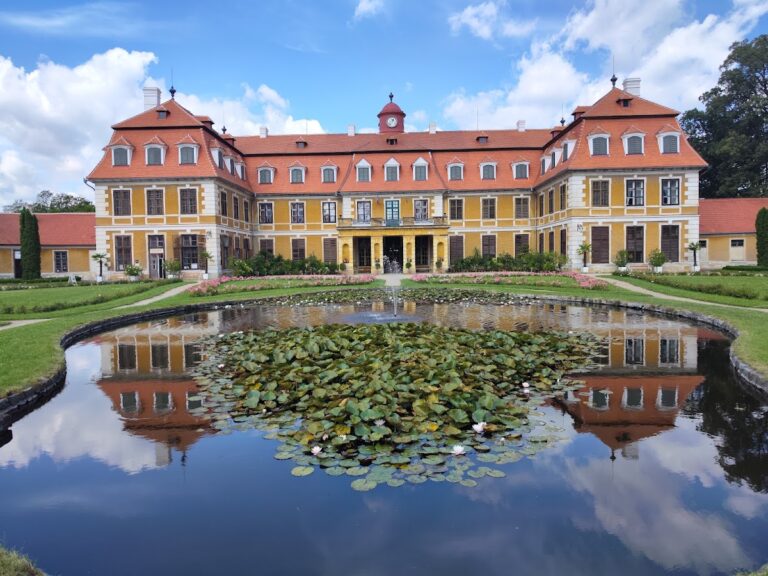
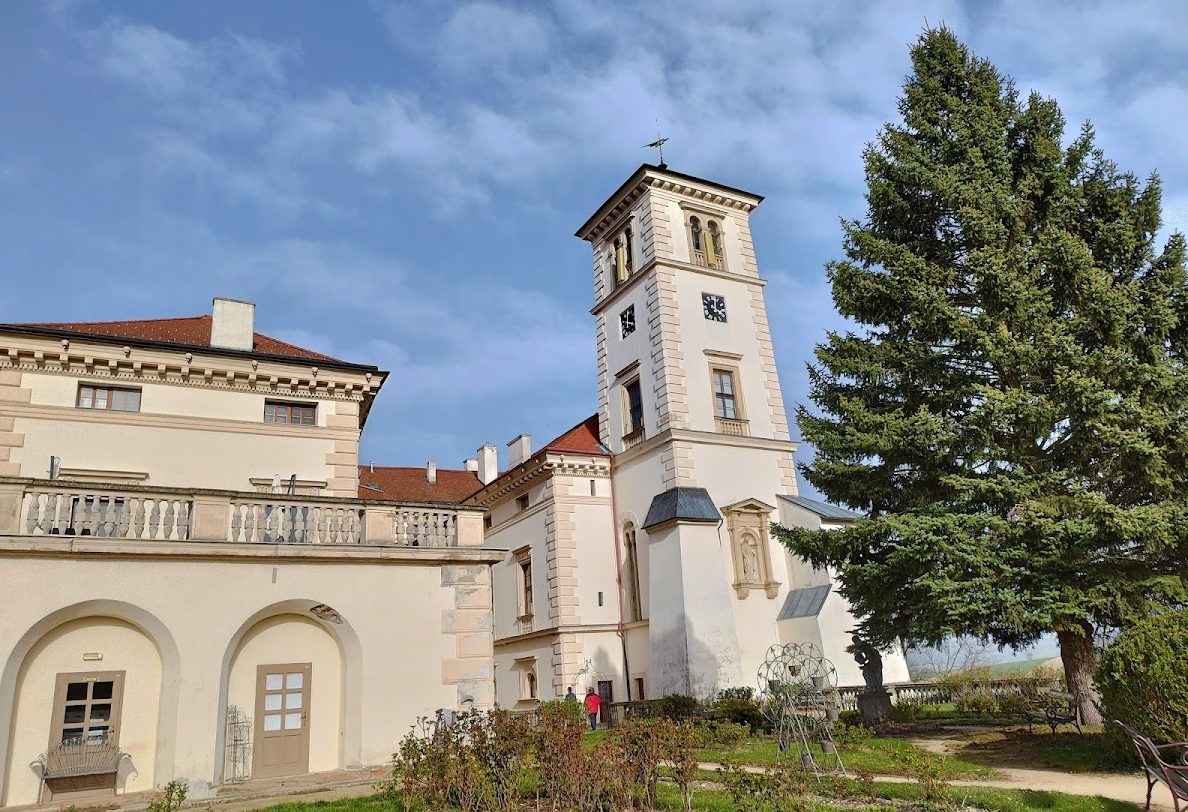
Henrietta Pereira-Arnstein bought the property in 1857 and began converting the former castle into a château in the Renaissance Revival style. This later architectural style used forms and motifs derived from Renaissance architecture. Her son-in-law, Count Moritz Friess of Friessenburg, completed the work between 1859 and 1861. The Friess family lost the property through confiscation in 1945, after which a social-care institution was established there. Zámek Černá Hora is protected as a cultural monument of the Czech Republic.
Remains
Castle and Château Fabric
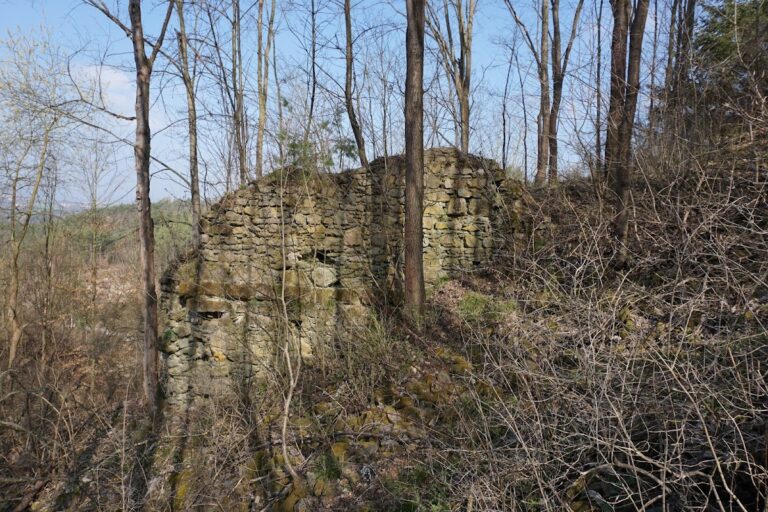
The site occupies a hill in the northern part of Černá Hora. Its surviving architectural character brings together Gothic, Renaissance, Renaissance Revival, Baroque, and Neoclassical elements. The earliest fabric belongs to the castle built between 1279 and 1298, while the Renaissance phase is associated with Albrecht Bučovický of Boskovice’s ownership. Provisional repairs followed the fire of 1726, and the building was later remodelled as a Renaissance Revival château between 1857 and 1861. The present complex therefore preserves the physical results of a medieval foundation, early modern alterations, fire repairs, and nineteenth-century transformation.
Nearby sites