Varta Castle: A Medieval Castle in Czechia


Site at a Glance
- Rating
- 4.1
- Popularity
- Very Low
- Country
- Czechia
- Primary era
- Medieval
- Eras represented
- Medieval
- Civilizations
- Holy Roman Empire, Kingdom of Bohemia
- Site type
- Military
- Remains
- Castle
On this page4 sections
History
Origins and the Lords of Dubá
Varta Castle, also known as Warta, is a medieval castle in Czechia that originated in the fourteenth century near Olešnice in the Bohemian Central Uplands. By the end of that century, the castle and its associated lordship belonged to the Škopek branch of the Lords of Dubá, a noble lineage in medieval Bohemia.
In 1397, Beneš Škopek of Dubá transferred the lordship to his son, also named Beneš. The domain included Varta Castle, its manorial farm, and the surrounding villages. Between 1399 and 1401, the lordship passed from Beneš the Strong Škopek of Dubá to the Wartenbergs of Tetschen, another noble lineage whose seat was in the town now known as Děčín.
Wartenberg Rule and Disappearance
After acquiring the lordship, the Wartenbergs appointed castellans at Varta. A castellan was an official responsible for administering and defending a castle on behalf of its lord. In 1405, the castellan Otto of Luckau became involved in a feud concerning Schreckenstein Castle against his Wartenberg lords.
It remains uncertain whether Varta survived the Hussite Wars, the fifteenth-century religious and political conflicts in Bohemia associated with the reform movement initiated by the Czech religious reformer Jan Hus. The castle is no longer mentioned in surviving records after 1465.
Remains
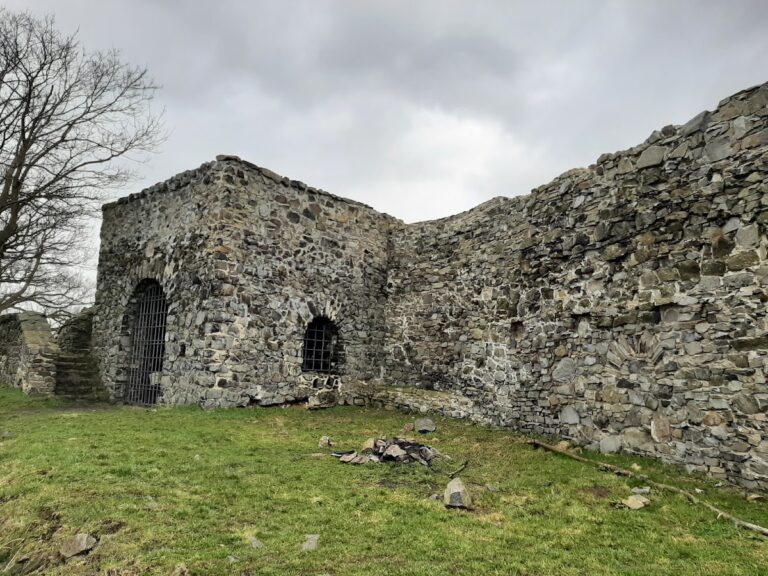
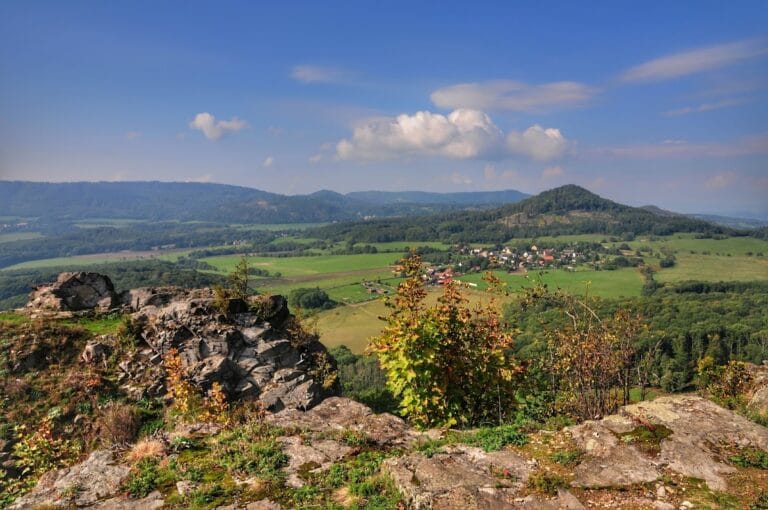
Varta Castle stood on a hill near Olešnice, on the right bank of the Elbe in the Bohemian Central Uplands. The medieval site is preserved as a ruin. Only a few sections of masonry survive, together with ditches and earth ramparts that mark parts of the castle’s former defensive arrangement.
Nearby sites