Obřany Castle: A Ruined Medieval Stronghold in Czechia
Site at a Glance
- Rating
- 4.4
- Popularity
- Very Low
- Country
- Czechia
- Primary era
- Medieval
- Eras represented
- Medieval
- Civilizations
- Holy Roman Empire, Margraviate of Moravia
- Site type
- Military
- Remains
- Castle
On this page11 sections
History
Obřany Castle is a ruined medieval castle in Czechia, above Chvalčov, founded before 1365 by the Moravian nobleman Boček I of Poděbrady. Built without the approval of King Charles IV and his brother John Henry, Margrave of Moravia, it was named after an earlier Obřany Castle near Brno, destroyed around 1315 or 1316. Boček regarded that earlier stronghold as the ancestral seat of the Lords of Obřany and the Lords of Kunštát.
Foundation and royal order
Charles IV ordered the destruction of Obřany Castle in 1366. The order probably did not result in its immediate demolition. Instead, construction appears to have stopped, leaving the stronghold incomplete. The castle may have served provisionally during the first half of the fifteenth century.
The claim that Obřany was the ancestral seat of the Lords of Kunštát requires qualification. The family’s actual ancestral seat was Kunštát, founded by Kuna of Zbraslav and Kunštát. The Lords of Obřany descended from Kuna’s brother, Boček of Jaroslavice and Zbraslav.
Late medieval ownership and destruction
After Jobst of Moravia died in 1411, King Wenceslaus IV transferred the castle to Milota of Tworkau. Milota sold Obřany together with the Bystřice estate in 1418 to his brother Andreas, also called Ondřej of Tworkau, who died around 1420. Milota the Younger of Tworkau probably repurchased the castle and estate between 1434 and 1437. Around 1440, he probably sold them to Vok of Sovinec and Helfenstein, who probably transferred them in 1447 to Johann the Younger Zub of Landstein and Morawan. Johann died in 1466.
Obřany was destroyed during the Hussite Wars, the religious and political conflicts in Bohemia and Moravia that followed the execution of Jan Hus in 1415. The destruction probably occurred in 1421, during a campaign led by King Sigismund. Afterward, the castle ceased to function and was replaced by a newly built fortified manor in Bystřice pod Hostýnem. A 1447 entry in the Moravian Land Table, a legal register of noble property and rights, described Obřany as destroyed or ruined.
Protection and survival
Obřany has been protected as a cultural monument since 1973. This status identifies it as a heritage site valued for its historical, architectural, or archaeological importance. The ruins lie within the Obřany nature reserve. At an elevation of 704 metres, the castle has been described as the second-highest in Moravia after nearby Skalný, although historian Václav Štěpán disputed that ranking, pointing to Rabštejn near Rýmařov at 805 metres and possibly Koberštejn near Jeseník at 934 metres.
The surviving remains continue to deteriorate through weathering, vandalism, and falling trees.
Remains
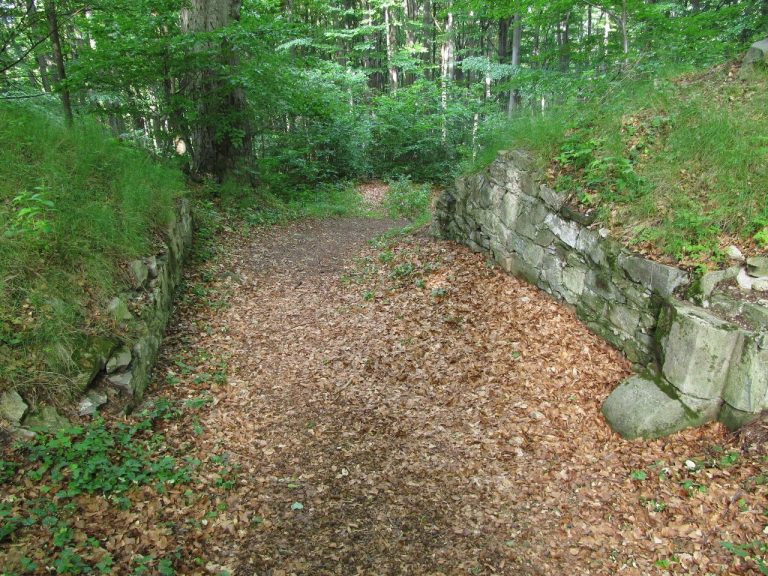
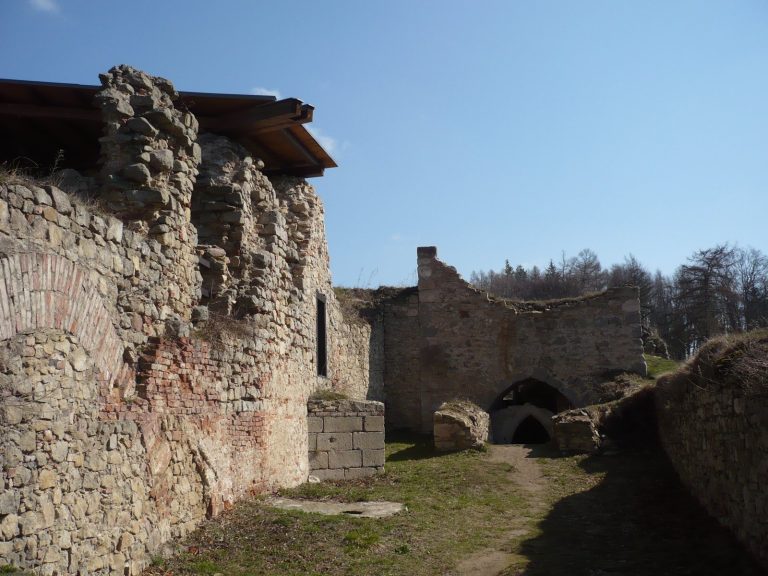
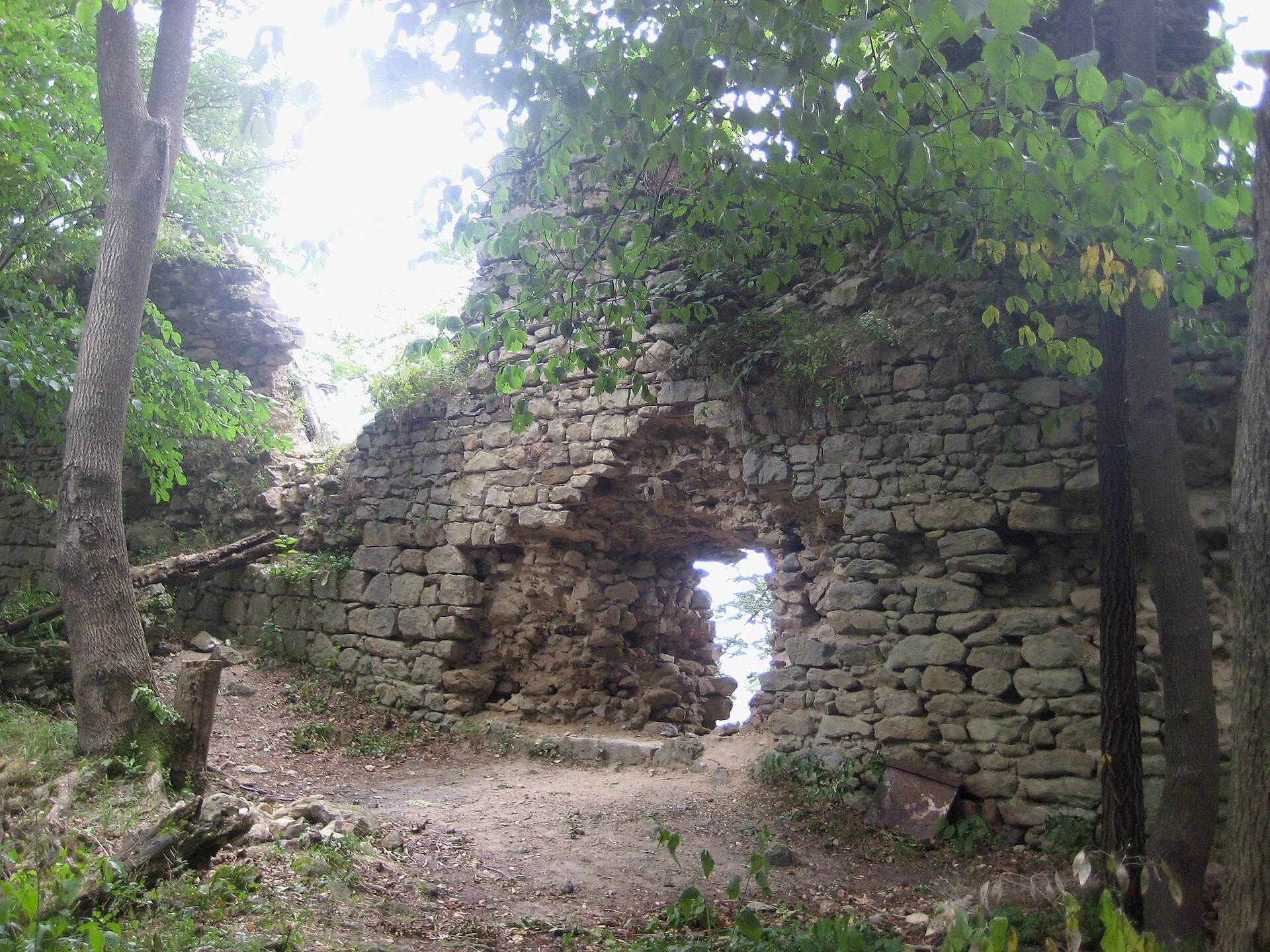
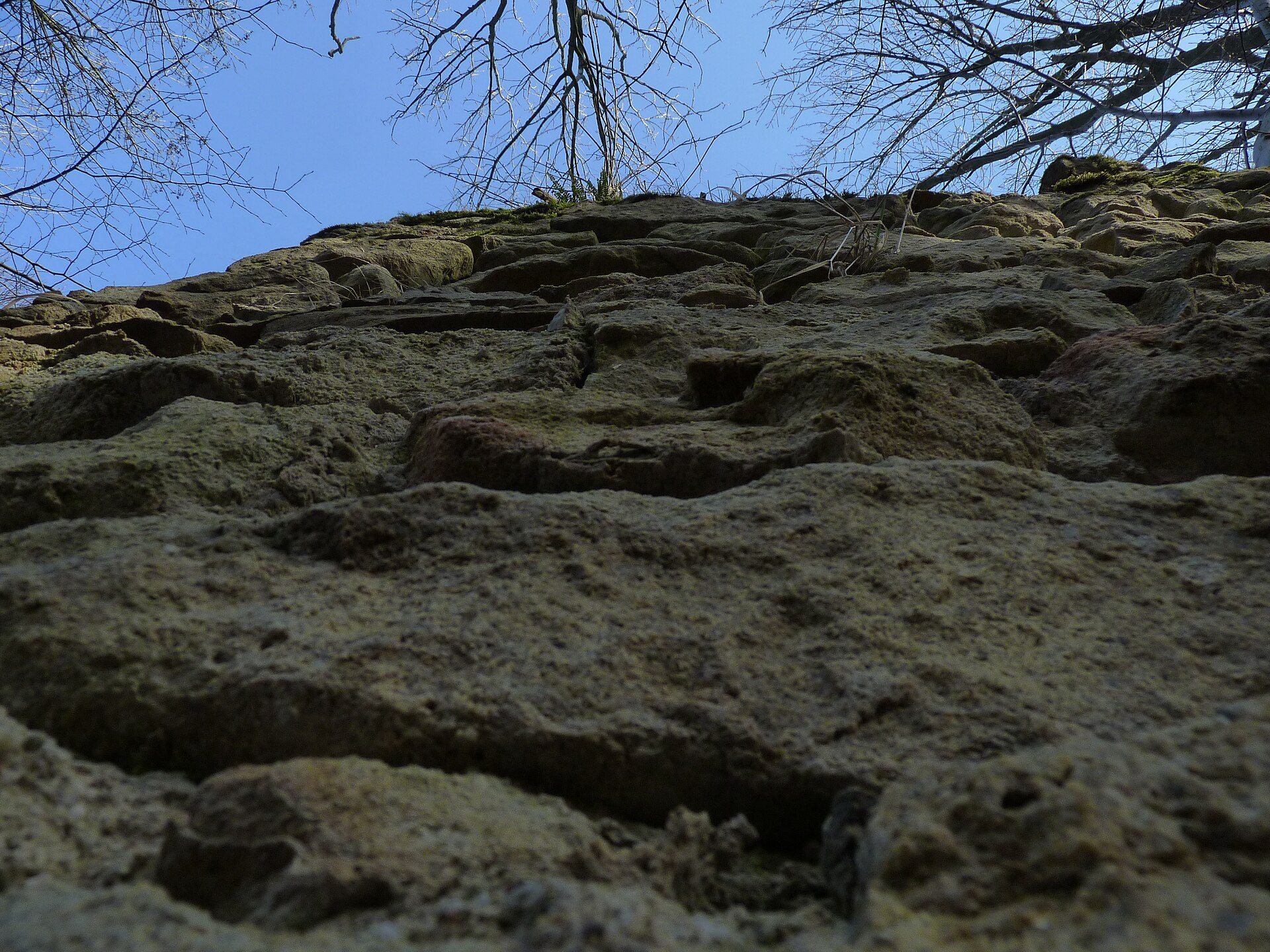
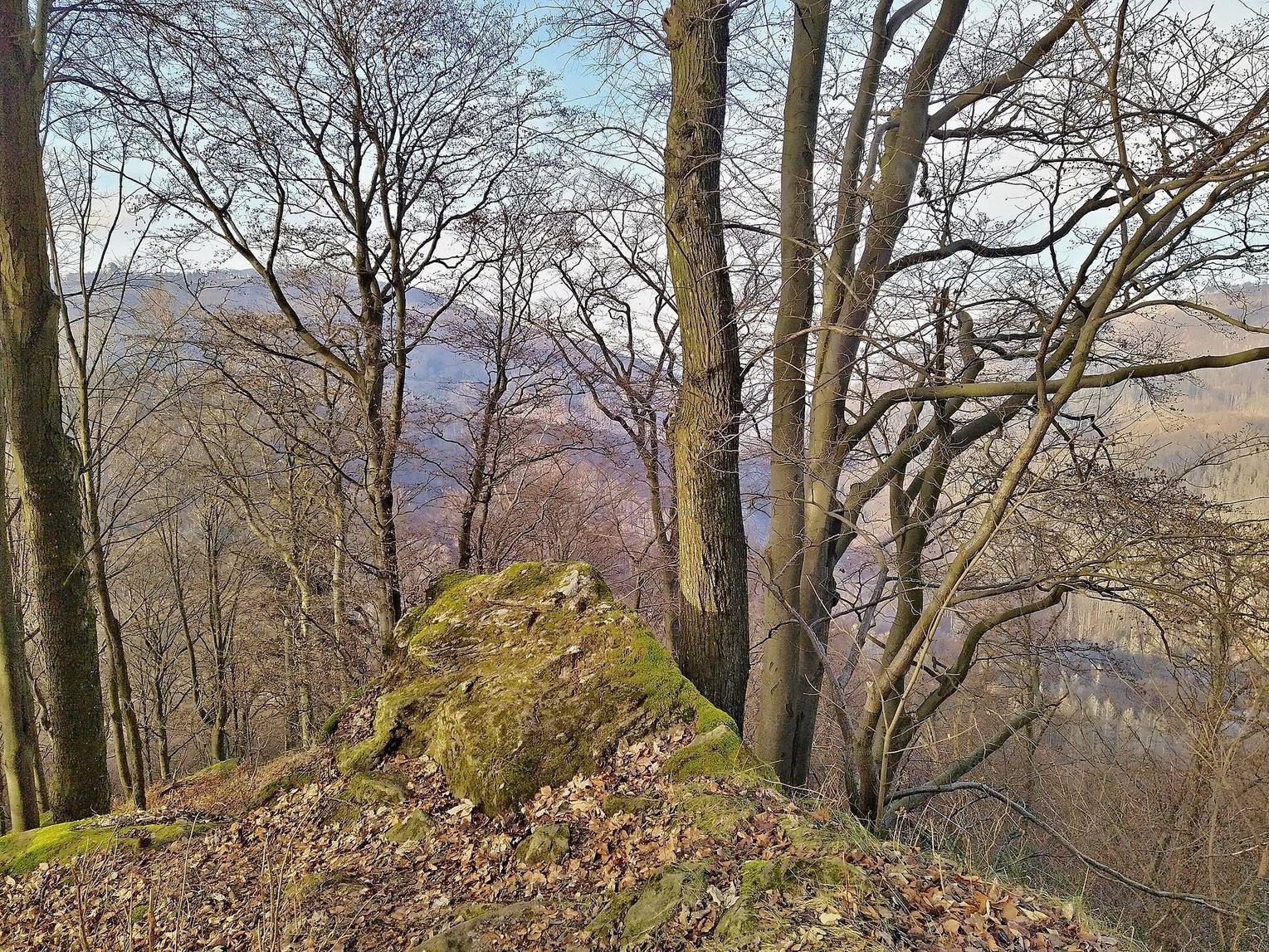
Obřany occupies a narrow, elongated summit ridge measuring about 120 by 20 metres. Its surviving masonry is heavily ruined, while earthworks on the southern side preserve parts of the defensive arrangement. The site included a western turret, an eastern palace area, and a cylindrical tower placed at the most defensible point of the ridge.
Ridge buildings and defenses
Western guard turret
The western part of the ridge contains the remains of a small, round guard tower or turret. Its fragmentary masonry forms one of the identifiable elements of the castle’s western end.
Eastern palace
Earthwork traces in the eastern part indicate the position of a large palace. The surviving ground forms show its place within the elongated summit enclosure, although the masonry is now severely ruined.
Cylindrical tower
A cylindrical castle tower stands at the most defensible point of the site. Its position allowed it to command a broad view, making it a principal defensive feature of the stronghold.
Southern ditch, rampart, and entrance
Terrain remains on the southern side mark a ditch and rampart. These defenses were not fully completed, and the entrance gate was located on this side of the castle.
Springs beneath the ruins
Two water springs lie beneath the ruins. Táborský Spring was named in honor of the ethnographer and writer František Táborský, while Ondrúškův Spring, originally called Hladová studánka, commemorates the painter František Ondrúšek. Both men frequently visited the area and brought friends there.