Nový Šaumburk: A Medieval Administrative Castle in Czechia
Site at a Glance
- Rating
- 4.4
- Popularity
- Very Low
- Country
- Czechia
- Primary era
- Medieval
- External website
- Open
- Eras represented
- Medieval
- Civilizations
- Holy Roman Empire, Kingdom of Bohemia
- Site type
- Military
- Remains
- Castle
On this page6 sections
History
Nový Šaumburk is a ruined hill castle in Czechia, situated near Podhradní Lhota in the Hostýn Hills. Built in the second half of the fourteenth century, it replaced the older Šaumburk Castle and became an administrative center of the Olomouc bishopric’s Kelč domain. The castle is also known as Neue Schaumburg or Neue Schauenburg, while the name Zubříč is sometimes used incorrectly.
Foundation and episcopal administration
Nový Šaumburk was first recorded in 1360. The Olomouc bishopric, the ecclesiastical institution whose bishops controlled the Kelč domain, used the castle as an administrative seat. Around 1400, Bishop Jan XI pledged it to Hereš Smetana of Záhlinice. In 1406, the bishopric transferred the castle to Jindřich of Bystřice in settlement of a debt valued at 200 Scherf groschen, a medieval monetary denomination.
Pledges, raiding, and destruction
At the beginning of the fifteenth century, Bishop Jan XI Mráz again pledged the castle because of financial difficulties. From 1416, it was held by the lords of Bítov near Bílovec, including Zikmund of Bítov and, after the Hussite Wars, his sons Mikuláš and Hanuš. The Hussite Wars were fifteenth-century religious and political conflicts in Bohemia and Moravia associated with the Hussite reform movement.
Mikuláš of Bítov used Nový Šaumburk as a base for raiding expeditions. In 1451, Jan Tovačovský of Cimburk, the provincial governor responsible for governing Moravia on behalf of the ruling authority, bought the castle and had it demolished. The ruins were probably restored later, but Hungarian forces completed the destruction during the Czech-Hungarian Wars, conflicts between the Bohemian crown and the Hungarian monarchy that affected Moravian territories. In 1456, the Kelč Fortress became the new administrative seat. The ruins are now undergoing gradual conservation, and Nový Šaumburk is protected as a cultural monument.
Remains
Fortifications
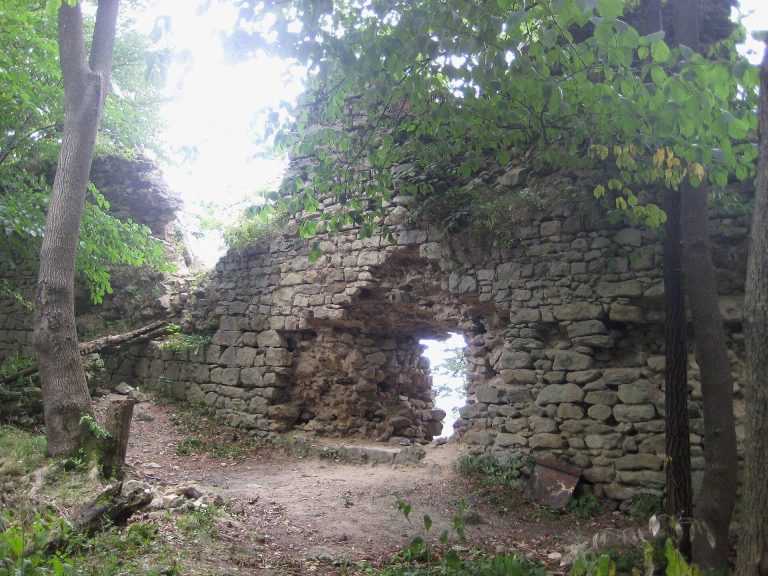
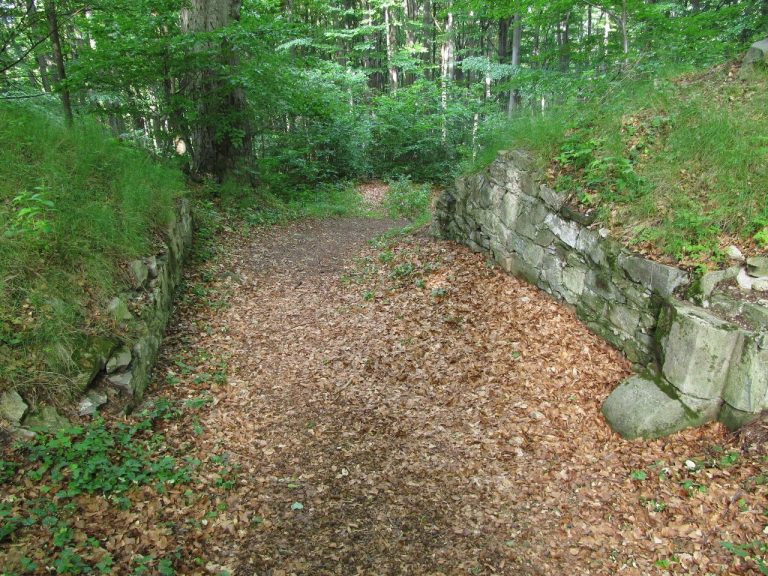
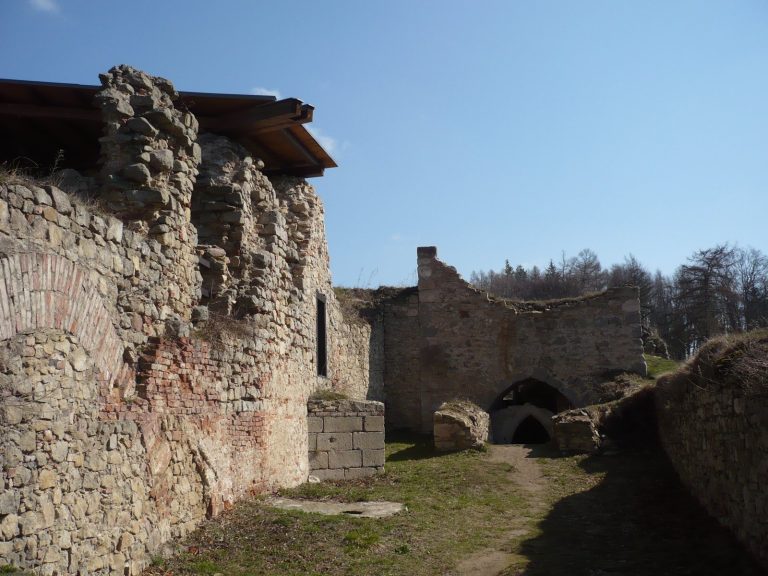
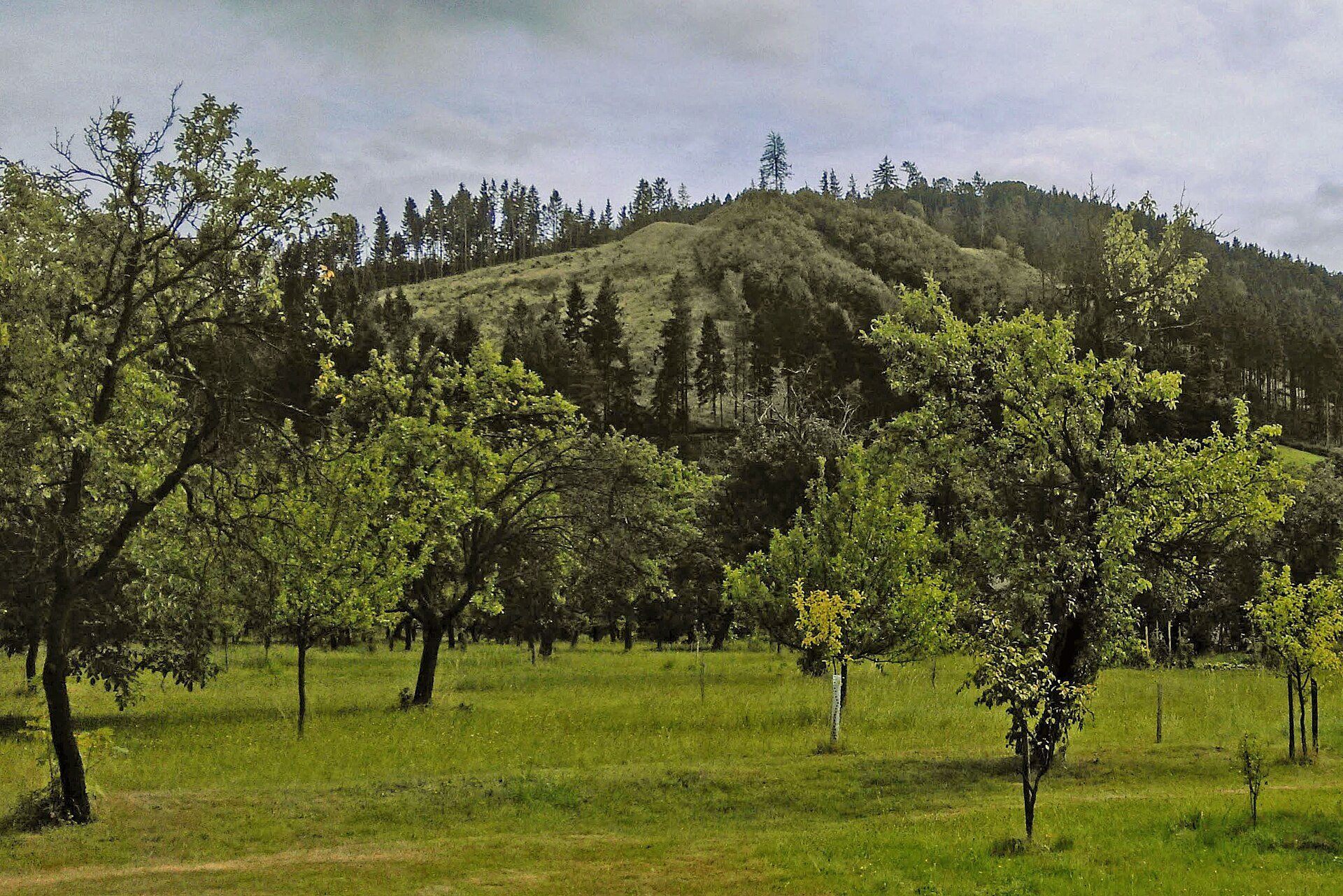
The ruined castle stands on Bašta hill at an elevation of about 503 metres, approximately 0.5 kilometres south of Podhradní Lhota. Its core occupied an oval area measuring roughly 50 by 30 metres. A ditch about 20 metres wide and 5 metres deep enclosed the inner area, while an outer rampart rose approximately 3 metres high beyond it. The surviving remains include the ditch, the rampart, and sections of rubble-stone walls.
A gate tower marked the western entrance to the inner area, and fragments of the tower remain. Together with the enclosing earthworks and wall sections, it indicates the defensive arrangement of the castle’s compact hilltop core.
Water supply
South of the castle lies a cistern measuring approximately 20 by 10 metres. It formerly supplied the settlement with water and remains a distinct part of the archaeological layout.