Burg Hohenkarpfen: A Medieval Hilltop Castle in Germany


Site at a Glance
- Rating
- 4.6
- Popularity
- Very Low
- Country
- Germany
- Primary era
- Medieval
- Eras represented
- Medieval
- Civilizations
- Holy Roman Empire
- Site type
- Military
- Remains
- Castle
On this page5 sections
History
Burg Hohenkarpfen, also called Karpfen, is a medieval hilltop castle in Germany, above Hausen ob Verena in Baden-Württemberg. Constructed around 1000–1100, it was associated with the Lords and Knights of Karpfen, who were named as its builders in 1050. The castle was held as an imperial fief, meaning that its lordship came directly from the Holy Roman Emperor or imperial authorities rather than from a regional prince.
Early Lords and Imperial Possession
The Karpfen family formed the castle’s early ruling line. After its main branch died out, the fief passed through the Remschingen and Emmershofen families. The Lords of Blumberg were recorded as owners in 1382, while the Counts of Lupfen-Stühlingen held the castle from the late fourteenth century.
In 1444, Burg Hohenkarpfen came to the County of Württemberg. In 1491, Hans I of Karpfen, also known as Wirtenberger, received the lordship. He was a natural son of Count Eberhard im Bart, the Württemberg count who became the first Duke of Württemberg in 1495. Hans had the castle repaired and brought its holdings together with Rietheim Castle and surrounding estates.
Destruction during the Thirty Years’ War
The Thirty Years’ War, a European conflict fought from 1618 to 1648 over religious, dynastic, and territorial disputes, brought the castle’s history to an end. Imperial forces, serving the Habsburg-led imperial side, joined troops from Villingen in destroying Burg Hohenkarpfen and the village of Hausen ob Verena. The castle was never rebuilt, and its ruins remain above Gunningen in Tuttlingen District.
Remains
Hilltop Castle Layout
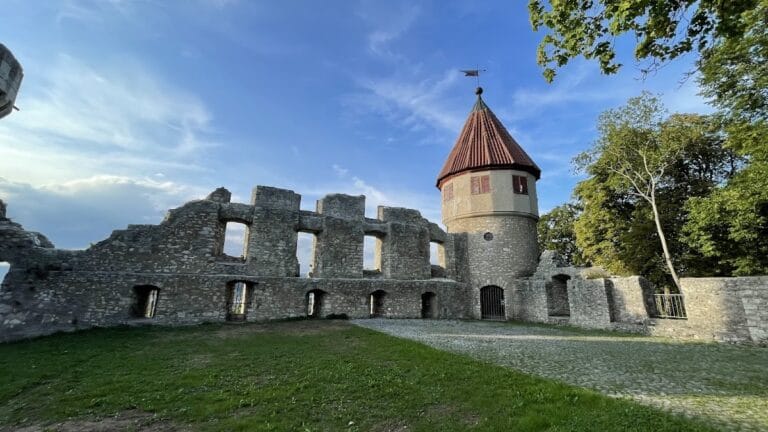
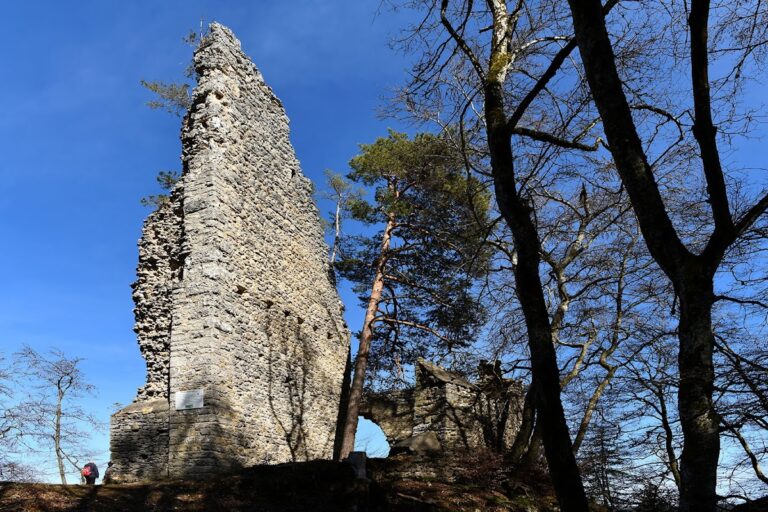
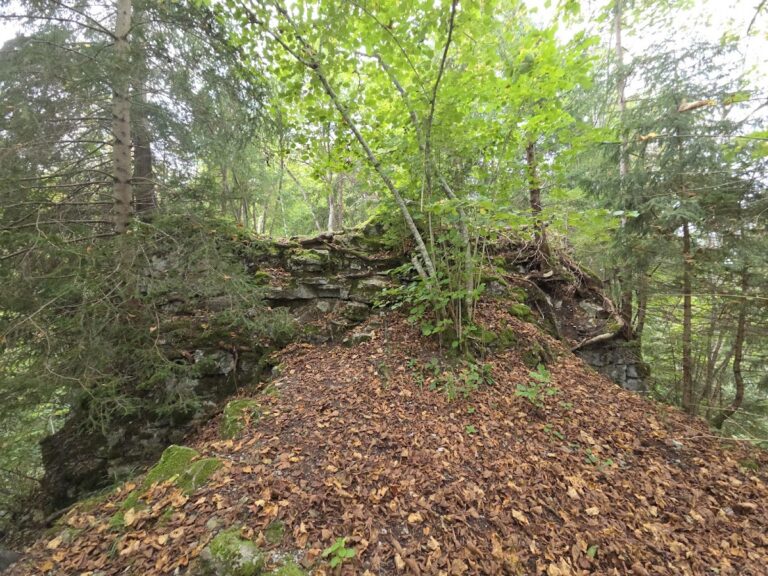
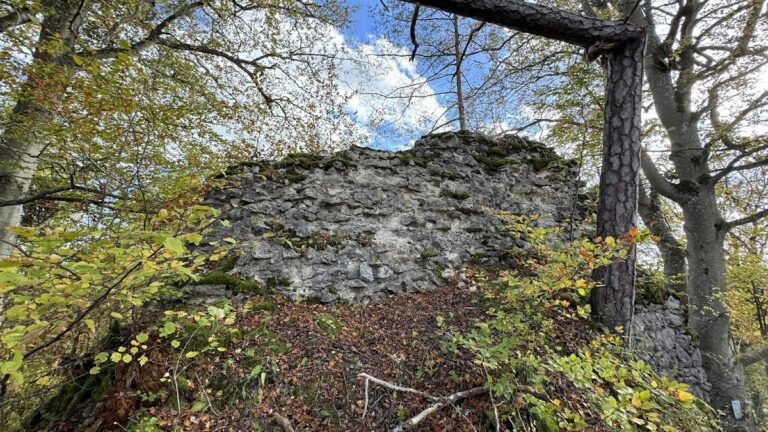
The ruins occupy Hohenkarpfen at approximately 912 metres above sea level. The former castle complex consisted of two principal sections, a triangular outer bailey and a main castle containing a square residential tower. The surviving structural fabric is fragmentary and slight. Hohenkarpfen has the form of an isolated hill resembling the volcanic cones of the nearby Hegau, although the mountain itself is composed of White Jurassic limestone.
Nearby sites