Pisan Fortress of Marciana: A Medieval Fortification on Elba


Site at a Glance
- Rating
- 4.2
- Popularity
- Low
- Country
- Italy
- Primary era
- Medieval
- External website
- Open
- Eras represented
- Medieval
- Civilizations
- Republic of Pisa
- Site type
- Military
- Remains
- Fort
On this page10 sections
History
The Pisan Fortress of Marciana is a medieval fortification in Italy, built by the Republic of Pisa in the twelfth century to defend Marciana and its territory on Elba Island. The Republic of Pisa was a powerful medieval Italian maritime state whose political and commercial influence extended across parts of the western Mediterranean. The fortress protected the settlement and offered local inhabitants refuge during enemy attacks, particularly the frequent Saracen pirate raids of the period. Saracen was a medieval European term for Muslim peoples, especially those associated with maritime attacks in the Mediterranean.
Pisan and Appiano rule
As Pisan power declined, control of the fortress changed. The Appiano family, ruling house of the Principality of Piombino, probably reinforced it between 1450 and 1457. The principality was a late medieval and early modern state on the Tuscan coast and nearby islands. With its defensible position and the security it offered, Marciana became a base from which the Appianos represented their interests on the western side of Elba.
Sixteenth-century strengthening and later use
In 1560, the community of Marciana undertook further restoration and strengthening. Contemporary records state that women were required to transport water, stone, and other materials for the works. The fortress’s strategic and defensive role ended during the sixteenth century. In later centuries, the complex was used as shelter for goats.
The inner courtyard was restored in 1991. A fortress museum opened in July 2013 in the two front bastions at the entrance to the courtyard. The Pisan Fortress of Marciana is owned by the Municipality of Marciana.
Remains
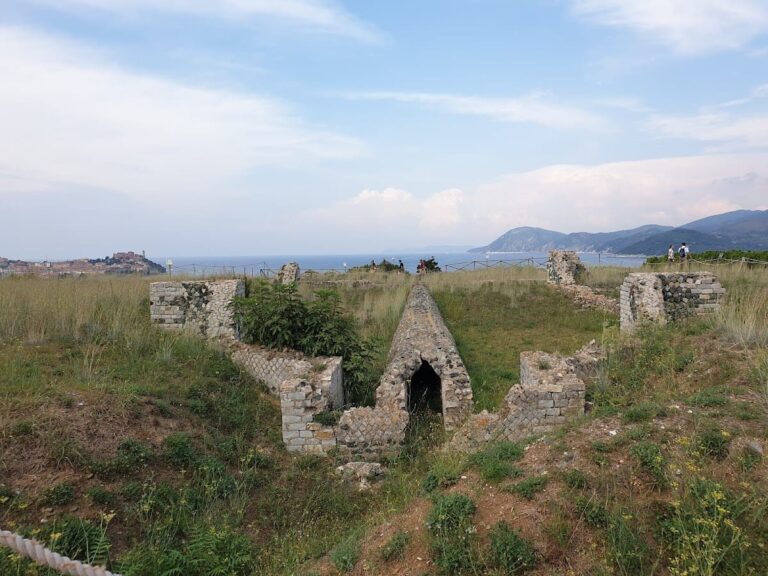
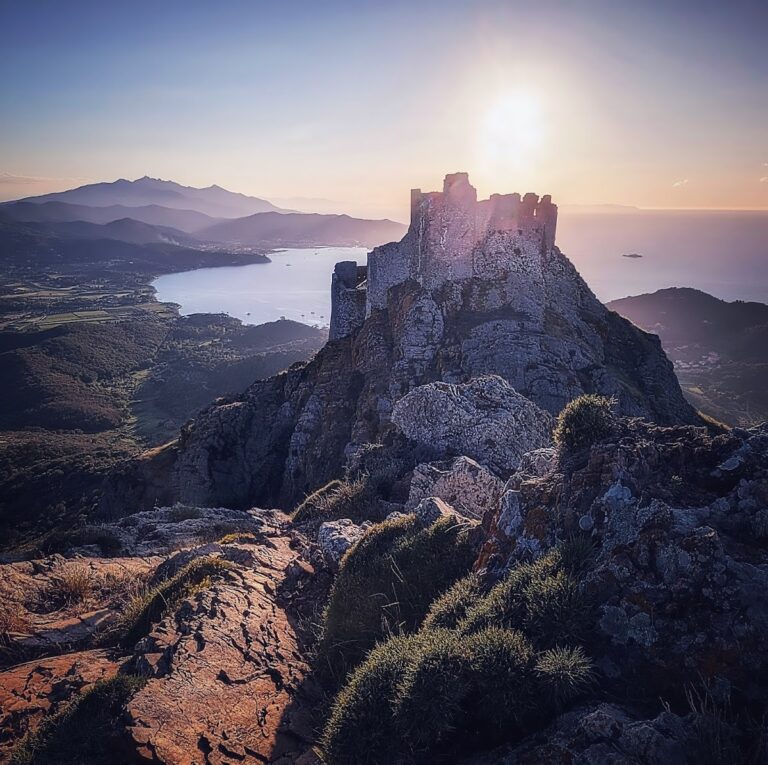
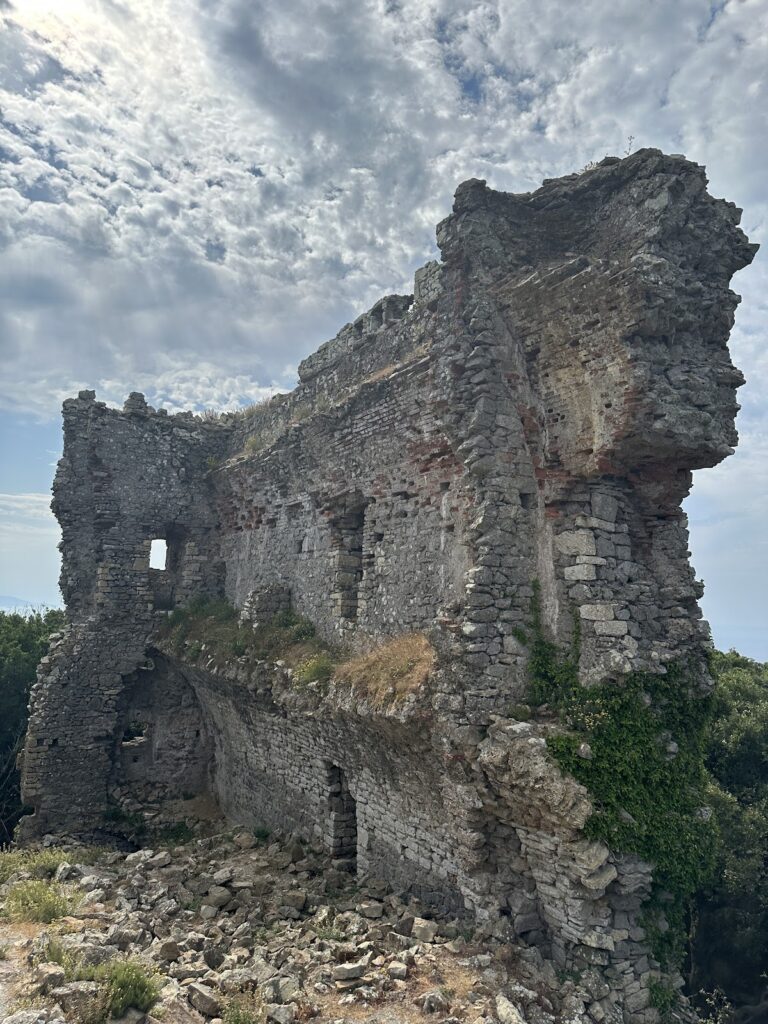
Standing at an elevation of 415 metres, the fortress has a quadrangular plan with four bastions placed at its sides. Its defensive arrangement centres on a large inner courtyard, while the surviving wall walk preserves the relationship between the bastions and the enclosed space. From the walls, the surrounding territory extends from the Gulf of Marciana Marina towards the Monte Capanne massif behind the fortress.
Fortifications and water supply
Bastions and courtyard
The inner courtyard measures approximately 16 by 16 metres. Its restored surface is used in summer for performances, cultural meetings, and other events. The southern bastion originally housed the powder magazine, a fortified store for gunpowder and ammunition. The two bastions facing the courtyard entrance now contain the fortress museum.
Water source
On the northern side of the courtyard, a water source was fed by an underground conduit from the nearby Fosso della Giunca, a local watercourse. The system supplied water continuously during a siege, supporting the fortress’s defensive function.
Archaeological and museum features
Courtyard vessel
A large dolium, an ancient ceramic storage vessel generally used for grain, wine, or oil, stands in the inner courtyard. It was found during excavations at the fortified Etruscan village of Monte Castello.
Museum collections
The left bastion presents reproductions of medieval and Renaissance bladed weapons, together with material on falconry, the trained use of birds of prey for hunting. The right bastion contains archaeological finds recovered inside the fortress, including fragments of majolica vessels from Lucca, Montelupo, and Savona dating from the fourteenth to the nineteenth century. Majolica is tin-glazed earthenware with an opaque decorated surface. The displays also provide historical information about Marciana and the fortress, ending with a panel on the maritime activities and naval fleet of the Republic of Pisa.
Nearby sites