Fort van Walem: A Belgian Fortress in Antwerp’s Defensive Line


Site at a Glance
- Rating
- 4.2
- Popularity
- Low
- Country
- Belgium
- Primary era
- Modern
- External website
- Open
- Eras represented
- Modern
- Civilizations
- Belgian
- Site type
- Military
- Remains
- Fort
On this page7 sections
History
Fort van Walem is a nineteenth-century Belgian fort at Walem, within Mechelen, Belgium, built between 1878 and 1893 as part of the Antwerp defensive line. The system of forts and military works was intended to protect Antwerp, its port, and the approaches to the city. Fort van Walem formed part of the older fort belt while belonging to a newer defensive response to the growing power of artillery.
The Antwerp defensive system
Antwerp’s first fort belt and surrounding enceinte, or fortified enclosure, were constructed between 1859 and 1865. The first forts stood about 3.5 kilometres from the city’s fortifications, protecting the port from bombardment and occupation. Further forts were added between 1870 and 1880.
Advances in artillery soon made the earlier works less secure. Fort van Walem was constructed within a newer defensive system that also included Fort Lier, Fort Schoten, and Fort Steendorp. From 1885, new projectile types made the vaults of existing brick forts vulnerable. They were reinforced mainly with concrete protective layers and some armoured elements, with most of these adaptations completed around 1906. Later fortifications were built entirely of concrete.
The First World War
When the First World War began, 35 forts had been built around Antwerp, although some remained unfinished and their armament was inadequate. Fort van Walem was commanded by the Belgian officer Captain De Witte. The rank of captain is a commissioned military position, and De Witte directed the fort during the opening of the conflict.
Fort van Walem was not shelled by Krupp’s 420 mm gun popularly called “Big Bertha.” From 28 September 1914, it was instead subjected to artillery of several calibres, including heavy 305 mm shells. The Belgian military ordered the evacuation of Walem’s population on the same day.
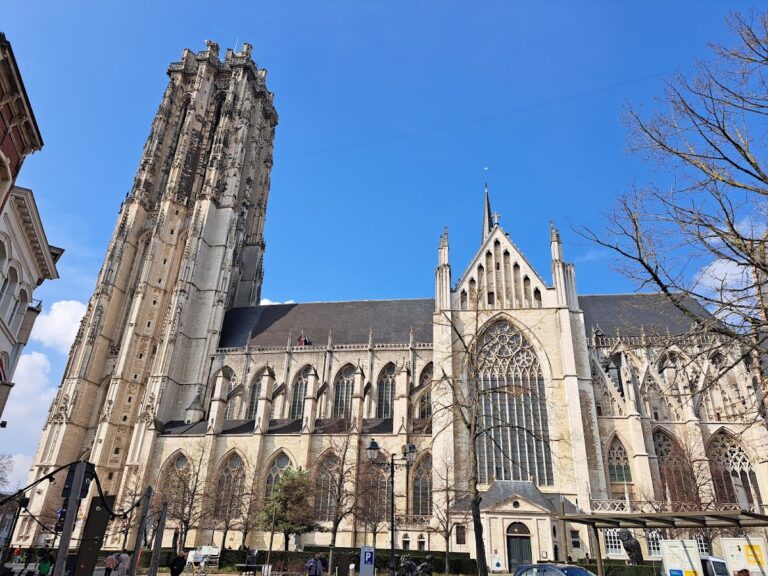
Two heavy coastal batteries, first positioned at Hofstade and Elewijt, fired the 305 mm shells. After 1 October, the guns were moved to Zemst-Laar and Hombeek-Heyhof to attack Fort Breendonk, which obstructed the German advance between Mechelen and Walem. German marines helped with the aiming from St. Rumbold’s Tower in Mechelen.
On 29 September, the German Twelfth Reserve Infantry Regiment came to within 1,200 metres of the fort. One gun turret was disabled on the first day, and 230 shells struck the fort over two days. A shell hit the ammunition magazine on 29 September. The defence was abandoned on 2 October, after Belgian losses of 40 dead and 60 wounded.
Twentieth-century reuse and protection
Road works connected with the 1930 World Exhibition straightened the road beside the fort. Part of the moat was filled and the island was reduced in size. The disused section of road was presumably given the name “Old Road.”
From 1960 to 1992, the fort served as a coordination centre and headquarters for Belgian Civil Protection, the state emergency service responsible for major disasters and emergencies. It was later used briefly as an emergency reception centre for asylum seekers before standing vacant.
Fort van Walem became a protected monument on 13 February 1998. In 2006, Mechelen decided to purchase it from the Belgian federal government with the intention of transferring it to Natuurpunt, a Flemish nature-conservation association. Natuurpunt acquired the island and fort in 2009.
The fort is part of the historic forts around Antwerp protected within the European Natura 2000 network under the Habitats Directive. This European Union system safeguards areas important for nature, with sites under the directive generally designated as Special Areas of Conservation. Fort van Walem also received official architectural-heritage status on 29 March 2019. For the centenary commemorations of the First World War, Walem’s local historical society established a permanent exhibition in the fort.
Remains
Island fortification
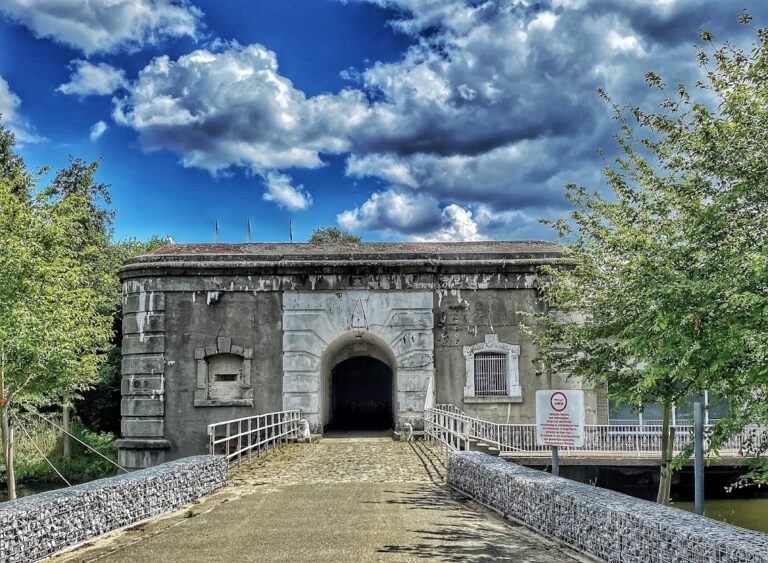
Fort van Walem is a military fortification made of concrete, earth, and steel. It occupies an island surrounded by a moat, giving the surviving complex its characteristic water-bound setting. Road alterations around 1930 changed this arrangement by filling part of the moat and reducing the size of the island.
Bat habitat
The fort provides shelter for four recorded bat species: Daubenton’s bat, whiskered bat, Brandt’s bat, and Natterer’s bat. Their presence forms part of the site’s protected natural value within the Natura 2000 network.
Nearby sites