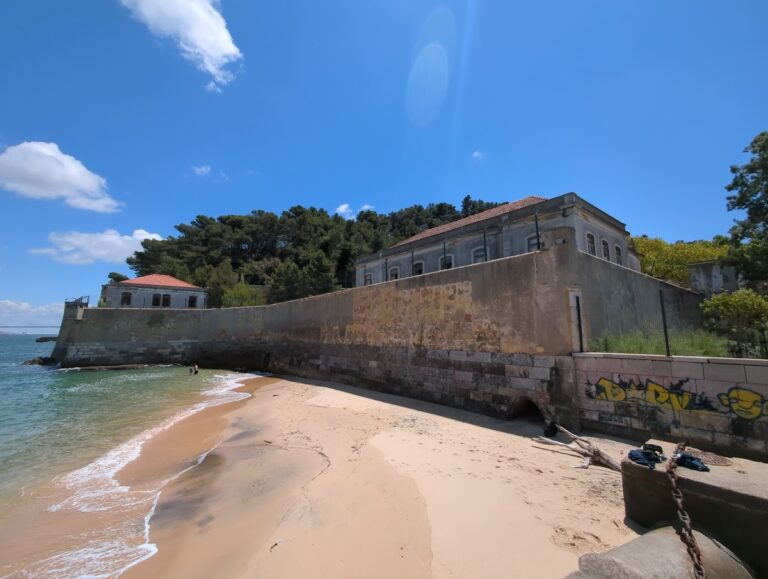
Fort of São João das Maias: A Coastal Bastion Fort in Portugal


Site at a Glance
- Rating
- 4.4
- Popularity
- Low
- Country
- Portugal
- Primary era
- Early Modern
- External website
- Open
- Eras represented
- Early Modern
- Civilizations
- Portuguese
- Site type
- Military
- Remains
- Fort
On this page11 sections
History
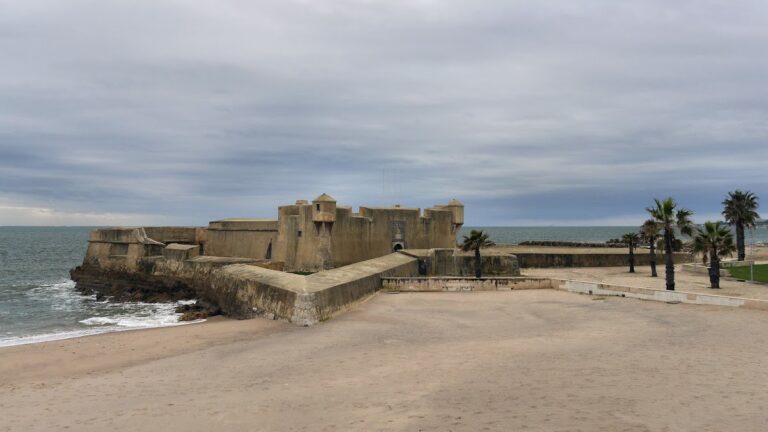
The Fort of São João das Maias, also known as the Fort of Oeiras, is a Portuguese bastion fort in Oeiras, Portugal, constructed in the Mannerist style between 1644 and 1653 during the reign of King John IV. Its building formed part of Portugal’s preparations during the Restoration War, the conflict in which Portugal regained and defended its independence from the Spanish monarchy after 1640. The fort belonged to a coastal defensive system protecting the approaches to Lisbon.
Construction and the Restoration War
Construction took place under the supervision of António Luís de Meneses, 1st Marquis of Marialva, a Portuguese nobleman and military commander. Although the works continued until 1653, the fort was already garrisoned in 1644 by 20 soldiers, 10 gunners, and a chief of artillery. It then possessed five cannons. The Restoration War ended with the Treaty of Lisbon in 1668, when Spain recognized Portuguese sovereignty.
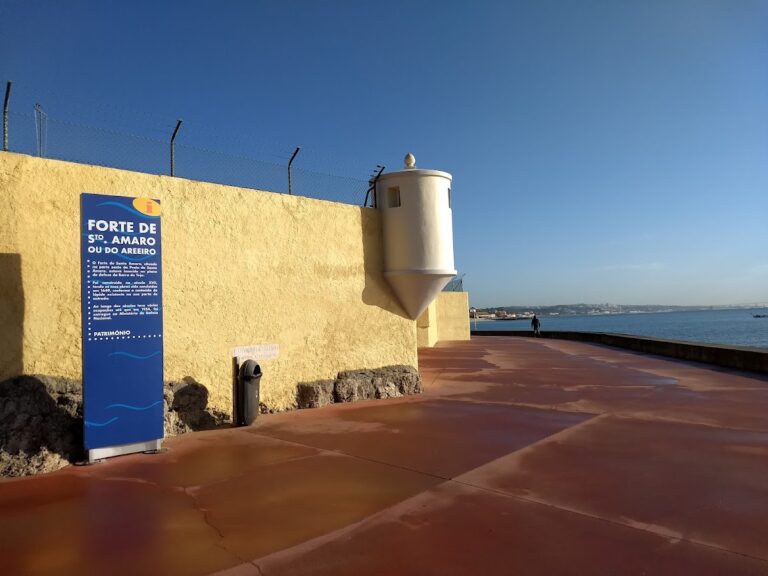
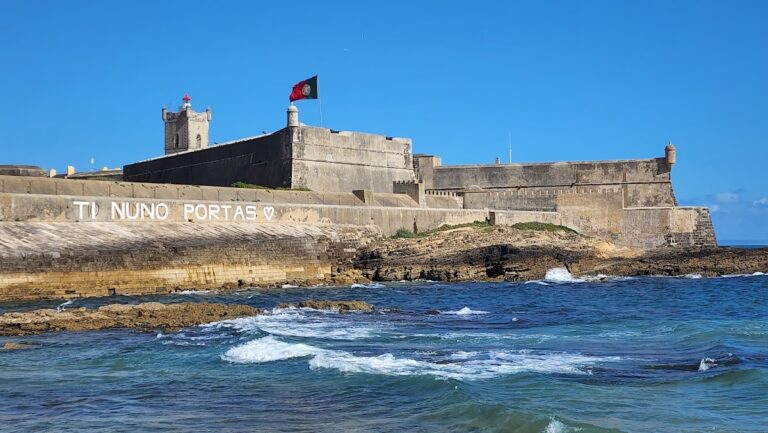
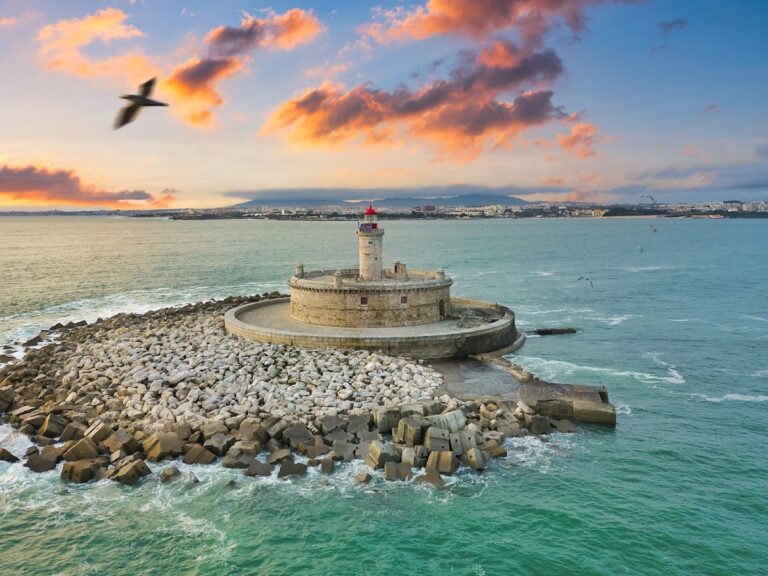
The fort supported São Julião da Barra to the southwest and formed part of a crossfire arrangement with São Lourenço do Bugio in the Tagus estuary and Santo Amaro do Areeiro, situated between it and São Julião da Barra. These fortifications belonged to a defensive line extending from Cabo da Roca on the Atlantic coast to Belém Tower near Lisbon.
Eighteenth-century changes
In 1735 the fort was considered to be in good repair, although its artillery had been reduced to two 24-gauge cannons and 12 additional pieces of various calibres that were out of service. Repairs in the middle of the eighteenth century included work on the chapel. The earthquake of November 1, 1755, severely damaged both the fort and the chapel. Further construction followed, including the New Battery, built about a decade later as part of an enlargement of the fort.
Nineteenth-century military roles
After the War of the Oranges in 1801, the fort mounted 24 artillery pieces in 1802. Eight stood on the original battery, 12 on the New Battery, and four on the terrace above the strong house, a fortified building within the defensive complex.
During the Peninsular War, the 1808 to 1814 conflict between French forces and their opponents in the Iberian Peninsula, the fort became Military Work No. 110 in the third defensive line of the Lines of Torres Vedras. These lines were a system of defensive works north of Lisbon intended to block the French advance and protect Lisbon and possible evacuation routes. The third line was meant to protect the possible evacuation of Portuguese and British troops under Arthur Wellesley, 1st Duke of Wellington, from São Julião da Barra. That evacuation was not required because the northernmost line resisted the French advance.
During the Portuguese Civil War of 1828 to 1834, the fort possessed 14 artillery pieces of various calibres. It was rebuilt in 1853 and restored again in 1868, but it was never again used as a fort. Like other coastal fortifications, it subsequently fell into disrepair.
Later uses and restoration
In 1940, part of the fort’s land was transferred for construction of the Marginal, the coastal road connecting Lisbon and Cascais. The fort was later used for holiday camps for military families, including camps operated by the Portuguese Legion, a paramilitary organization associated with the Estado Novo authoritarian regime that governed Portugal from 1933 to 1974.
After the Carnation Revolution of 1974, the military-led revolution that ended the Estado Novo and began Portugal’s transition to democracy, the fort was returned to the armed forces. It continued to function as a holiday camp until 1996 and is now used as a retirement home. Following advanced deterioration, the fort was restored in 2010.
Remains
Fortification layout and artillery positions
The Fort of São João das Maias occupies the right bank of the Tagus estuary in the municipality of Oeiras. Its strategic position overlooks the channel used by shipping to avoid shallow bars near the banks. The fort has an irregular pentagonal plan and was built as a bastion fort, a defensive structure with projecting angular bastions that allowed flanking fire along its walls. Its surviving arrangement includes the original battery, the later New Battery, and a terrace above the strong house.
Original Battery
The original battery was the fort’s first documented artillery position. In 1802 it held eight of the fort’s 24 artillery pieces, reflecting its continuing place within the wider system that supported São Julião da Barra and exchanged fire with São Lourenço do Bugio and Santo Amaro do Areeiro.
New Battery
The New Battery was added during the enlargement that followed the damage caused by the earthquake of 1755. It held 12 artillery pieces in 1802, making it the largest of the fort’s three recorded gun positions at that time.
Strong House Terrace
A terrace above the strong house formed the third recorded artillery position. Four guns were placed there in 1802, completing the distribution of the fort’s 24 artillery pieces among the original battery, the New Battery, and the upper terrace.
Chapel
The fort includes a small chapel that was repaired in the middle of the eighteenth century. Tiles were added as part of those repairs, and many survived the severe damage caused by the earthquake of November 1, 1755. The chapel therefore preserves both a religious feature of the defensive complex and material evidence of its eighteenth-century alteration.
Nearby sites