Grand-Geroldseck Castle: A Medieval Fortified Castle in France


Site at a Glance
- Rating
- 4.6
- Popularity
- Low
- Country
- France
- Primary era
- Medieval
- External website
- Open
- Eras represented
- Medieval
- Civilizations
- Holy Roman Empire
- Site type
- Military
- Remains
- Castle
On this page10 sections
History
Grand-Geroldseck Castle, also known as Château du Grand-Geroldseck, is a ruined medieval fortified castle in Haegen, France. Founded at the beginning of the twelfth century by the lords of Geroldseck, it is regarded as one of the oldest castles in the northern Vosges.
Foundation and Early Purpose
The lords of Geroldseck served as avoués, lay protectors and legal representatives responsible for defending the interests and territories of an ecclesiastical institution. In this role, they founded the castle to protect the lands of Marmoutier Abbey, a Benedictine abbey in Alsace.
Built on a platform, the castle served as a residence for its lords while also providing a fortified position. Its design therefore combined domestic and defensive purposes from its early medieval foundation.
Medieval Alterations and Later Status
The castle underwent substantial changes during the thirteenth, fourteenth, and fifteenth centuries. These successive alterations shaped the surviving complex beyond its original twelfth-century form.
Grand-Geroldseck Castle has been protected as a historic monument in France since December 1898. This designation formally recognizes a site or structure for its heritage value. Its present condition is recorded as ruins.
Remains
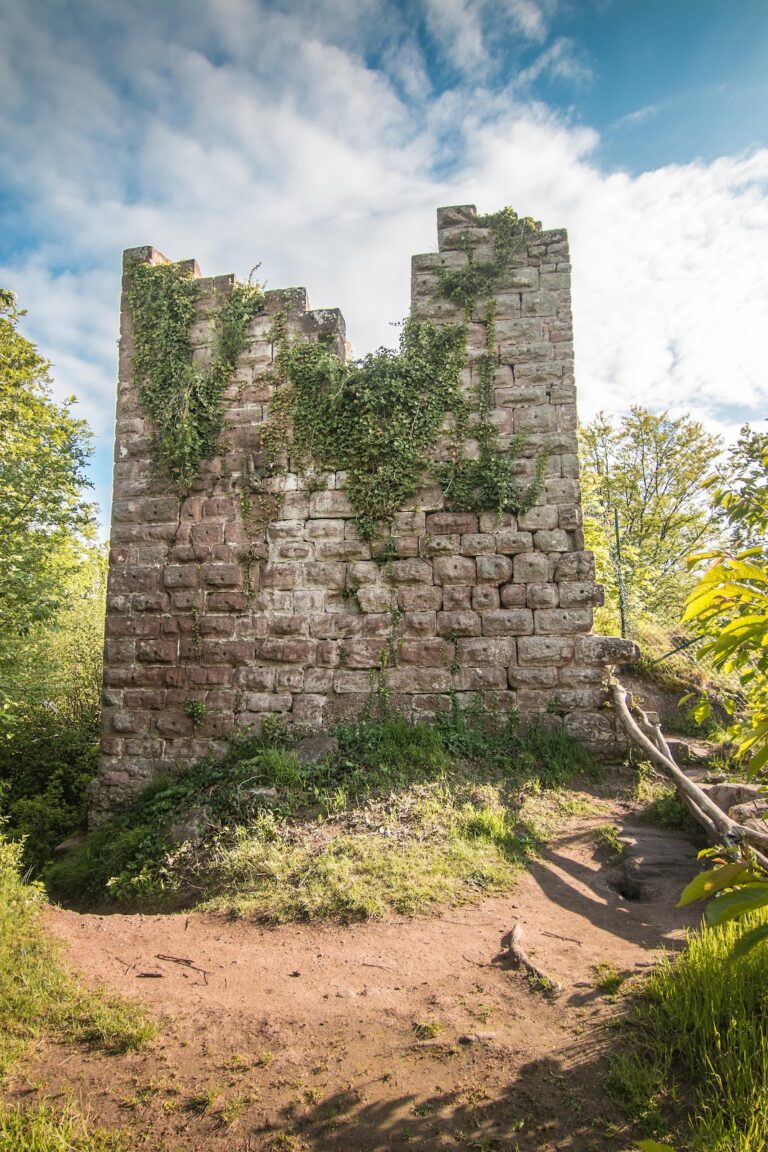
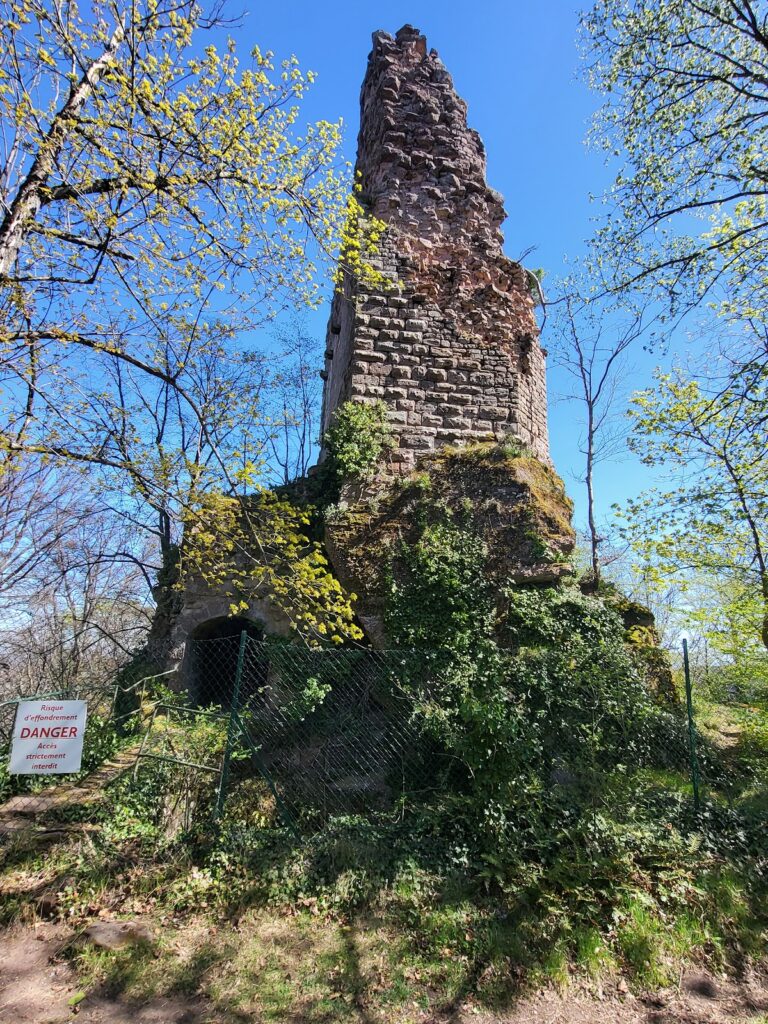
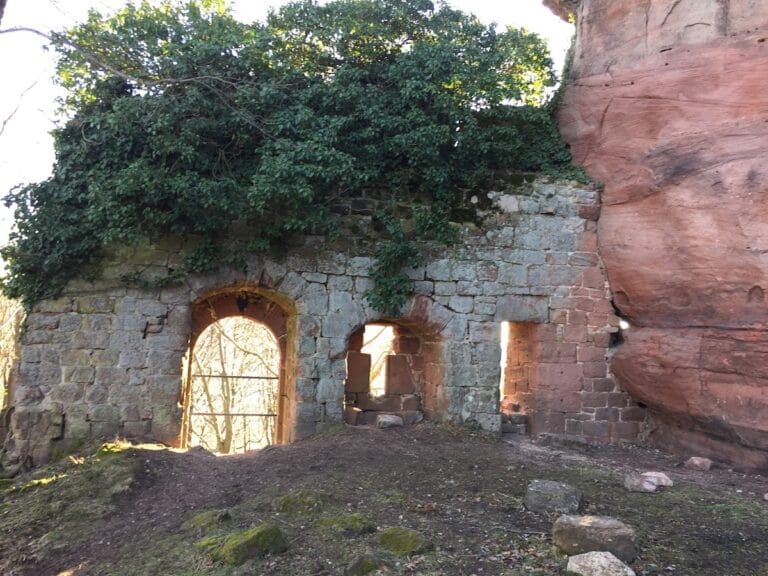
The surviving castle occupies a platform enclosed by fortifications. Its principal elements include an isolated square keep, the remains of the main lordly residence, and a barbican, a fortified outer work usually placed before an entrance.
Keep and Enclosure
Square Keep
The isolated square keep is faced with rusticated stone, whose roughly projecting surfaces give the masonry a pronounced texture. The tower dates to around 1200, while the oldest parts of the wider castle belong to the twelfth century. Its walls are approximately three metres thick.
Enclosing Fortifications
The keep stands within the castle enclosure on the platform. The surviving arrangement preserves the relationship between the central tower and the surrounding defensive boundary.
Residential and Entrance Remains
Seigneurial Residence
The cellars of the main lordly residence remain visible. They preserve part of the residential complex that accompanied the castle’s defensive structures.
Barbican
The barbican also survives among the visible remains. As an outer defensive work, it formed part of the castle’s approach and entrance defenses.
Nearby sites