Fort VII: A Fortification of the Poznań Fortress


Site at a Glance
- Rating
- 4.7
- Popularity
- Medium
- Country
- Poland
- Primary era
- Modern
- External website
- Open
- Eras represented
- Modern
- Civilizations
- German
- Site type
- Military
- Remains
- Fort
On this page7 sections
History
Fort VII is a fortification in Poland, in the city of Poznań, built between 1876 and 1880 as one of the 18 forts forming the Poznań Fortress, a nineteenth- and early-twentieth-century defensive system surrounding and protecting the city. It belonged to the first stage of that system and was constructed to designs by Hans Alexis von Biehler.
Names and the Greater Poland Uprising
The fort was originally called Fort Colomb in honor of Friedrich von Colomb, a Prussian military officer. Until 1902, however, the name Colomb referred to Bastion IV Colomb. In 1931, Fort VII was renamed for Major Florian Dąbrowski, a Polish military officer.
During the Greater Poland Uprising, a Polish struggle for control of the region after the First World War, German forces defending Ławica threatened on 4 January 1919 to destroy the fort and this part of Poznań if they came under attack. Several hundred tonnes of aircraft bombs were stored inside. When the Battle of Ławica began on 6 January, a detachment of the Polish Military Organisation, a clandestine Polish military organization active in the struggle for independence, was assigned to occupy the fort. The electricity cable between Poznań and Ławica was cut, and telephone communications were blocked to prevent the explosive charges from being detonated.
Interwar and wartime use
After the First World War, Fort VII became an ammunition depot, including a depot for the 3rd Aviation Regiment. In 1939, during the Second World War, the German concentration camp known as KL Posen began operating in the fort. Toward the end of the war, the site was also used to manufacture radio sets by Telefunken Gesellschaft für drahtlose Telegraphie, a German telecommunications company associated with radio technology.
Postwar preservation
After the Second World War, the Polish People’s Army used Fort VII for storage. Efforts to open the fort to visitors began in the 1960s, and since 1979 its left-hand section has housed the Museum of Wielkopolska Martyrdom, also known as Fort VII. In 2000, Poznań City Council transferred Fort VIII to the Military Property Agency in exchange for receiving Fort VII. The fort is now owned by the City of Poznań, and its grounds form part of the Natura 2000 protected area “Fortifications in Poznań” (PLH300005).
Remains
Layout and setting
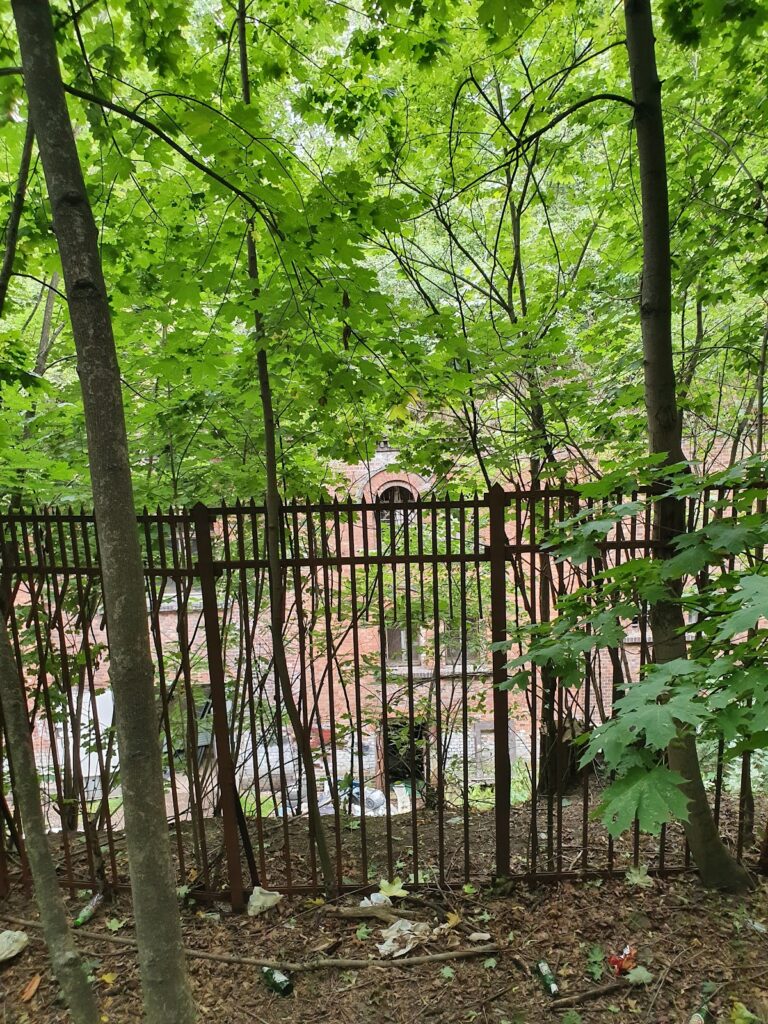
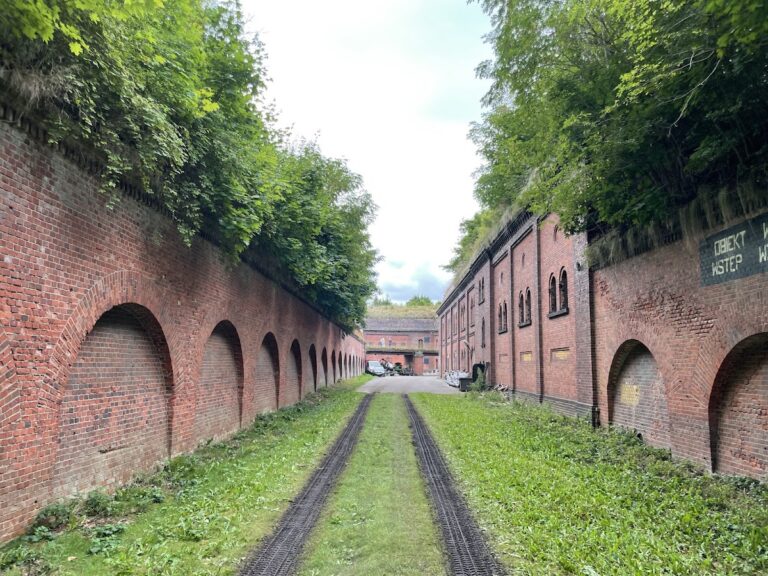
Fort VII stands on Polska Street in Poznań, within the Wola municipal estate and the Ogrody area of the city’s municipal information system. Its access route was a military communication road that is now called Polska Avenue. A cemetery lies west of the fort, while the Poznań–Szczecin railway line runs to the north. Detached-house neighborhoods, including the Wielkopolska Aviators estate, are located nearby.
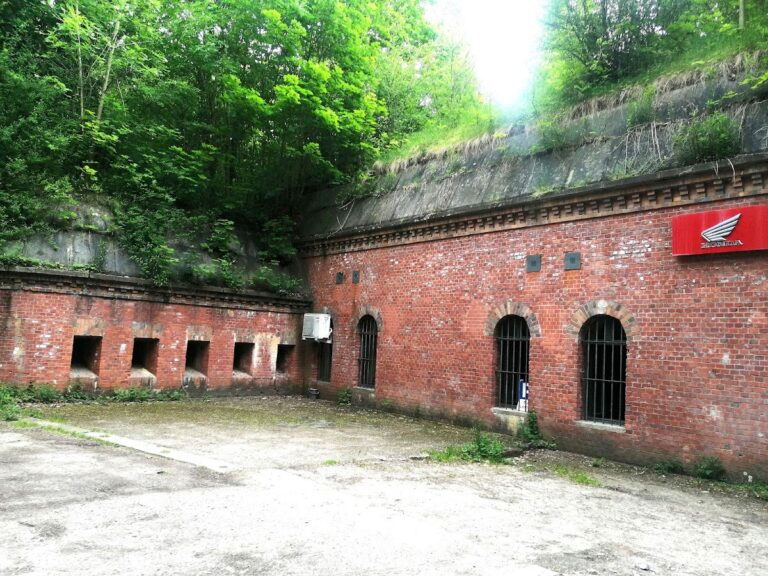
The fort’s two front sections meet at an angle of 140 degrees. Its design includes no infantry rampart, a feature also noted at Fort IX, and incorporates gorge barracks at the rear, or gorge, of the fort. These barracks formed part of the fortification’s internal arrangement.
Modernized defensive features
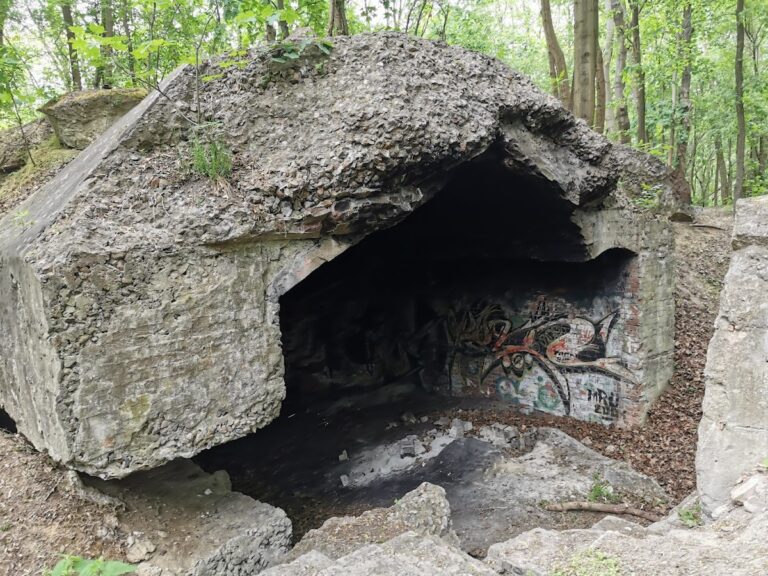
Modernization in 1887 and 1888 added six-position batteries attached at the shoulders, the areas where the front and side sections of a fort meet. In 1913 and 1914, two shelters were built in the counterscarp, the outer slope or defensive wall on the far side of the ditch from the fort’s main rampart. During the same phase, part of the fort’s windows was bricked up.
In 1939, two further shelters and two observation cupolas were installed. The cupolas were protected raised structures used for surveillance. These additions form part of the surviving physical record of the fort’s changing defensive requirements before and during the Second World War.