Het Steen: Antwerp’s Medieval Gatehouse Castle


Site at a Glance
- Rating
- 4.3
- Popularity
- Medium
- Country
- Belgium
- Primary era
- Medieval
- External website
- Open
- Eras represented
- Medieval, Early Modern, Modern
- Civilizations
- Belgian, Duchy of Brabant, Habsburg, Holy Roman Empire
- Site type
- Military
- Remains
- Castle
On this page10 sections
History
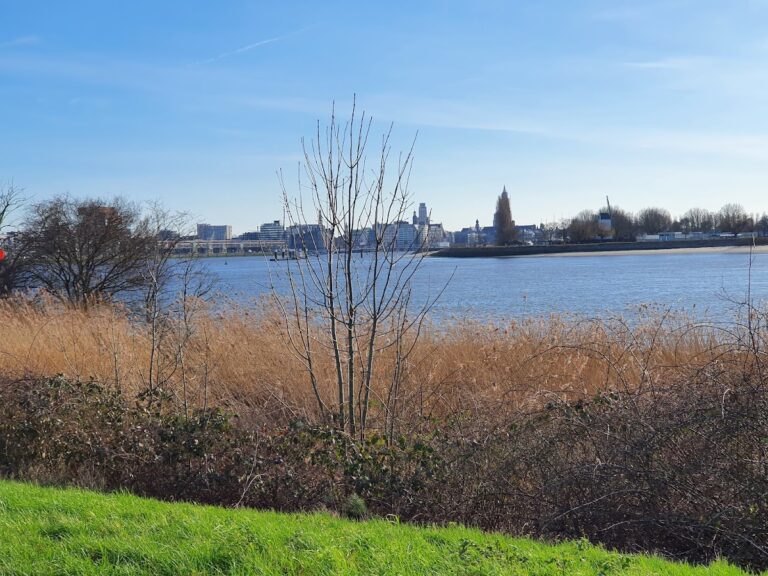
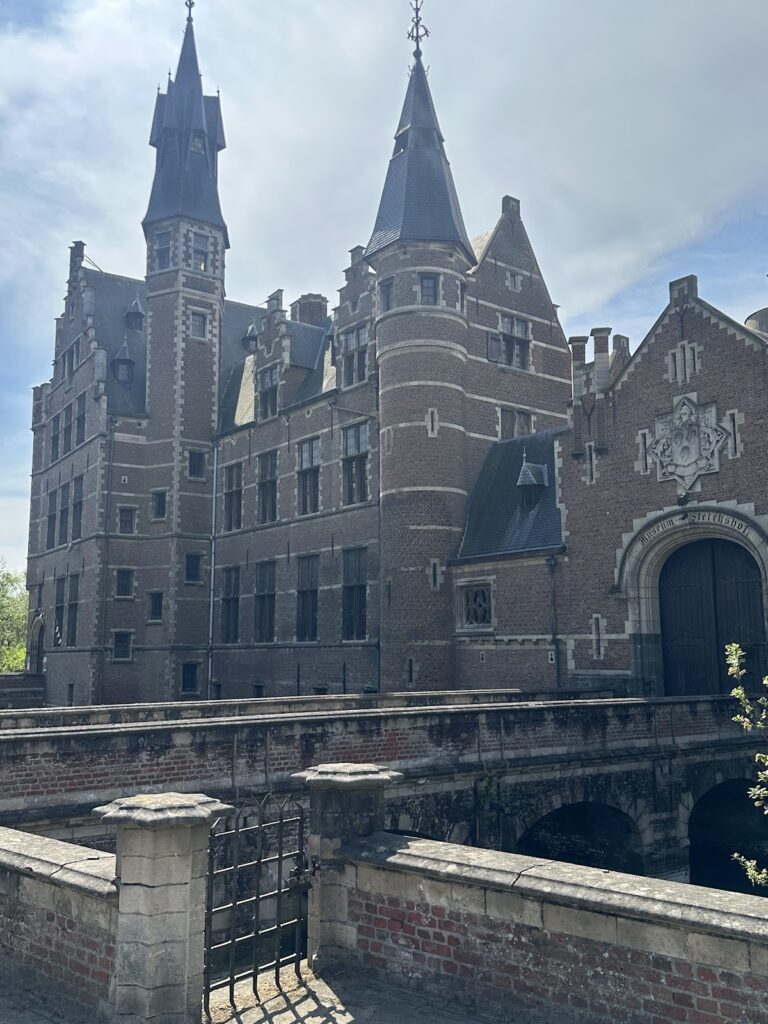
Het Steen is a medieval castle gatehouse in Antwerp, Belgium, built by the Dukes of Brabant between 1200 and 1225 as part of a fortified enclosure on the right bank of the Scheldt. A castle already stood here during the Carolingian period in the ninth century, and the first surviving written reference to Antwerp’s castle dates from the twelfth century. The surviving gatehouse is regarded as Antwerp’s oldest building.
From frontier castle to Brabant stronghold
The site developed within a contested frontier landscape. Norman attacks affected Flanders in 879, and around 974 the Ottonian rulers established the Margraviate of Antwerp, a border territory governed by a margrave within the Holy Roman Empire. The opposite bank of the Scheldt belonged to the County of Flanders, which held its lands from the French king. Godfrey the Captive became the first margrave, while Godfrey of Bouillon held the margraviate from 1076 to 1100. In 1106 Godfrey I of Leuven received the Duchy of Lower Lorraine, and his descendant Henry I became Duke of Brabant in 1183.
By around 1200, the castle formed part of Antwerp’s defenses and controlled access to the city from the Western Scheldt. The gatehouse served as the entrance to the larger castle of the Dukes of Brabant. During the reign of Emperor Charles V, around 1520, the castle and gatehouse underwent extensive renovation. The works adapted the complex for artillery and gave it a more comfortable, palace-like character. It was subsequently known as ’s-Heeren Steen. Charles V transferred the castle to Antwerp in 1549, and the city retained ownership until 1828.
Prison and changing civic uses
From 1303 to 1823, Het Steen functioned as a prison. Executions took place there, including the secret drowning of people who supported the Reformation between 1557 and 1565. A crucifix above the entrance marks the place where condemned prisoners said their final prayer before execution.
After its prison use ended, the building became a home for disabled soldiers in 1823. Authorities claimed it in 1827, and it was sold to a sawyer the following year. Antwerp bought it back in 1842. The building subsequently accommodated a residence, a sawmill, and a fish store.
Museum, demolition, and restoration
In 1862, Pieter Génard proposed creating an antiquities museum in each Belgian province and identified Het Steen as a suitable Antwerp location. The city supported the idea, and architect Kennes began restoration. The museum opened on 14 August 1864. Most of the surrounding castle was demolished in the 1880s as the Scheldt quays were straightened and the river widened. The original gatehouse and a small group of adjoining buildings survived, after which the retained complex came to be called simply Het Steen. A new wing was added between 1887 and 1890, alongside further alterations to the older structures.
The antiquities museum was replaced by the National Maritime Museum in 1952. Alterations carried out from 1953 to 1958 included the demolition of part of the 1890 extension to make room for another wing. The museum’s interior section closed on 28 December 2008, and its collection began moving to the newly built Museum aan de Stroom in 2010.
In 2012, Het Steen became HETSTEEN der wijzen, an active question house for thinkers, dreamers, and doers. Its youth activities later moved to the Dry Docks site under the name Stormkop. A management plan for the new use was approved in 2017 by the Flemish Agency for Immovable Heritage, and a restoration agreement covering Antwerp’s town hall and Het Steen was signed on 1 December that year.
After restoration and conversion, Het Steen opened as Antwerp’s visitor reception centre on 22 October 2021. The building now accommodates the Antwerp Visitor Center, exhibitions, ticketing and booking services, a city shop, and a resting area overlooking the Scheldt. The restored complex also contains The Antwerp Story, a multimedia route through 11 rooms presenting the history and identity of Antwerp. In October 2022, Het Steen received the Onroerenderfgoedprijs.
Folklore and cultural memory
Antwerp folklore places the giants Druon Antigoon and Lange Wapper at Het Steen. A statue of Lange Wapper, designed by Albert Poels, has stood at the entrance since 1963. Richard Wagner’s opera Lohengrin, first performed in 1850, sets part of its action in and around the castle of Antwerp. In 1869, the arrangement of buildings at Bavaria’s Neuschwanstein Castle was designed partly from the stage directions for Lohengrin and modelled on Burg Steen.
Het Steen also appears in several Suske en Wiske stories, including De zwarte madam from 1947, De 7 schaken from 1995, De knikkende knoken, De stuivende stad, and Het gewiste Wiske. Bobbejaan Schoepen mentions the building in his 1949 song ’k Zie zo gere m’n duivenkot.
Remains
The surviving gatehouse and castle layout
Het Steen preserves the gatehouse, or gate wing, of the former castle and represents less than five percent of the original complex’s area. The stone building combines medieval and Renaissance phases, with the later castle substantially remodelled during the sixteenth century. The former enclosure included a main building, the Vierschaar court, Saint Walburga’s Castle Church, the Bezaanhuis, the Reuzenhuis, the refuge of Affligem Benedictine Abbey, the Werf, and a fish market immediately outside the castle. The Affligem refuge also served as the parsonage of the castle church.
Defenses and Renaissance additions
The original keep no longer forms part of the surviving complex. In the sixteenth-century castle, the main entrance had a projecting defensive gallery with machicolations, openings through which defenders could attack people below. A large crenellated round tower stood to the right of the entrance, while another round tower with a conical roof and machicolations stood to the left. Artillery bastions, projecting platforms designed to accommodate guns and provide flanking fire, were installed along the river side. The complex had stepped roof gables with a distinctly Hanseatic appearance.
An elegant chapel projects above the entrance. It belongs to the sixteenth-century remodelling and bears Emperor Charles V’s motto, Plus Outre. The chapel and the gatehouse preserve the relationship between the castle’s defensive entrance and its later residential and ceremonial character.
Modern additions and riverside setting
The modern restoration and redesign were undertaken by noAarchitecten. The scheme used the free-standing appearance of Het Steen in 1890 as its basis. A new tower and roof terrace replaced an extension added in the 1950s, a change that prompted public controversy. Restoration work in 2019 also incorporated nesting provisions beneath the roofs, and common swifts were already using several nest stones that year.
The restored building contains visitor facilities, exhibitions, The Antwerp Story multimedia route, a city shop, and a resting space overlooking the Scheldt. Beside Het Steen, a 350-metre pontoon for the Antwerp Cruise Terminal was built along the riverbank between 2018 and 2021. It accommodates sea and river cruise ships whose passengers are received at the building.
Figures and symbols at the entrance
A statue of Lange Wapper stands before the entrance and represents the legendary giant who, according to Antwerp folklore, wandered through the city at night and frightened its inhabitants. Above the large entrance arch, a wide-legged figure occupies a niche. Known as Semini, it represents a fertility deity and may preserve a pre-Christian, possibly Germanic fertility cult, although that interpretation remains probable rather than certain. The figure originally had a long phallus, removed by Jesuits in the seventeenth century. The mutilation later entered folk songs, while the name Semini survived in Antwerp expressions.
A modern statue called De Gulle Waard, meaning “the Generous Host,” stands in the inner courtyard.