Kasteel van IJse: A Historic Castle in Overijse, Belgium


Site at a Glance
- Rating
- 4.8
- Popularity
- Very Low
- Country
- Belgium
- Primary era
- Early Modern
- External website
- Open
- Eras represented
- Medieval, Early Modern
- Civilizations
- Duchy of Brabant, Holy Roman Empire
- Site type
- Domestic
- Remains
- Castle
On this page12 sections
History
Kasteel van IJse is a historic castle in Overijse, Belgium, built after the late fifteenth-century burning of the town and shaped largely by seventeenth-century expansion. Its history follows the rise and transfer of the IJse lordship, a territorial estate governed by a lord with jurisdiction and other seigneurial rights, before the property became a state-owned school complex.
The Isque and Van Wittem lords
An IJse lordship existed under the Isque family, whose lords held it as vassals of the Duke of Brabant, the ruler within whose political hierarchy the fief belonged. When the male line of the Isque family ended, the last heiress, Maria d’Oisy, sold the lordship in 1335 to Johan I van Wittem.
Hendrik III of Wittem, also known as Van Wittem van Beersel or Van Witthem van Beersel, built the castle after troops of Maximilian of Austria burned Overijse in 1489. Hendrik III was the son of Hendrik II of Wittem and Jacoba van Glymes. He married Elisabeth van der Spout, and their son Filips van Wittem van Beersel succeeded him.
Filips, who lived from 1471 to 1523, married Johanna van Halewijn. Their sons Hendrik IV of Wittem and Georges van Wittem received different lordships: Hendrik became lord of Beersel, while Georges became lord of IJse. Georges, who lived from 1500 to 1544, married Jeanne de Jauche de Mastaing. Their son Anton van Wittem, born in 1530 and deceased in 1590, later held IJse and married Jeanne de Noyelles.
The Horne and Salm families
Anton’s daughter Honorine van Wittem, who lived from 1580 to 1643, married Gerard van Horne. Through this marriage, the castle and lordship passed to the Van Horne family. The successive lords were Ambrosius van Horne, Eugenius Maximiliaan van Horne, Filips Emanuel van Horne, and Maximiliaan Emanuel van Horne.
During the seventeenth century, the Hornes enlarged the castle. Under Eugenius Maximiliaan van Horne, the lordship of IJse was raised to a principality in 1677, giving it the higher territorial rank associated with rule by a prince. The Van Horne princes, followed by the Salm princes, encouraged increasing French influence in Overijse, which lay near the language border. Their lavish lifestyles also contributed to recurring financial difficulties.
Maximiliaan Emanuel van Horne had no sons, so the male line ended. His eldest daughter, Maria Theresia van Horne, married Filips Jozef van Salm-Kyrburg, bringing the principality and castle into the Salm family. Frederik III of Salm-Kyrburg, who later held the Salm title, was beheaded by revolutionaries in Paris in 1794 because of his position as Prince of Overijse and his lavish lifestyle.
From principality to private estate
Overijse became part of the United Kingdom of the Netherlands in 1814, shortly before that state was formally established in 1815. The Salm heirs recovered their property but lost their former seigneurial rights, meaning that they retained ownership while no longer possessing the old governing authority. In 1817 they were compelled to sell the principality publicly. By then, it had effectively become an estate covering 740 hectares.
Maurice de Le Hoye bought the castle in 1824 and renovated it between 1824 and 1830. The property later passed by inheritance to Louis de Le Hoye, president of the court in Nivelles. The de Le Hoye family retained the castle until 1937. It then passed to a granddaughter who was married to Louis Braffort, a professor at the Catholic University of Louvain, lawyer, and head of the bar association. Braffort, who lived from 1886 to 1944, died for his country.
War, state ownership, and later changes
From 1939 onward, during the Second World War, Belgian, German, and English soldiers successively used the castle. The Belgian state bought it in 1948, restored it, and established a secondary school there. Part of the complex is now used by the final two years of the primary school Het Kasteeltje.
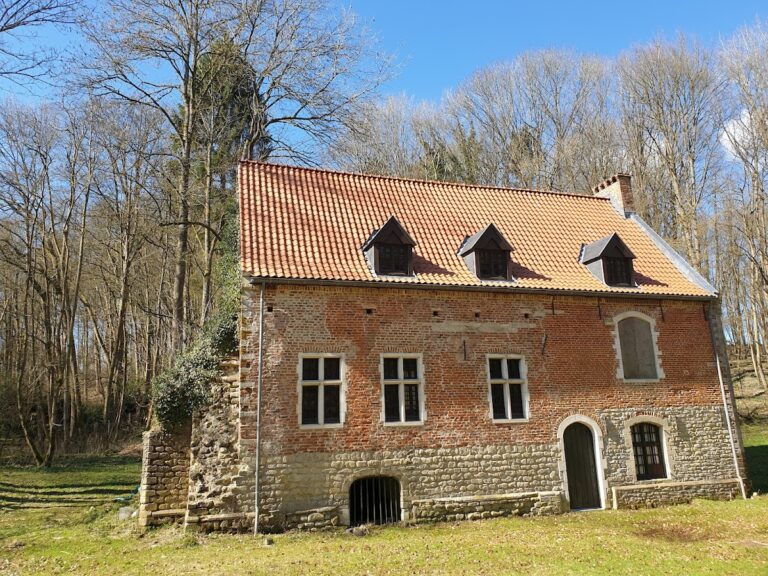
In the early 1950s, the castle grounds known as the warande, enclosed grounds or a park associated with a residence, were divided into building plots. A dilapidated fifteenth-century hunting pavilion belonging to the castle collapsed in 1967 after a jet aircraft broke the sound barrier. In 1977, the three-hundredth anniversary of the Principality of IJse was commemorated at the castle in the presence of a descendant of the Salm family, and a memorial plaque was unveiled. Nancy Smolders was the castle’s last resident, living there from 1997 until February 2019.
Remains
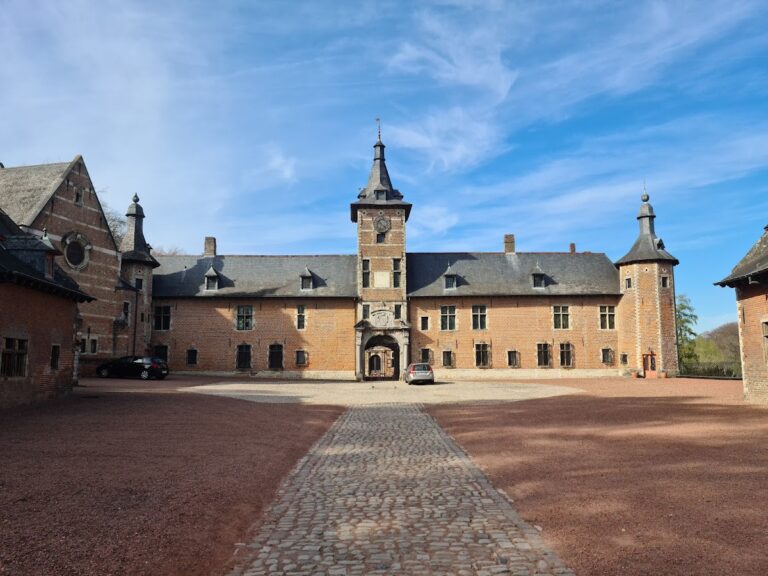
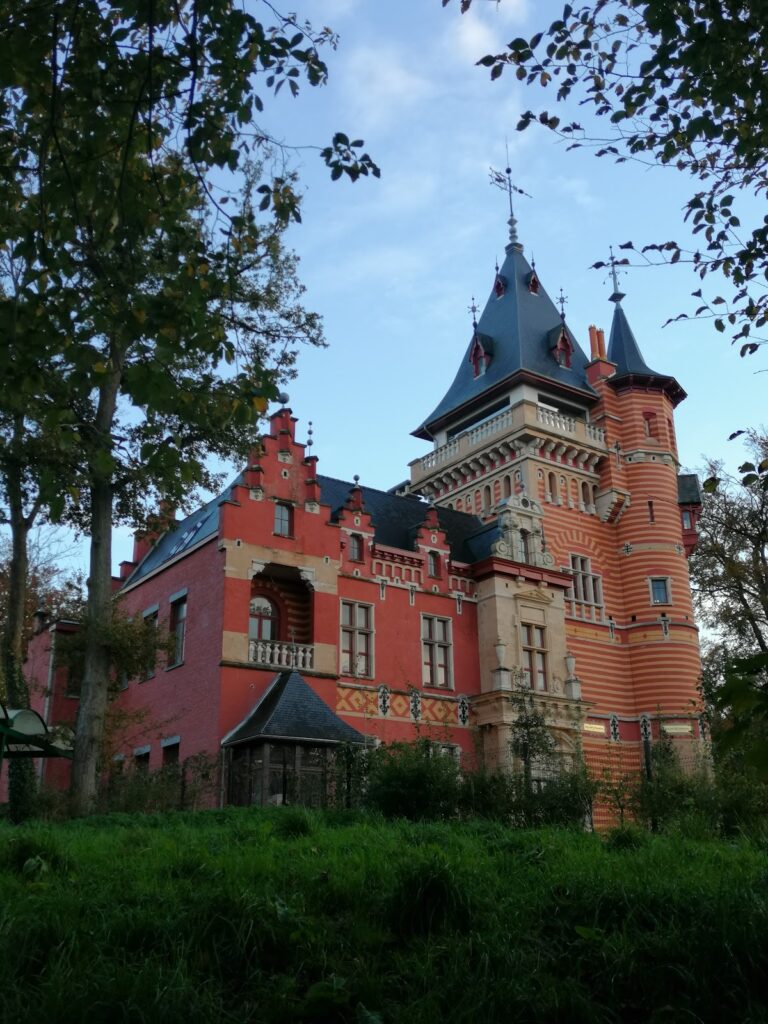
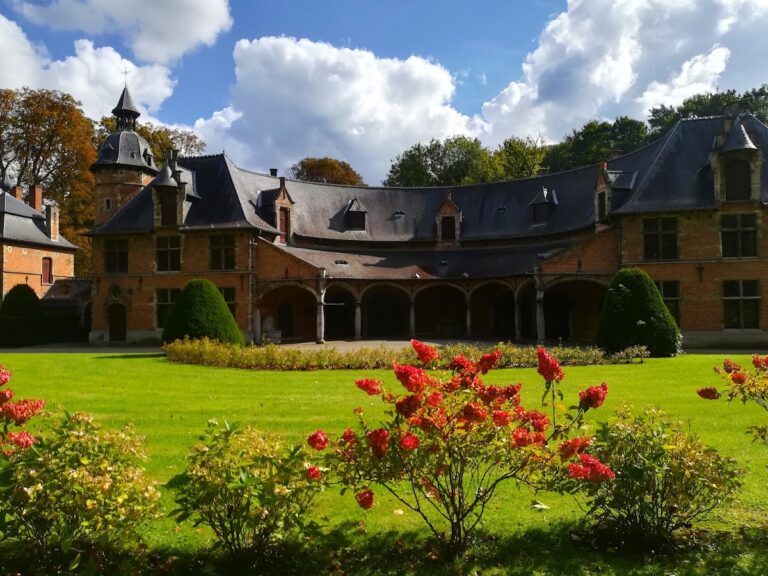
The surviving complex combines a mainly seventeenth-century castle with older sixteenth-century elements. Its long surviving wing is constructed of red brick decorated with white French stone, while the main facade incorporates an earlier octagonal turret. The stables and service buildings also belong to the sixteenth-century phase, and the thirteenth-century Kellebron stands against the enclosure wall.
Castle buildings
Main facade and octagonal turret
The main facade retains a sixteenth-century octagonal turret bearing the coat of arms of the Van Wittem family. This feature preserves a visible connection with the period when the Van Wittem family held the lordship and the castle formed part of their estate.
Long wing, entrance, and service buildings
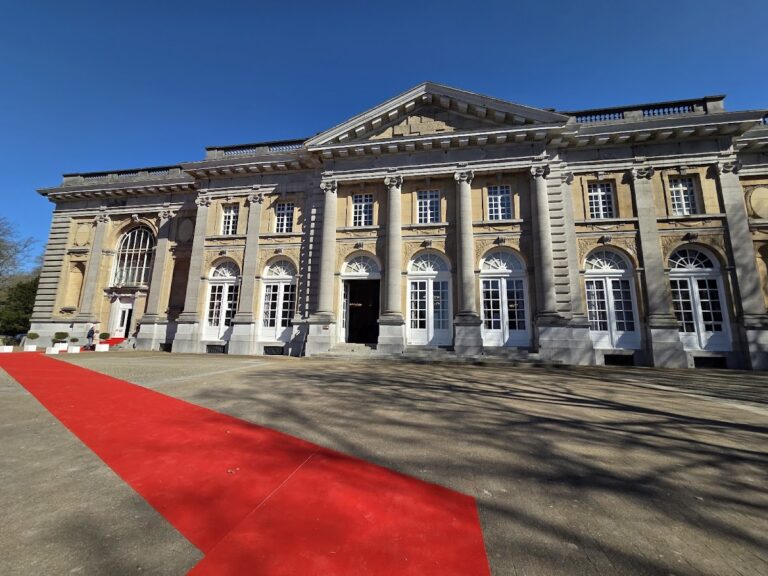
The surviving long wing uses red brick with white French stone decoration. During Maurice de Le Hoye’s renovation of 1824 to 1830, the western wing was demolished because it stood in poor condition. That wing had run parallel to the Waversesteenweg. A new main entrance with a monumental staircase was then built at the level of the sixth bay, a regularly defined section of a facade between structural divisions, where the western wing had previously stood.
The stables and service buildings date from the sixteenth century. During the nineteenth-century renovation, the de Le Hoye family lived in buildings that had formerly housed the intendants of the Princes of Horne. An intendant was an administrator who managed an estate for its principal. These buildings stood opposite the coach house and stables before they were later demolished.
Enclosure feature and commemorative remains
Kellebron
The Kellebron, a thirteenth-century feature, is positioned against the castle’s enclosure wall. Its date places it among the oldest surviving elements associated with the castle grounds.
Memorial plaque
A memorial plaque unveiled at the castle in 1977 commemorates the three-hundredth anniversary of the Principality of IJse. Its unveiling took place in the presence of a descendant of the Salm family, whose ancestors had acquired the principality and castle through the marriage of Maria Theresia van Horne to Filips Jozef van Salm-Kyrburg.
Nearby sites