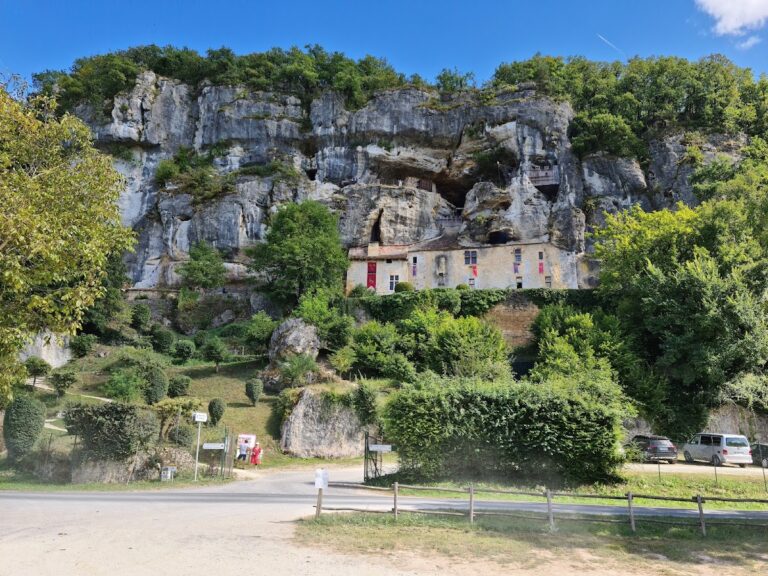
Château de la Pommerie: A Historic Château and Napoleon Museum in France


Site at a Glance
- Rating
- 5
- Popularity
- Very Low
- Country
- France
- Primary era
- Modern
- Eras represented
- Early Modern, Modern
- Civilizations
- French
- Site type
- Domestic
- Remains
- Castle
On this page9 sections
History
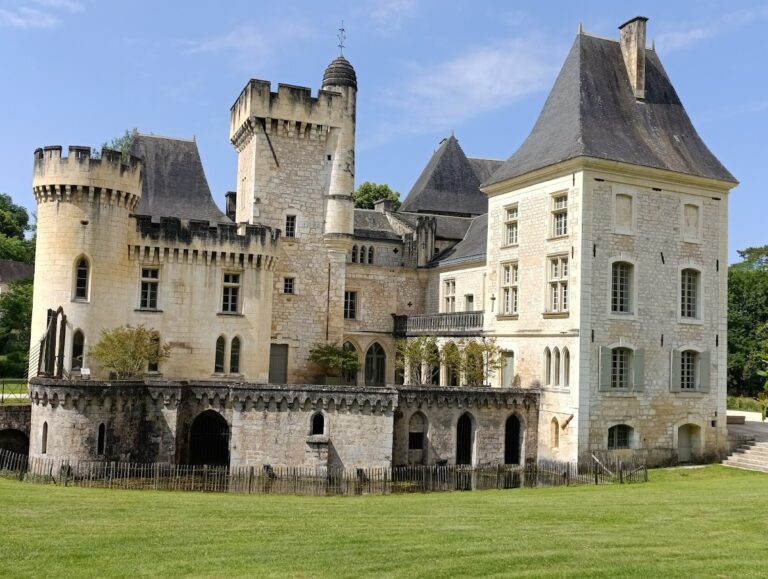
Château de la Pommerie is an eighteenth- and nineteenth-century château in Cendrieux, France, now part of the commune of Val de Louyre et Caudeau in the Dordogne. Construction began in the eighteenth century and was completed in the nineteenth century. The château belongs to the de Witt family and is owned by Count Baudouin-Napoléon de Witt, a descendant of Jérôme Bonaparte, Napoleon I’s youngest brother and the former king of Westphalia.
Construction and family ownership
The building’s development extended across two centuries, giving Château de la Pommerie its place within the historic landscape of Périgord. Its later history connected it to the Bonaparte family through the de Witt line. Marie-Clotilde, the eldest daughter of Prince Victor Napoleon, became Countess de Witt in 1938 and lived at La Pommerie from 1949 until her death in 1996.
The Bonapartist succession
The château’s family history is tied to the political fortunes of the French imperial dynasty. Napoleon I ruled as emperor from 1804 to 1814 and again briefly in 1815, during the First Empire. Napoleon III, his nephew, ruled the Second Empire from 1852 to 1870. After the Prince Imperial, Napoleon III’s only son and a claimant associated with the Bonapartist succession, was killed on 1 June 1879 while serving in a British uniform during a battle against the Zulus in southern Africa, Victor Napoleon became heir presumptive to the imperial throne.
Victor Napoleon went into exile in Belgium after a French republican law of 22 June 1886 barred claimants to the throne and the eldest sons of formerly reigning royal and imperial families from living in France. The law was repealed on 24 June 1950. In 1910, Victor married Clémentine, Princess of Belgium, despite opposition from her father, King Leopold II. These family connections later helped shape the imperial and royal heritage preserved at La Pommerie.
Formation of the imperial collection
The museum’s holdings emerged through a long process of dispersal and reassembly. After the fall of the Second Empire in September 1870, the former imperial couple’s property was placed under sequestration, while the liquidation of the civil list remained disputed with the French state until 1924. A majorat, an inherited estate or endowment legally attached to a title, also affected the disposition of imperial family residences and collections.
Objects reclaimed by Napoleon III’s family after the suppression of the Museum of Sovereigns in 1873 were later returned to his widow. Other imperial works and souvenirs entered the art market through sales in Paris in 1881, London in 1921 and 1922, and the 1927 sale of the contents of Farnborough Hill after Victor Napoleon’s death in 1926. During the 1890s, Victor commissioned members of his household to acquire imperial objects and souvenirs in Paris. These purchases, together with later sales and acquisitions, contributed to the group of imperial memorabilia now associated with the museum at La Pommerie.
The museum at La Pommerie
Since 1999, the château has housed a museum devoted to Napoleon I and the imperial period. Many of its objects were formerly kept at Prince Victor Napoleon’s residence on Avenue Louise in Brussels. The museum brings together personal belongings of Napoleon I and his family with objects created for imperial propaganda. It also presents the continuing popular devotion to Napoleon after his death, particularly during the Restoration, when memories of liberty and military glory became associated with his image.
Château de la Pommerie has been protected as a French monument historique since 15 March 2002. This designation is a legal form of protection for buildings and other cultural property considered historically or architecturally significant.
Remains
Château and museum layout
Château de la Pommerie is a château whose construction spans the eighteenth and nineteenth centuries. Its interior contains the Napoleon Museum, where the surviving rooms and display spaces accommodate a large collection connected with the First and Second Empires. The museum’s arrangement combines family portraits, royal images, personal belongings, memorial objects, and material associated with Napoleon I’s imperial cult and propaganda.
Imperial and royal portraits
The portrait displays include Napoleon I, Joséphine, Marie-Louise, the King of Rome, Napoleon III, King Jérôme and his wife Catherine of Württemberg, the Prince Imperial, and Prince Victor Napoleon. Belgian royal portraits extend the family story beyond the Bonapartes. Among them is a photograph of King Baudouin of Belgium, sent by Queen Fabiola in 1993 after the king’s death with a message referring to “the gift of love.”
Personal and memorial objects
The museum also contains objects linked to members of the imperial family and to the public presentation of Napoleon I’s rule. One distinctive piece is an ivory powder flask carved with full-length portraits of Emperor Franz Joseph and Crown Prince Rudolf on one side and Rudolf’s cipher on the other. Princess Stéphanie of Belgium sent it to her sister, Princess Clémentine, as a memorial of Rudolf after his death. Together with the personal belongings and propaganda objects, it forms part of the material culture preserved within the château’s museum.
Nearby sites