Château de Vezins: A Historic Barons’ Residence in France
Site at a Glance
- Rating
- 4.8
- Popularity
- Very Low
- Country
- France
- Primary era
- Early Modern
- External website
- Open
- Eras represented
- Medieval, Early Modern, Modern
- Civilizations
- French
- Site type
- Domestic
- Remains
- Castle
On this page13 sections
History
Château de Vezins is a historic residence in France, developed from a medieval fortress associated with the barons of Vezins. The estate was granted around 1100 to Hardouin de la Porte, the first known owner and Baron of Vezins, whose descendants retained it until 1930. For about eight centuries, the château served as the family residence, from Hardouin de la Porte to Jacques Le Clerc, Baron of Vezins, in 1929.
From wooden fort to red-stone fortress
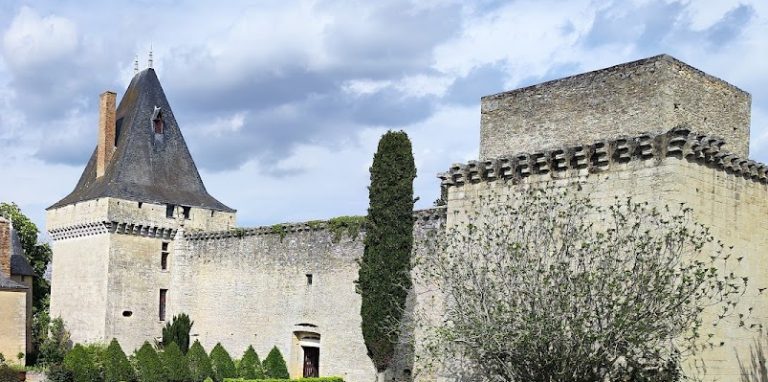
An early wooden fort stood near an area known in Vezins as the delaporte field. Between 1200 and 1400, the barons built a fortress of red stone. During the Hundred Years’ War, a prolonged conflict between England and France from 1337 to 1453, the fortress was probably held by the English.
Religious conflict and rebuilding
In 1622, Louis XIII, king of France from 1610 to 1643, ordered the baron to convert to Catholicism. The baron’s children were condemned to death in absentia, meaning that the sentence was issued while they were away, and the fortress was ordered to be destroyed. The family is said to have been forced to stage the public decapitation of its Protestant descendants. The baron was also compelled to remarry according to the Catholic rite. His actual sons and daughters later returned from voluntary exile in Geneva to reclaim the château, its properties, and their title.
The family retained its barony during the persecution of the Huguenots, French Protestants associated largely with the Reformed tradition. Their repression intensified after the revocation of the Edict of Nantes in 1685. By then, the site had been demilitarized and its fortifications demolished. A new-style château was constructed over the remains of the earlier red-stone fortress from 1708.
Revolution and the War in the Vendée
During the French Revolution and the War in the Vendée, a counter-revolutionary civil war and regional conflict in western France, opposing forces repeatedly seized the château. The village was destroyed, and its church was burned along with part of the château’s east wing. At the end of the conflict, the baroness and her servant were executed by republican forces known as the Blue armies. The heir was sent to Geneva for protection, while the baron, who sympathized with the new political ideas, fought abroad for the Revolutionary army and later for Napoleon. The baroness remained a royalist.
Before the Revolution, the family lived permanently at the château, managed the estate and its other properties within roughly 50 kilometers, and held numerous receptions. A position of the revolutionary army was established in the Vezins forest, with its headquarters at Nuaillé, a few kilometers from the château.
Later ownership and restoration
The château regained its former splendour during the mid-nineteenth century. In 1929, the last baron died after dissipating his fortune through gambling. The family subsequently lost properties that had made up half the village and included 22 farms. Jacques Le Clerc was the last baron identified in the ownership history.
Albert Robic bought the property in 1992 and restored the château for more than a year. It housed an antiques shop and art galleries until 2006, when it was resold and then abandoned because of the new owner’s serious health problems. The Deschamps and Rozon families purchased it in 2007 and began an extensive programme of interior and exterior renovation. The listed owners are Gaelle and Marc Deschamps and Lyndsay and Francois Rozons.
Remains
Fortified remains
Moat and former keep
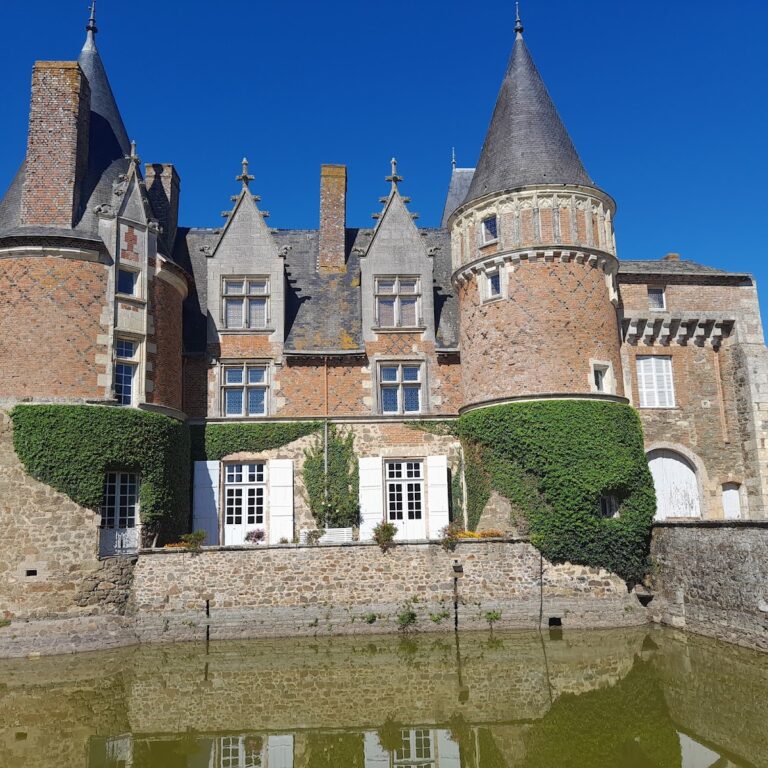
The earlier fortified château survives in the remains of its moat, bridge, and icehouse. The position of the former keep can be recognized from the shape of the moat and from holes in the opposite wall that received the drawbridge. Stones from the red-stone fortress were incorporated into the base of the later château.
Bridge and icehouse
The surviving bridge formed the starting point of a road linking the château with a hospital donated by the family. The icehouse, a structure historically used to store ice and preserve food, belongs to the surviving features of the former fortified estate.
Later château and grounds
Main residence
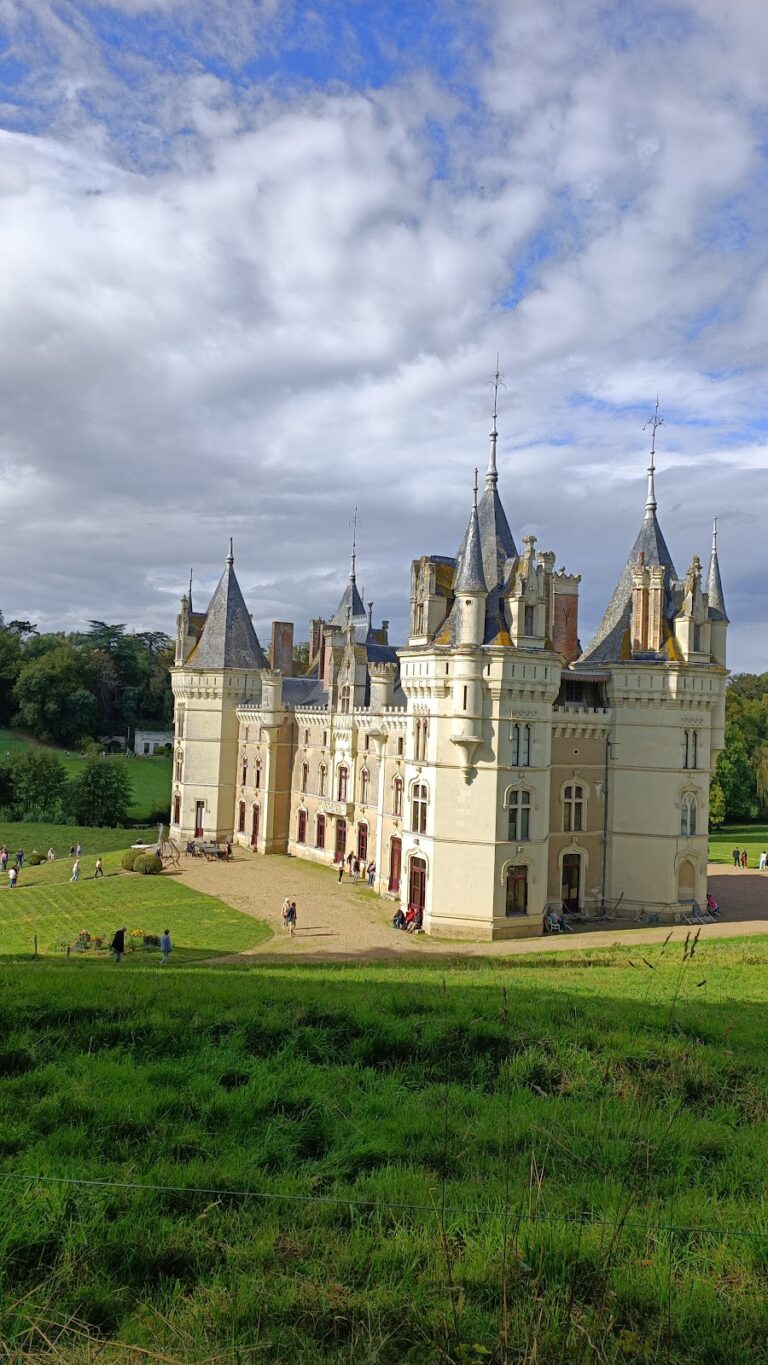
The later château, built from 1708 over the earlier fortress remains, contains large rooms and large glazed openings. One side faces formal French gardens, while the other looks toward a church.
Rotunda and park
The grounds were reshaped in the mid-nineteenth century with a central rotunda, a circular architectural space or building, and a park laid out by the architect André Leroy in the English landscape style. The planting includes numerous American trees, among them a sequoia.
Outbuildings
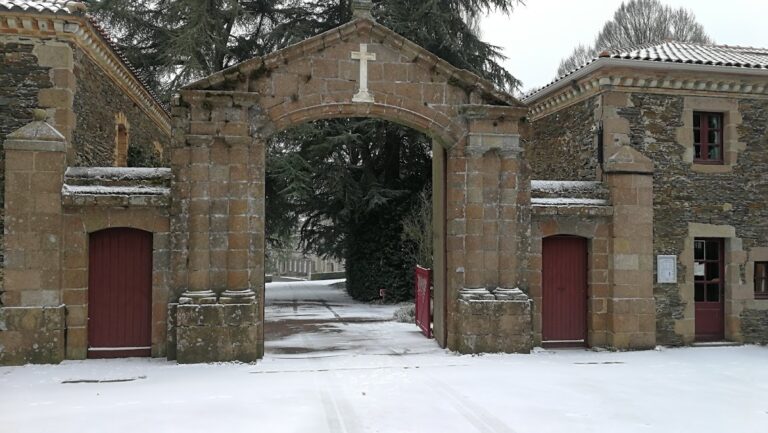
The surviving outbuildings served several practical purposes. Some accommodated horses and cattle, while others were used to store food and firewood or housed the kitchens and staff.