Chaperonnière Manor: Remains of a Fifteenth-Century Castle in France
Site at a Glance
- Popularity
- Low
- Country
- France
- Primary era
- Medieval
- Eras represented
- Medieval
- Civilizations
- French
- Site type
- Domestic
- Remains
- Castle
On this page9 sections
History
The Chaperon estate and the fifteenth-century castle
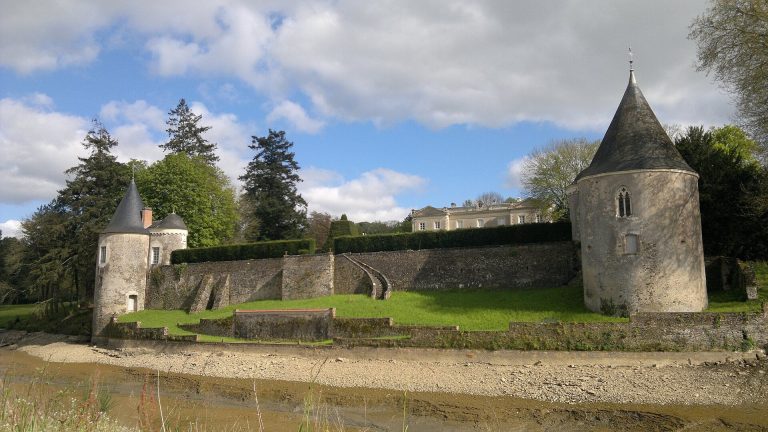
Chaperonnière Manor is the surviving part of a fifteenth-century castle in La Chaperonnière, France, probably built in the second half of the century by Jehan II du Plessis de La Bourgonnière and Guyonne de la Rochefoucault. The Chaperon lords had built an earlier castle here, dated either to the ninth or eleventh century.
The estate took its name from the Chaperon family, which held the surrounding lands until the end of the fifteenth century. The family also gave its name to Chaperonnière Street in Angers. Marriage alliances transferred the estate in 1384 and again around 1440, passing it from the Chaperons to the Plessis de La Bourgonnière family.
Members of the Chaperon family took part in the Crusades, medieval religious and military expeditions by Latin Christian forces. In 1086, the knight Jean Chaperon went to Spain at the request of the king of France to fight people then called Saracens, a historical European term for Muslim peoples. Tradition says he returned seven years later, on the day his wife was remarrying, after she had believed him dead.
Changes in ownership
In 1609, Jeanne d’Acigné, heir to La Bourgonnière and extensive estates, and her husband Charles de Vaudrey sold Chaperonnière to Charles II de Cossé. Vaudrey had been a favored courtier of Henri III, king of France from 1574 to 1589. Henri-Albert de Cossé, duke of Brissac, sold the castle in 1680 to René de Broon, marquis of Cholet. It passed to François-Édouard de Colbert in 1706, then returned to the Rougé family in 1763, when François de Rougé acquired it.
Uprising, restoration, and protection
During the royalist Vendée uprising of 1832, supporters of the duchess of Berry sought to restore the senior Bourbon line. Jacques-Joseph de Cathelineau, son of Jacques Cathelineau, a leading royalist commander during the earlier War in the Vendée, surrendered to royal gendarmes in an attempt to save the life of the owner, Augustin Charles Camille de Rougé, who had hidden him. The gendarmes, loyal to Louis-Philippe, who ruled France from 1830 to 1848, summarily executed Jacques-Joseph. Augustin was later imprisoned at La Flèche.
About 1850, the damaged castle was sold to Louis III Courtois for use as a country residence. It underwent partial restoration in the second half of the nineteenth century and remained in the Courtois family until 1978. The estate received French historic-monument protection that year, with protection extended in 2020.
Remains
The manor
Principal façade and stair tower
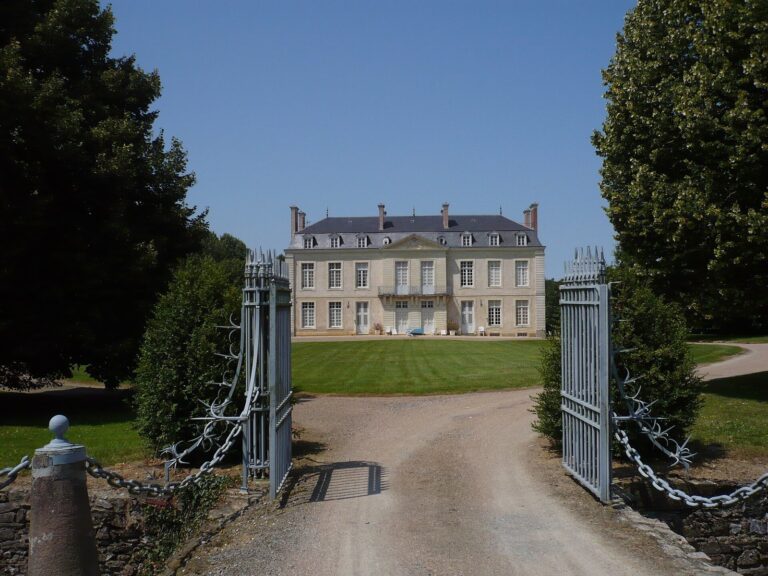
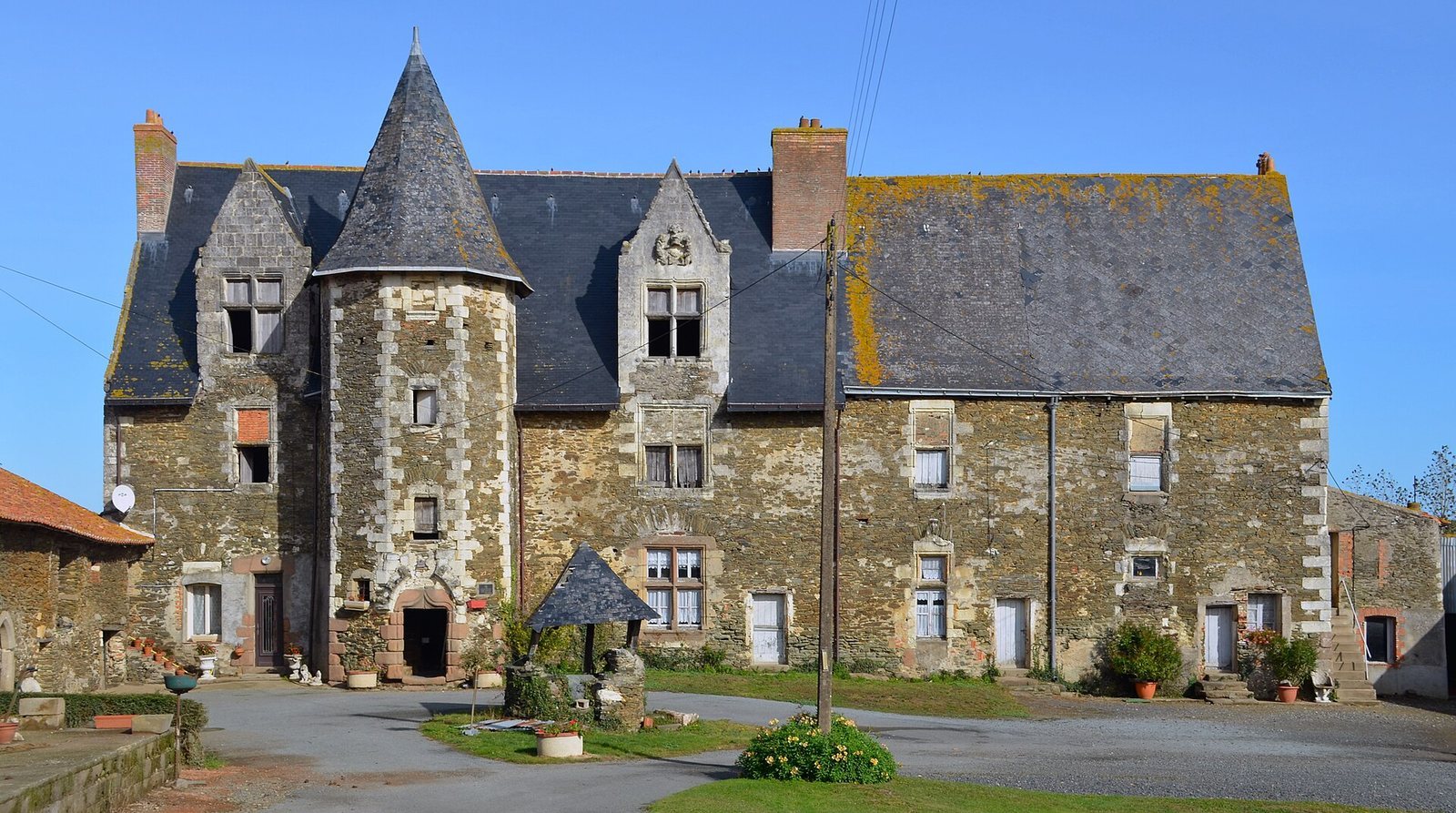
The manor preserves part of the fifteenth-century castle. On its principal façade, a tower containing the staircase rises between two large roof dormers, windows that project from a sloping roof. A monumental decorative ornament once crowned the tower entrance, which bears the combined coats of arms of Jehan II du Plessis de La Bourgonnière and Guyonne de la Rochefoucault.
Interior features
Surviving details include window surrounds, fireplaces, door lintels, built-in window seats, woodwork, and terracotta floor tiles. The manor’s design represents fifteenth-century building in Anjou, a historic region of western France, and closely resembles Belligan Manor, built between 1440 and 1450.
Other estate buildings
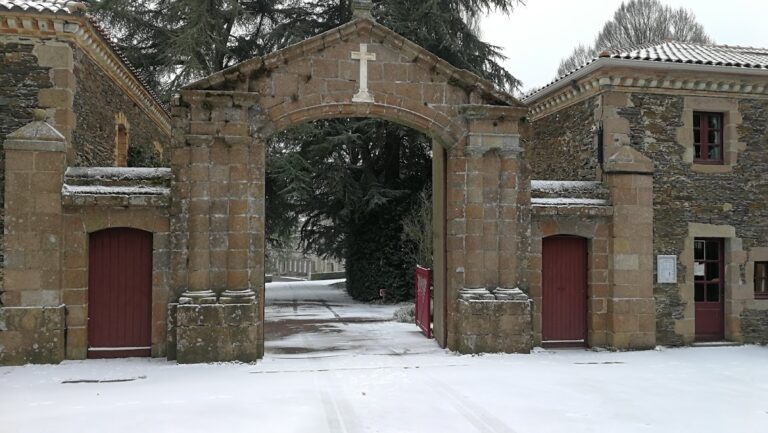
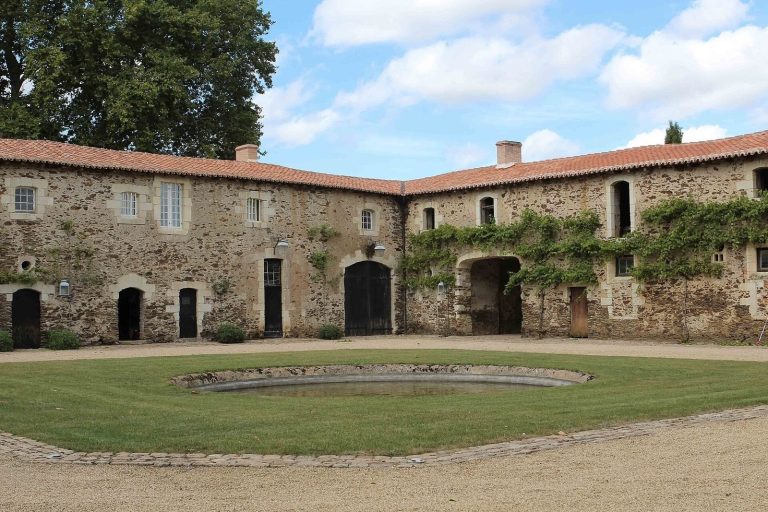
The estate’s built features include outbuildings, a well, a former chapel, and the main residential block. One outbuilding is attached to the manor’s north façade. Around 1850, the estate covered 150 hectares and included the Chaperonnière watermill on the Èvre River. The manor and mill are now divided among three separate properties.