Château d’Ettevaux: A Historic Estate in Poil, France


Site at a Glance
- Rating
- 5
- Popularity
- Very Low
- Country
- France
- Primary era
- Early Modern
- External website
- Open
- Eras represented
- Early Modern, Modern
- Civilizations
- French
- Site type
- Domestic
- Remains
- Castle
On this page7 sections
History
Château d’Ettevaux is a historic château in Poil, France, whose present building was begun in 1730 on the site of an older castle. The estate formed part of the fief of Ettevaux, a landed holding within a feudal system, and its history is closely connected with the neighbouring County of La Roche-Milay.
The fief and its lordship
The fief was known as Estevaul in 1281. Its name changed through several forms over the following centuries, including Estrevaulx, Estuauds, Estevaulx, Estevault, Etuau, Estuelle, Estiot, and Estuaul. The forms Estevaux, Haulte-Vaux, and Alta Vallis were also used.
A lordship held by Guillaume d’Estevaux was established in 1490. The existence of a feudal castle at that date cannot be confirmed, although the later château occupies the site of an older castle. Ettevaux depended on the County of La Roche-Milay and possessed medium and low justice, meaning that its lord could decide less serious cases carrying limited fines or penalties. More serious cases belonged to the high justice of the Count of Larochemillay, so the inhabitants of Ettevaux and Poil relied on Larochemillay for major judicial matters.
Ettevaux was purchased in July 1748 by Zacharie Bertrand de Rivière, who served as fiscal prosecutor of the bailiwick at Larochemillay. A bailiwick was a territorial judicial and administrative district, while a fiscal prosecutor represented the financial interests of a lord or jurisdiction within it.
Construction and nineteenth-century changes
Construction of the present château began in 1730. After a fire, the building was altered and restored during the second half of the nineteenth century by Baron de Galembert. These works shaped the later appearance of the estate while retaining its connection with the earlier castle site.
A neo-Gothic chapel replaced an older chapel at Ettevaux in 1821. Neo-Gothic architecture was a nineteenth-century revival of medieval Gothic forms. The chapel was blessed on 6 October 1821, and in 1854 the parish priest of Poil travelled there every Thursday to celebrate Mass. The north chapel of Poil church was also said to have been built by the House of Estevaux during the Renaissance period.
The château is included in France’s General Inventory of Cultural Heritage, a national system for surveying and documenting heritage sites. The hamlet of Ettevaux is now part of Poil, although it probably formerly belonged to Larochemillay. Poil separated from that commune by imperial decree in 1860.
Remains
The estate occupies the western part of Poil beside departmental road D192, at the boundary with Larochemillay. Its surviving buildings comprise the château, standing on the site of the earlier castle, and a neo-Gothic chapel dating from 1821.
Estate buildings
Château
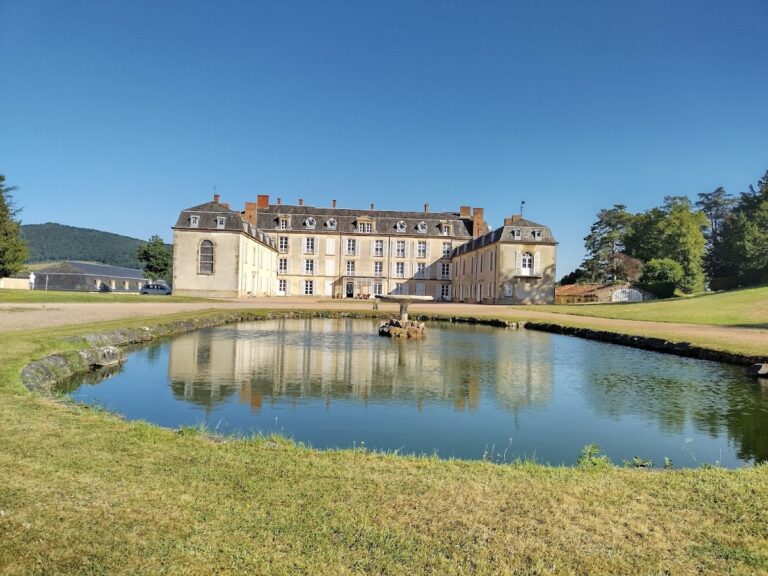
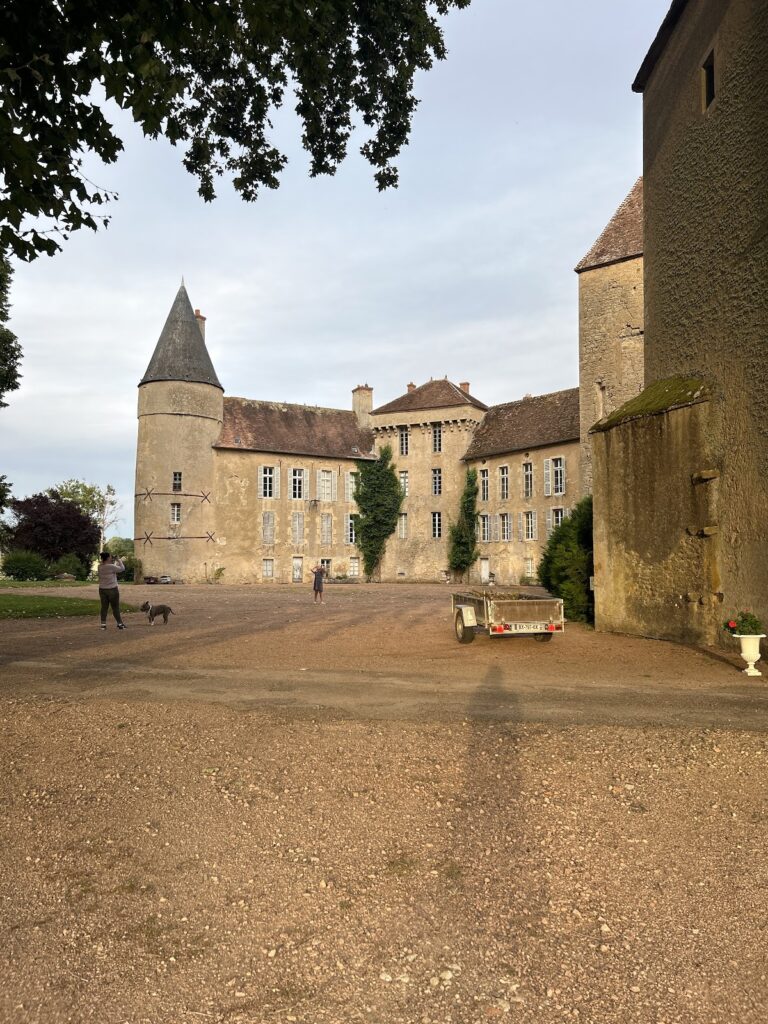
Château d’Ettevaux stands directly beside the road and is described as the most visible of Poil’s six châteaux. The present building was constructed from 1730 on the site of an older castle and later underwent alteration and restoration after a fire. Its current form therefore reflects both its eighteenth-century construction and the nineteenth-century work associated with Baron de Galembert.
Neo-Gothic chapel
The estate chapel was built in 1821 in succession to an earlier chapel. Its documented architectural elements include a façade, an apse, an interior, and a choir. The apse is the terminal part of the sanctuary, while the choir is the area traditionally reserved for clergy and singers.