Klemensów Palace-and-Park Complex: A Zamoyski Family Residence in Poland


Site at a Glance
- Rating
- 3.1
- Popularity
- Very Low
- Country
- Poland
- Primary era
- Early Modern
- Eras represented
- Early Modern, Modern
- Civilizations
- Polish–Lithuanian Commonwealth, Russian
- Site type
- Domestic
- Remains
- Elite Residence
On this page6 sections
History
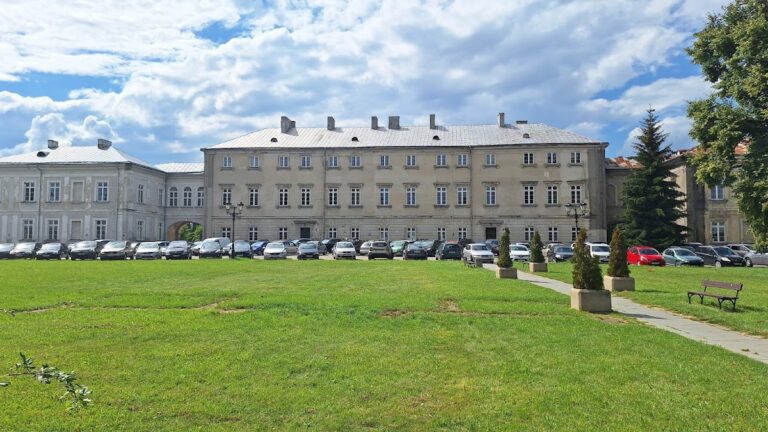
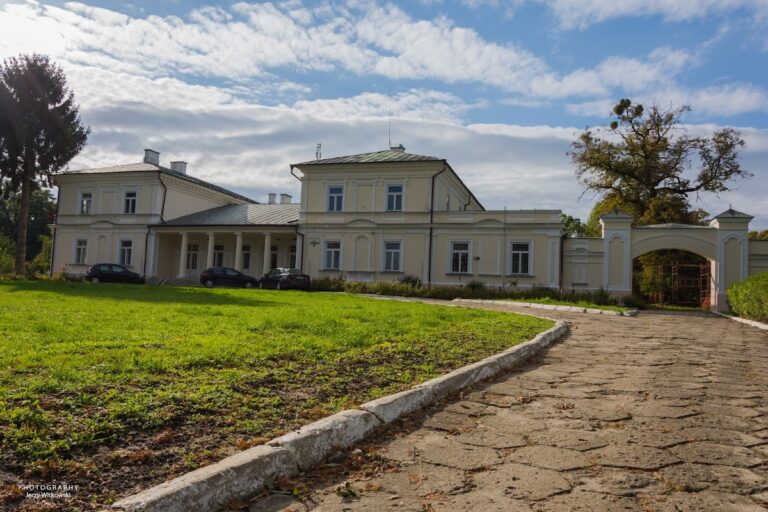
The Klemensów Palace-and-Park Complex in Bodaczów, Poland, is a Baroque residence created in 1744–1746 in the village of Michalów near Szczebrzeszyn for the Zamoyski family. Teresa Zamoyska initiated the project with a future descendant in mind. That descendant, Klemens Jerzy Zamoyski, gave the palace its name and established its lasting connection with the family.
Creation and expansion
The oldest section of the palace was designed by Jerzy de Kawe and Andrzej Bem and constructed by Jan Columbani. Henryk Ittar enlarged the building between 1810 and 1813, while Henryk Marconi carried out another expansion between 1826 and 1841. A chapel and an orangery stood beside the palace, and the heritage register identifies the orangery as the former Church of the Sacred Heart of Jesus.
The palace first served as the Zamoyskis’ summer residence. From 1809 until 1941, it became their principal residence.
War, nationalization, and recovery
During the Second World War, Germans from a nearby airfield occupied the palace as accommodation. In 1944, the building was used as a field hospital. The war also dispersed much of its cultural contents. Soviet troops looted a substantial part of the painting collection in September 1939, followed by further losses under German occupation. Most of the approximately 14,000 books from the palace library, including about 5,000 early printed books, were transferred to the Łopaciński Library in Lublin. The remaining furnishings went to museums in Kozłówka and Zamość.
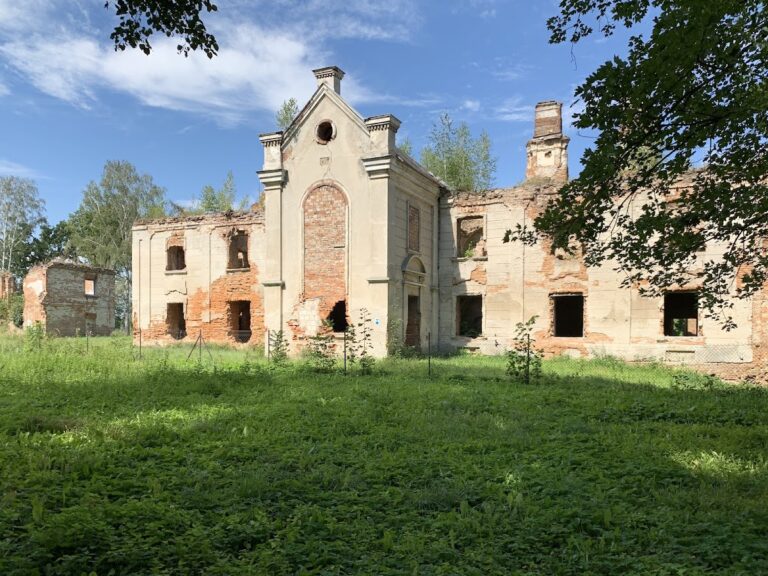
The estate was nationalized from 1945. After the war, the palace housed a social-welfare institution. That institution was later moved to Szczebrzeszyn because local conditions did not meet European Union standards.
The Zamoyski descendants subsequently sought to recover the property. In 2017, five children of Jan Zamoyski, the last holder of the Zamość Entail, purchased the palace from the State Treasury through a non-tender sale. The Zamość Entail was a legally indivisible hereditary estate associated with the Zamoyski family, intended to remain undivided under a defined succession. The palace-and-park complex is entered in the heritage register under number A/316, with entries dated 22 June 1956 and 10 May 1967.
Remains
The palace
The surviving complex is organized around a Baroque palace and an extensive park, with service and ancillary buildings surrounding the main residence. Inside, the palace retains fireplaces, the principal staircase, and parts of its library fittings. The built-in bookcases remain fixed within the walls because they could not be removed.
The rooms follow an enfilade arrangement, a sequence aligned along a common axis so that doorways provide views from one room into the next. This historic plan was considered unsuitable for conversion into a hotel.
Park and associated buildings
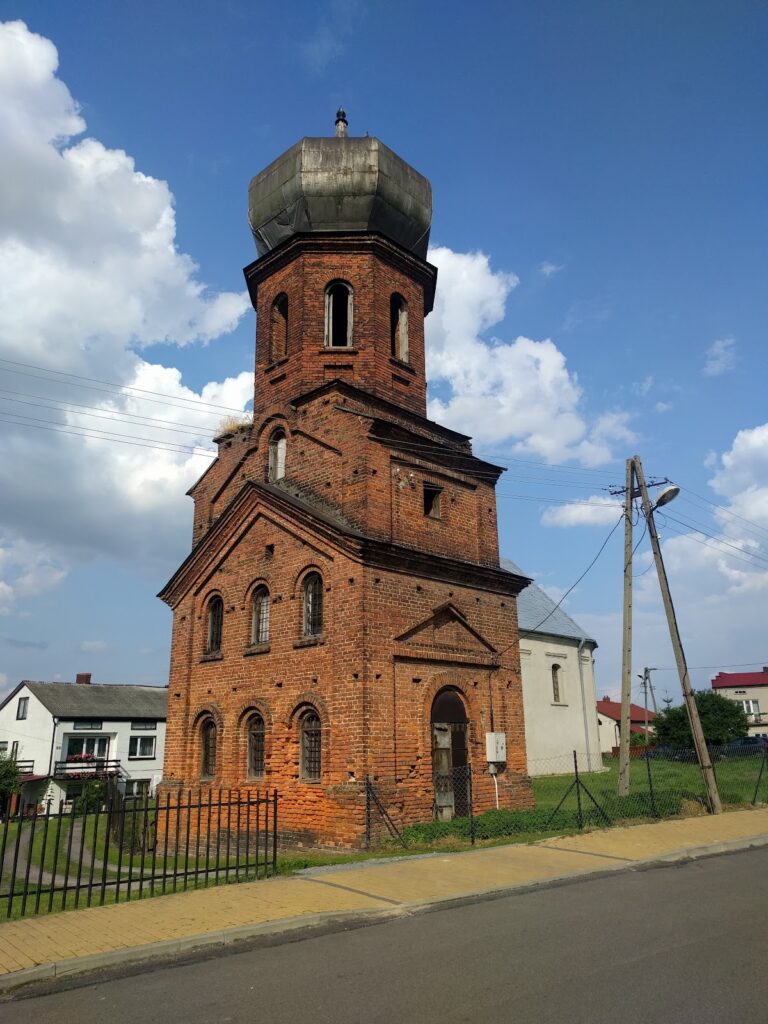
The park covers approximately 100 hectares and follows the English style. Its mature trees include common catalpa, magnolias, black walnut, and Weymouth pine, among many other species. A building within the complex is covered by trumpet vine. The protected grounds also include the former Sacred Heart of Jesus church, identified as the former orangery, together with the pensioners’ house known as the White Annexe and the Red Cottage.
Farm and service buildings surround the complex, forming part of the wider estate setting. The palace, park, former orangery and church, White Annexe, and Red Cottage are all included within the protected historic complex.
Nearby sites