Schloss Forchtenstein: A Medieval Castle and European Forum in Austria
Site at a Glance
- Rating
- 4.4
- Popularity
- Very Low
- Country
- Austria
- Primary era
- Medieval
- External website
- Open
- Eras represented
- Classical, Medieval
- Civilizations
- Duchy of Styria, Holy Roman Empire, Roman
- Site type
- Domestic
- Remains
- Castle
On this page8 sections
History
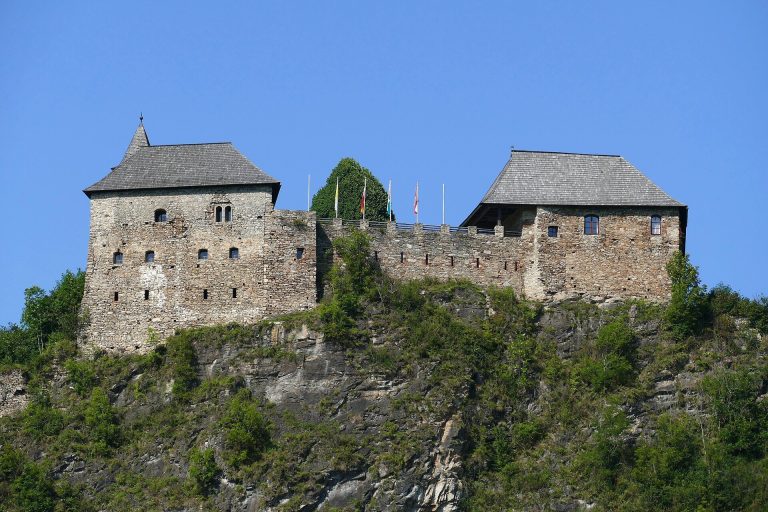
Schloss Forchtenstein is a medieval hilltop castle in Neumarkt in Styria, Austria, whose origins lie in the mid-12th century. It served as a strongpoint on the route linking the Danube region with Italy. The site is also associated with the historical designation castrum Graslupp, while the name Forchtenstein is said to combine the Old High German term forhten, meaning “to fear,” with “stone.”
Medieval lordship and defense
The castle hill was probably inhabited during the later Iron Age, before the medieval stronghold was established. During the Slavic period, the Neumarkt plateau was known as Graslupp and the castle as castrum Graslupp. Markwart of Forchtenstein appears in a document from 1187, providing an early written reference to the lordship.
King Ottokar II Přemysl, the 13th-century Bohemian ruler whose territorial expansion brought him into conflict with neighboring powers, conquered the castle. Its economic base rested for centuries on collecting tolls and exercising toll rights along the route. In 1457, Salzburg Archbishop Sigismund I of Volkersdorf transferred the castle and the market to Habsburg Emperor Frederick III without compensation. The Habsburgs then appointed administrators who lived at Forchtenstein.
The stronghold continued to have a defensive role. In 1480, resistance was organized at Forchtenstein against Ottoman incursions. This episode belongs to a period when Ottoman military expansion threatened territories in and around the Austrian lands.
From castle to European institution
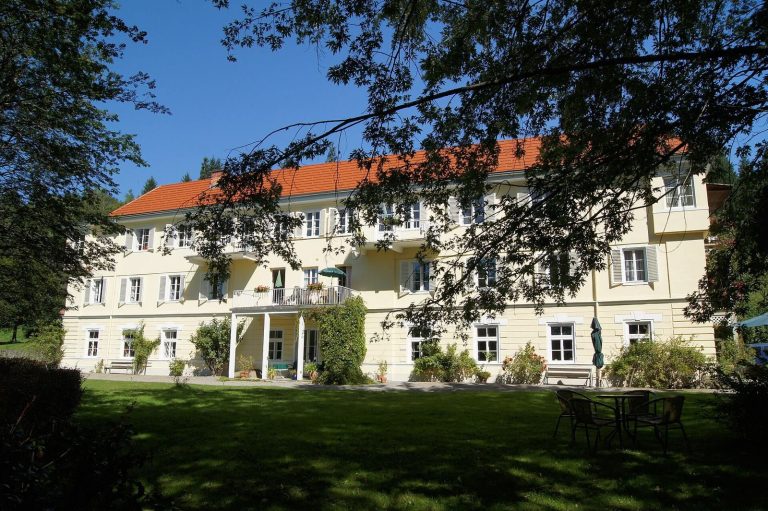
Renovation in 1884 converted the fortified castle into a residential palace, after which it became known as Schloss Forchtenstein rather than Burg Forchtenstein. Its later history gave the complex a new public role. In 1956, the Styrian regional branch of the Austrian European Federalist Movement leased the castle, which thereafter served as an international meeting place, ideas workshop, and educational center promoting European federalism and integration across party lines.
Robert Schuman, the French statesman and a principal founder of European integration after the Second World War, visited in autumn 1956. He expressed the hope that the building would become “a fortress of the European idea,” both literally and figuratively. On 7 July 1957, Austria’s first Europahaus, an institution for European education, exchange, and cooperation, was founded at the castle. It was named the Karl-Brunner-Europahaus after its founder, Karl Brunner.
On 1 January 1975, the European Federalist Movement purchased the castle from Felicitas Bittner-Wallaschek. Since 1981, the Styrian regional association’s annual summer Europa-Forum Neumarkt has been held there. In 2018, the European Federalist Movement of Styria transferred the castle for a symbolic sum to the EYFON Foundation, the institution associated with the European Youth Forum Neumarkt. The foundation was established by Christoph Leitl, Georg Spiegelfeld-Schneeburg, Franz Majcen, Gerhard Stürmer, and Christian Buchmann.
Remains
Setting and layout
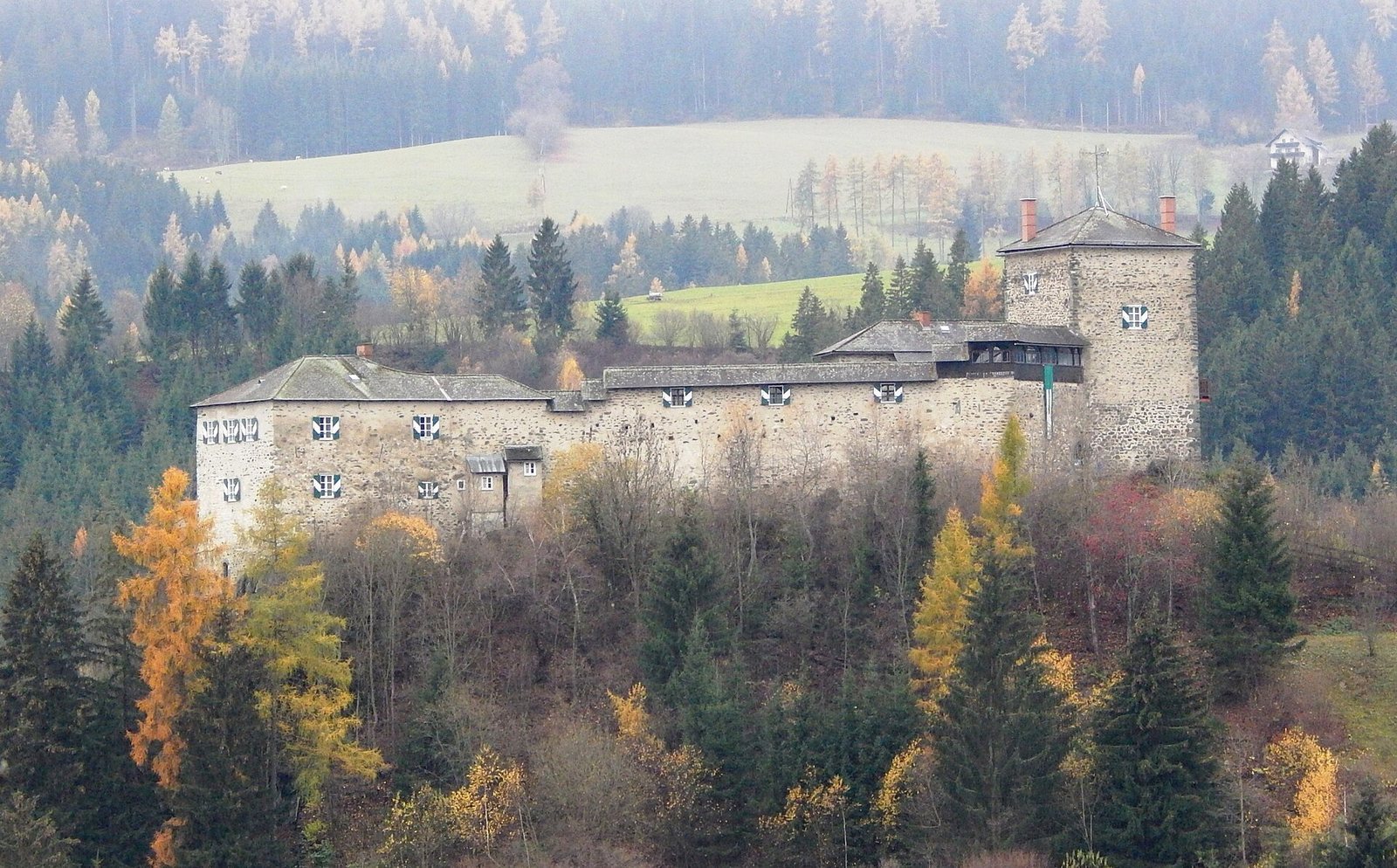
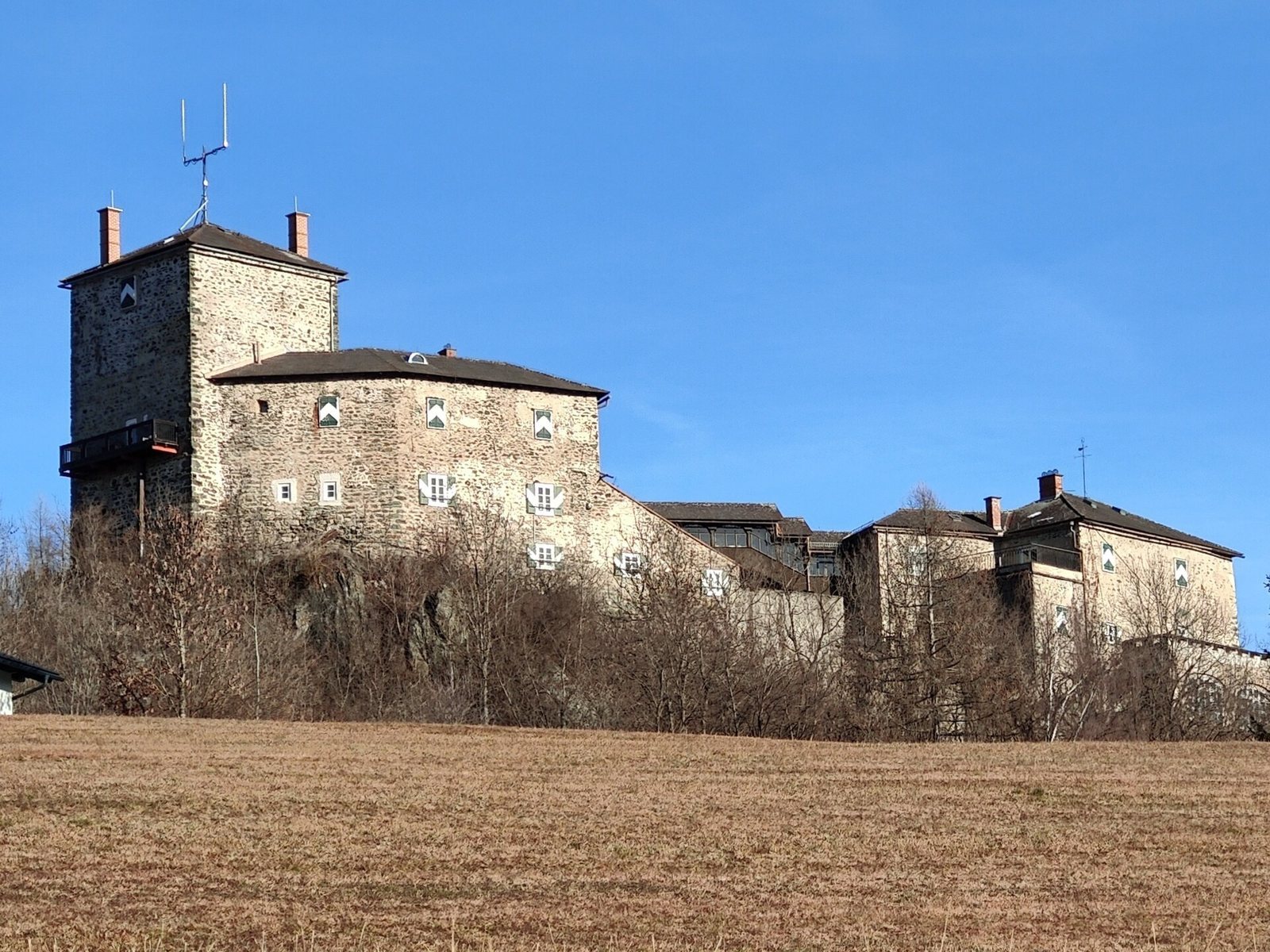
Schloss Forchtenstein stands at the northwestern corner of Neumarkt’s market fortifications. Neumarkt lies in a high valley between the Seetal Alps to the east and the Grebenzen to the west. The castle complex forms an elongated rectangle, with its defensive walls and attached buildings organized around a four-storey tower house at the northwest.
Tower house and fortifications
Four-storey tower house
The four-storey tower house is the central surviving structure of the complex. Its base incorporates an old Roman watchtower, linking the medieval building fabric with an earlier defensive feature. The castle survives in renovated condition, although the residential conversion of 1884 altered the function of the complex from fortified stronghold to palace.
Walls and town connection
Defensive walls and additional buildings extend from the tower house to create the elongated rectangular plan. A building on the southeastern side is connected to the town wall, integrating the castle into Neumarkt’s fortified perimeter.