Schloss Eckartsau: Habsburg Hunting Lodge and Imperial Residence


Site at a Glance
- Rating
- 4.8
- Popularity
- Very Low
- Country
- Austria
- Primary era
- Early Modern
- External website
- Open
- Eras represented
- Medieval, Early Modern, Modern
- Civilizations
- Duchy of Austria, Habsburg, Holy Roman Empire
- Site type
- Domestic
- Remains
- Palace
On this page10 sections
History
Medieval origins and the Eckartsau family
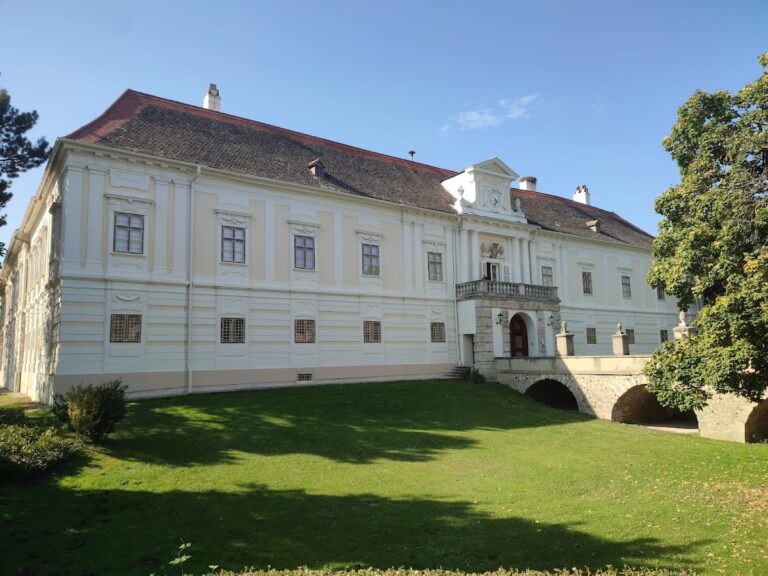
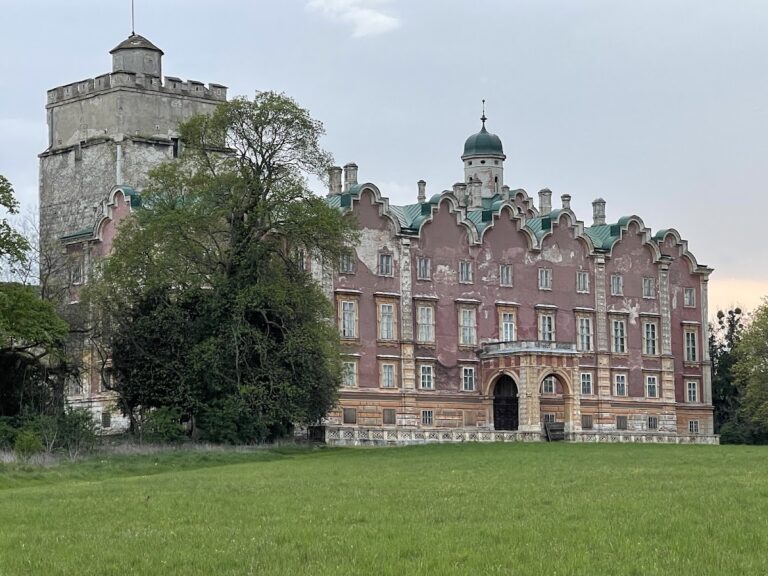
Schloss Eckartsau is a former medieval water castle in Austria that was transformed into a Baroque hunting lodge in the eighteenth century. It became historically important as the residence of Emperor Karl I and Empress Zita during the collapse of the Austro-Hungarian monarchy and their departure from Austria in 1919.
The castle belonged to the noble Eckartsau family, first recorded in 1175 when Heinrich des Ekkarisowe witnessed a donation to Klosterneuburg Abbey. The family held the castle as a fief of the Prince-Bishopric of Regensburg. Over time, its members acquired market rights, land, and additional castles, and they established a family crypt in Vienna’s Minorite Church.
Konrad von Eckartsau received substantial support after backing the assumption of the regency by the fourteen-year-old Austrian Duke Albrecht V. During the reign of Friedrich III, the family castle was repeatedly plundered, while Georg von Eckartsau was described as a robber knight. Wilhelm von Eckartsau was the family’s last male member. His daughter Appolonia inherited the castle and estate in 1507, and after her death in 1571 her sons sold them to Georg Freiherr von Teufel. Ownership changed frequently during the following two centuries.
Baroque transformation and Habsburg ownership
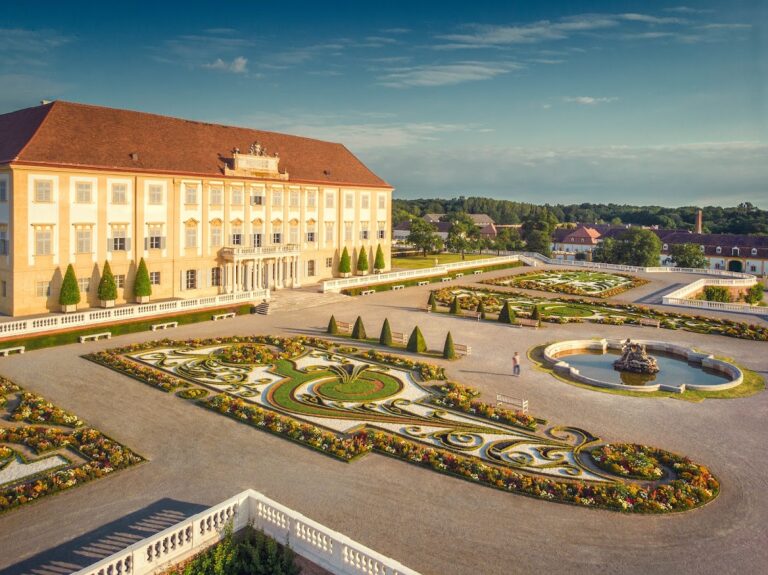
In 1720, Franz Ferdinand Count Kinsky acquired the castle and commissioned Joseph Emanuel Fischer von Erlach to convert it into a Baroque hunting lodge, a country residence intended for aristocratic hunting activities. The west wing was completely rebuilt during the conversion.
Emperor Franz I Stephan of Lorraine, the husband of Maria Theresa and Holy Roman Emperor, bought the palace in 1760. After Maria Theresa’s death in 1780, the building increasingly deteriorated. Structural damage led to the demolition of the entire east wing and part of the south wing. In 1797, their grandson Emperor Franz II transferred the property to the Family Fund, the family foundation of the Habsburg-Lorraine dynasty, the ruling house formed through the connection between the Habsburgs and the House of Lorraine.
Archduke Franz Ferdinand commissioned a general renovation in 1896 and 1897. The demolished sections were rebuilt, and the park was redesigned. Franz Ferdinand was heir to the Austro-Hungarian throne before his assassination in 1914.
The final imperial residence
In 1917 and 1918, Schloss Eckartsau served as a residence of Emperor Karl I, the last Austrian emperor and Austro-Hungarian king. He dealt with petitions there, and the palace was the official residence of the Austro-Hungarian court from 1 to 27 July 1918.
After Karl renounced participation in the affairs of the Austrian state on 11 November 1918, he and Empress Zita moved with their children, including their six-year-old son Otto, from Schönbrunn to Eckartsau. They lived there permanently from the night of 11–12 November. Their private ownership of the palace allowed them to remain there after republican authorities had taken over the official residences.
On 13 November 1918, a Hungarian political delegation obtained Karl’s written renunciation of the exercise of government in Hungary, although he did not formally abdicate there either. In January 1919, Chancellor Karl Renner, who became a political leader of the German-Austrian Republic, came to Eckartsau to urge Karl to abdicate but was not received. The German-Austrian government demanded either abdication or departure and threatened internment. Karl and Zita refused to abdicate but eventually agreed to leave Austria.
The former imperial family spent Christmas and welcomed the New Year of 1919 at Eckartsau. The hunting lodge was unsuitable for a prolonged residence because heating was inadequate and supplies became scarce. An influenza outbreak among the staff also made medicines difficult to obtain. British officer Edward Lisle Strutt helped protect Karl after republican authorities declined to provide security, and he brought food and medical supplies.
On 23 March 1919, Karl and his family left Eckartsau after breakfast and Mass in the palace chapel. They travelled to the nearby station at Kopfstetten, where Strutt had arranged a former imperial court train. The family travelled toward Switzerland and crossed into the country the following day.
State ownership and museum use
The Habsburg Law of 3 April 1919 confiscated the private property of the Habsburg family, including Schloss Eckartsau, without compensation. The palace became state property and is administered by the Austrian Federal Forests. It lies within Donau-Auen National Park and operates as a museum devoted to the imperial family and the palace.
Toward the end of the Second World War, Red Army soldiers partly looted the palace. It was subsequently carefully restored, preserving the building and its connection with the final days of the imperial household.
Remains
Palace and grounds
The surviving complex developed from a four-sided water castle surrounded by water into a Baroque hunting lodge. The palace is preserved in its entirety or with substantial parts surviving. Its grounds include a park laid out during the 1896–1897 restoration and extending over approximately 27 hectares.
West, east, and south wings
The west wing was completely reconstructed during Joseph Emanuel Fischer von Erlach’s 1720 Baroque conversion. Structural damage later resulted in the demolition of the entire east wing and part of the south wing. Both demolished sections were rebuilt during the renovation of 1896–1897, leaving the palace with substantial surviving evidence of its earlier castle form and later transformation.
Grand staircase
The palace contains a grand staircase made from white, hard Kaisersteinbruch stone. In 1912, the staircase was removed from the former Harrach Garden Palace in Vienna’s Landstrasse district and transferred to Schloss Eckartsau, where it was installed in the palace.
Interiors and chapel
The museum presents interiors dating from the turn of the nineteenth and twentieth centuries, together with objects associated with the residence of Karl and Zita. A chapel formed part of the palace and was used for the Mass held before the imperial family departed on 23 March 1919.
Nearby sites