Château de la Barillière: Seigneurial manor at La Croixille

Site at a Glance
- Rating
- 4.7
- Popularity
- Very Low
- Country
- France
- External website
- Open
- Eras represented
- Early Modern, Modern
- Civilizations
- French
- Site type
- Domestic
- Remains
- Castle
History
The château de la Barillière in La Croixille, France, is a seigneurial manor documented from the fifteenth century and linked to the local feudal order. It served as the centre of a small fief that answered to Ernée and exercised only land‑based seigneurial jurisdiction, making it a local seat of lordship from the late Middle Ages into the modern era. The place appears on old maps and in period descriptions as a castle with a chapel and a nearby pond, and it remained important as the residence of a single noble family for several centuries.
In the late fifteenth century the estate belonged to Raoul Le Porc, and Guillaume Le Porc later lost part of his holdings in 1487 after siding with the king of France; the duke of Brittany transferred that land to Thébault du Maz. In the early sixteenth century a branch of the Couasnon family, originally from Brittany, established itself at La Croixille. Members of that family appear in records in 1518 and 1534 and acquired the parish seigneury in 1633, tying the château more closely to local governance and rural administration.
Through the seventeenth century the Couasnon line continued to hold the manor. Religious use of the building increased when permission to celebrate Mass in the château chapel was granted in 1638, and the chapel was formally blessed on 20 December 1742. In June 1668 Pierre de Couasnon declared that he and his siblings retained the social rank of écuyer, or esquire, a status recognized within the provincial nobility.
The eighteenth century brought prominent clerical careers and revolutionary violence connected to the house. César‑Jérôme Couasnon de la Barillère, born in 1755, earned university degrees and served as archdeacon of Sées cathedral, vicar general, and chaplain to the king. His younger brother François‑Marie‑Jérôme, born in 1758, held clerical offices and returned to La Barillière at the start of the French Revolution. In February 1794 he was taken from his bed and imprisoned at Ernée. After acknowledging his priestly faith he was condemned by the Revolutionary military commission of the Mayenne as a refractory priest and noble, and he was executed on 20 March 1794; his remains were raised on 16 July 1814 and reinterred in the sanctuary of Charné.
Into the nineteenth century the Couasnon family continued at La Barillière. By the end of that century the château had undergone a complete renewal and the family still occupied the estate, preserving its role as a local noble residence.
Remains
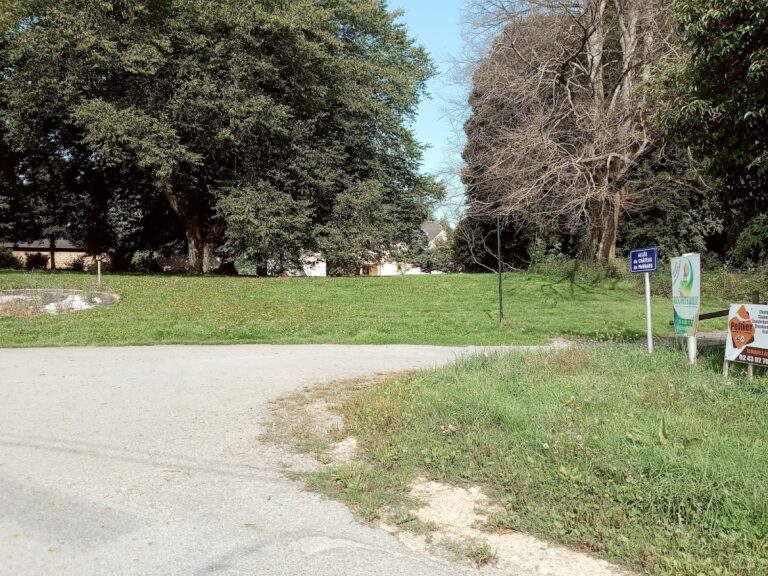
The site stands about 1,200 metres west of the village of La Croixille beside a small tributary of the Vilaine river, set within low, marshy ground that historically included a pond and adjacent meadow. Old cartography and period descriptions depict a castle and a chapel grouped near a water feature and low-lying pasture, making the landscape part of the manor’s setting.
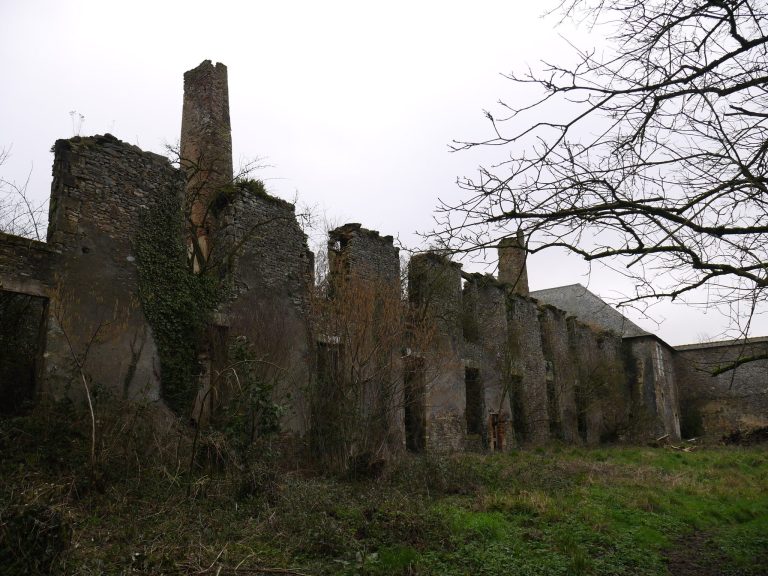
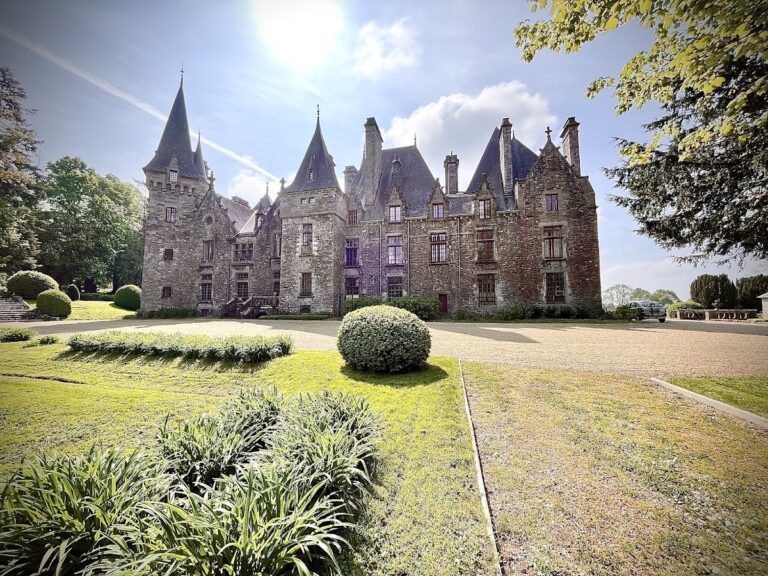
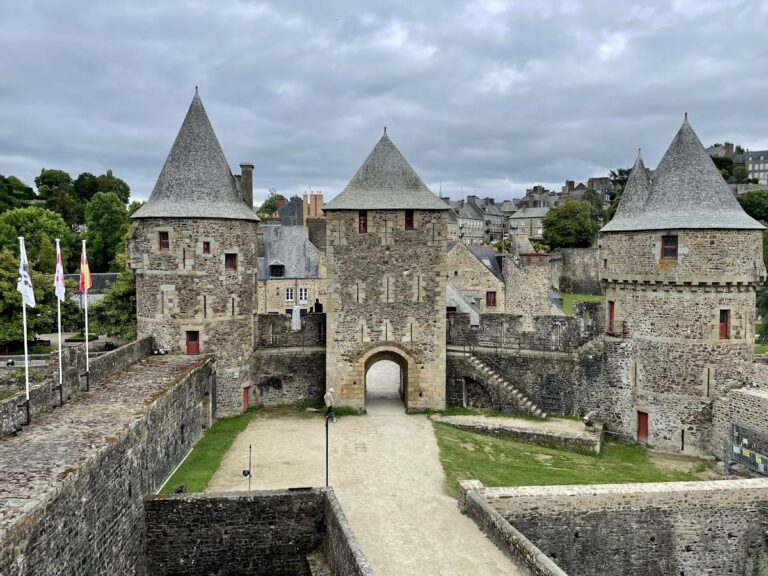
By the close of the nineteenth century the principal buildings were reconstructed around an interior courtyard, with structures occupying three sides of that space. The house incorporated small towers, known as tourelles, and projecting bays at the façade, features that gave the rebuilt residence a composed, asymmetrical profile. An isolated chapel stood near the main group of buildings; that chapel had been authorised to hold Mass from 1638 and received a formal blessing in December 1742, indicating continuous religious function across centuries.
The pond and meadow remained integral to the estate’s layout, lying in the marshy hollow beside the château. Contemporary descriptions from the eighteenth century characterize the castle as serviceable rather than grand, set beside meadowland and wet ground. By the end of the nineteenth century the estate showed the imprint of extensive rebuilding while retaining the courtyard plan, the chapel as a distinct building, and the surrounding wet pasture and pond that marked its historic landscape.