Château de Caramagne: A Historic Private Residence in Chambéry


Site at a Glance
- Rating
- 4.4
- Popularity
- Very Low
- Country
- France
- Primary era
- Early Modern
- External website
- Open
- Eras represented
- Early Modern, Modern
- Civilizations
- Duchy of Savoy
- Site type
- Domestic
- Remains
- Elite Residence
On this page7 sections
History
Château de Caramagne, also known as Villa Caramagne, is a private château in Chambéry, France, built in the sixteenth century by the jurist Bernadino Becchi. Born in Caramagna in Piedmont, Becchi established the house on the Boisse hill, where it later became associated with prominent families and with the poet Alphonse de Lamartine.
Early Ownership
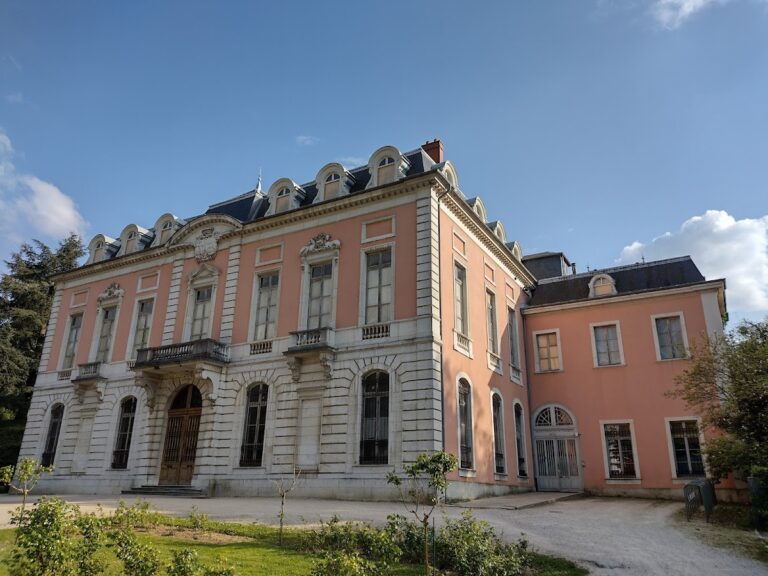
After Bernadino Becchi, ownership passed to the Bertrand de la Pérouse family. In 1783, the property came into the possession of Frédéric de Bellegarde, during whose ownership the residence received important decorative work. The decoration of the grand salon dates from the late eighteenth century, while the façade decoration belongs to the early nineteenth century. Piedmontese artists whose names are not known are associated with these works.
Lamartine and the Birch Family
The former military man Joseph Gillet took possession of the château in 1812. In 1820, he leased it to the Marquise de La Pierre, an Englishwoman married to a man from Chambéry, and to her compatriot Mrs Birch.
Alphonse de Lamartine, a major nineteenth-century French Romantic poet and political figure, met Marianne Elisa Birch, the daughter of Mrs Birch, in 1819. They married at the château in 1820, and their marriage contract was signed in the grand salon on 25 May of that year.
Historic Protection
Château de Caramagne has been partially listed as a French historic monument since 3 January 1963. Separate elements received protection in 1963, 2001, and 2003, covering a pavilion, an elevation, and the roof.
Remains
Château de Caramagne stands on the summit of the Boisse hill, with Chambéry to the south. It lies beside Saint-Ombre Street, which links the Chantemerle district with the former hamlet and commune of Chambéry-le-Vieux. The hill was once composed mainly of meadows and fields and has gradually been urbanized. A preserved meadow remains on one side of the château, while the Cèdres sports park, with a grass field and tennis courts, lies immediately to the south.
Entrance and Loggia
An imposing entrance, flanked by semicircular service buildings, leads to a broad avenue lined with plane trees. Marble columns support the loggia, a covered gallery or open-sided architectural space, whose design evokes Italian palaces. Tempera paintings, made with pigments held in a water-based medium, create the perspective of false columns. At the two ends, sculptural groups represent the abduction of Deianira by Nessus and the abduction of Europa by Jupiter. In Greek mythology, Nessus is a centaur, while Europa was abducted by Jupiter after he appeared as a bull.
Grand Salon
The grand salon contains stucco decoration, a plaster-like architectural finish, arranged around a central vaulted panel. Its rocaille ornament uses shell-, rock-, and plant-inspired forms, while volutes provide spiral scroll motifs within the composition.