Château de Fénétrange: A Historic Castle in France

Site at a Glance
- Rating
- 4.5
- Popularity
- Very Low
- Country
- France
- Primary era
- Medieval
- Eras represented
- Medieval, Early Modern
- Civilizations
- Duchy of Lorraine, French, Holy Roman Empire
- Site type
- Military
- Remains
- Castle
On this page8 sections
History
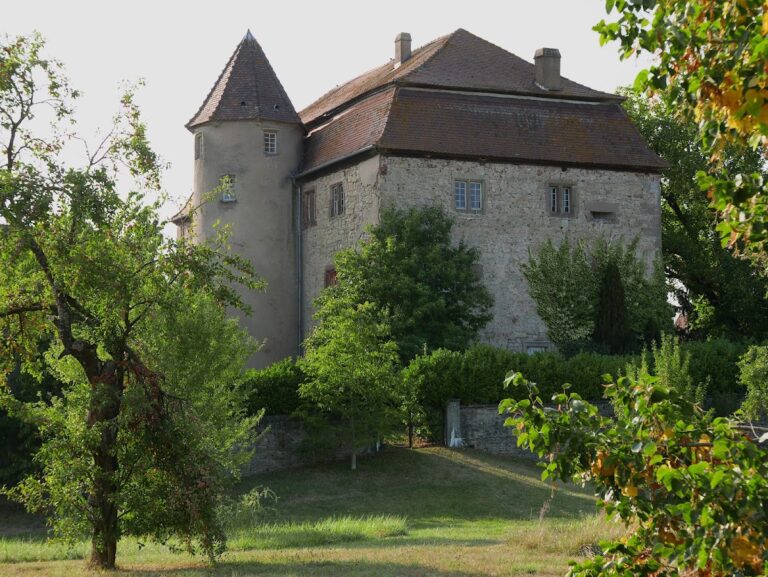
Château de Fénétrange is a castle in France, in the commune of Fénétrange in the Moselle department. The site was a medieval fortress by the tenth century, while construction of the castle is listed as having begun in the fourteenth century. Its defensive history and later rebuilding shaped the unusual complex that survives today.
Medieval Fortress and Dynastic Change
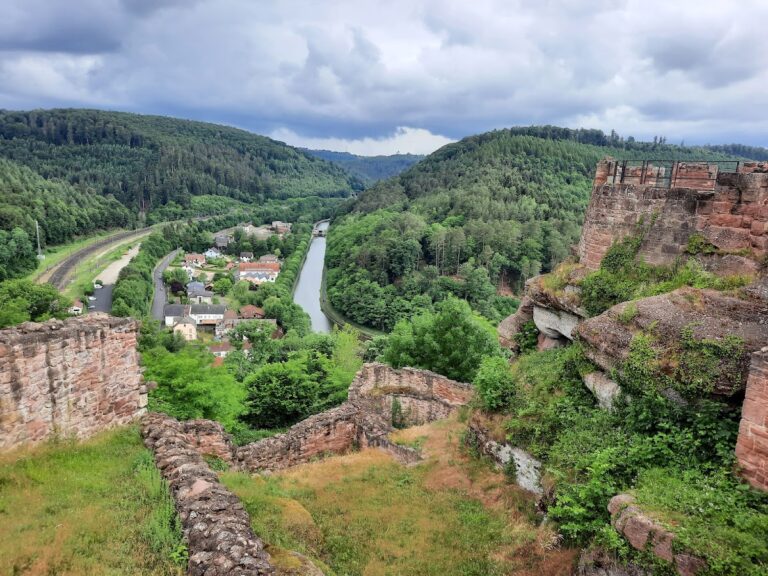
Known at that time as Fénétrange-Malberg castle, the fortress was enclosed by substantial walls and moats. Water from the nearby Sarre could be directed into the moats during an attack, strengthening its defenses. The fortress was reputed to be impregnable.
After Jean VII de Fénétrange died in 1467, the noble dynasty that had given its name to the castle became extinct. Ownership then passed to the Houses of Moers-Sarrewerden and Neuchâtel. In this context, a House was a noble family, while a dynasty was a succession of members of the same ruling family.
Reconstruction and Religious Change
Dominique de Frimont, the castle’s owner, reconstructed it in 1766. This rebuilding created the unusual horseshoe-shaped courtyard, which remains one of the defining features of Château de Fénétrange.
The castle chapel was erected in 1584 on the initiative of Diane de Dommartin and her husband, Charles Philippe de Croÿ. Its construction took place during the Reformation, the sixteenth-century religious transformation that divided Western Christianity and led to the establishment of Protestant churches at Fénétrange.
Heritage Protection and Name
In 1982, the façades and roofs were entered in the register of historic monuments, while the chapel and spiral staircase received classification. During the nineteenth century, the name was also written as “Château de Fenestrange” and “Château de Fénestrange”; the s was later dropped from the spelling.
Remains
Horseshoe Courtyard
The castle is particularly recognizable for its horseshoe-shaped courtyard, an atypical arrangement produced by the 1766 reconstruction. Its paving reproduces the rosette pattern found on the floor of the nave of the collegiate church of Saint-Remy in Fénétrange. At the center, a plaque bears the Fénétrange coat of arms surmounted by a crown, a symbol used by the commune in civic heraldry.
Spiral Staircase
A former tower houses the castle’s helical staircase, a spiral staircase that follows a continuous turning curve around a central axis or open core. Its snail-shell form is described as a unique example of a helical staircase in Lorraine.
Gothic Chapel
The castle chapel, also called the seigneurial chapel, is a Gothic building. Gothic architecture was a medieval style associated especially with pointed arches, ribbed vaults, and large windows.