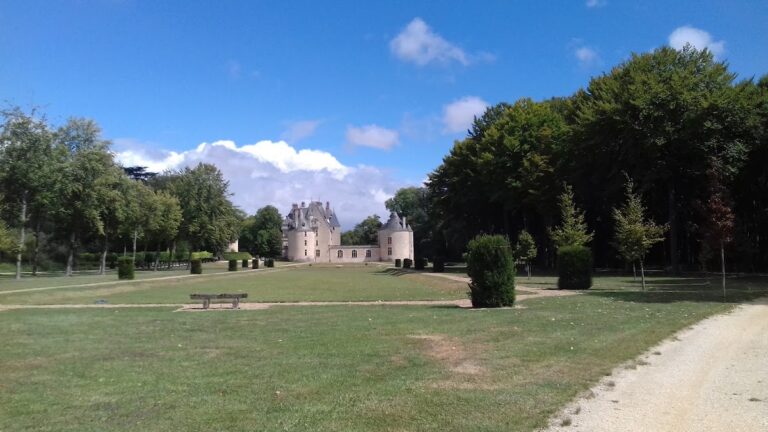
Château de Maupas: A Historic Seigneurial Residence in France


Site at a Glance
- Rating
- 4.1
- Popularity
- Very Low
- Country
- France
- Primary era
- Medieval
- External website
- Open
- Eras represented
- Medieval, Early Modern
- Civilizations
- French
- Site type
- Domestic
- Remains
- Castle
On this page10 sections
History
Château de Maupas is a historic château in Morogues, France, whose origins lie in a medieval seigneurial fief, a landed lordship whose holder exercised authority and received income from its territory. Construction belongs to the medieval period, with the building associated with the fifteenth century and later work continuing into the nineteenth century. Its principal façade is partly in the Louis XV style, linking the residence to the period of the eighteenth-century French king.
Medieval lordship and fifteenth-century ownership
The lordship of Morogues and Maupas belonged to Henri III de Seuly, lord of Les Aix-d’Angillon, in 1284. In 1357 it passed to the Mathefelon family and later reached the Rochechouart family through marriage. A further marriage in 1440, between Philippine de Rochechouart and Jean du Mesnil-Simon, transferred the lordship to the du Mesnil-Simon family. Jean du Mesnil-Simon served as chamberlain to Louis XI, king of France.
The Agard de Maupas family
Antoine Agard acquired the lordship, château, and lands of Maupas in 1688 for 36,000 gold francs. His family came from Vierzon. His father, Clément Agard, had been elected mayor of Bourges in 1672 and was ennobled on that occasion.
In March 1725, Louis XV created the marquisate of Maupas, a territory or title governed by a marquis, from the lands, fiefs, and lordships of Morogues, Maupas, and Parassy. The new marquisate was granted to Pierre-Antoine Agard, son of Antoine Agard. Antoine Agard had belonged to Louis XV’s Guard.
Revolution, restoration, and royal connections
During the French Revolution, Maupas and its château were confiscated from a descendant of Pierre Agard who had emigrated. They were then sold as national property. Guillaume Guibert of Henrichemont, formerly a tenant farmer of the Agard de Maupas family, was among the purchasers.
Lieutenant Colonel Jérôme Agard de Maupas had followed the princes into exile in England and Germany. After the amnesty of April 1802, he returned to France and bought the estate and château back from the Guibert family, who had carefully maintained them.
Auguste Marie Agard, Marquis de Maupas, received the Legion of Honour, France’s principal order of merit, from Napoleon on 14 July 1813. Under Louis XVIII, the restored Bourbon king who ruled after the Napoleonic period, he served as military attaché at the embassy in Constantinople. In 1827 he became deputy governor and tutor to the seven-year-old Duke of Bordeaux. He continued to visit the duke during his adulthood and exile, when the former child was known as the future Count of Chambord.
This relationship explains the royal gifts preserved at Château de Maupas, including objects presented by the Count of Chambord and his mother, the Duchess of Berry. The château remains in the Agard de Maupas family and is the private residence of the eighth Marquis of Maupas.
Protection and twentieth-century park restoration
Château de Maupas has been listed as a French historic monument since 6 July 1992. This status provides legal protection for heritage recognized for its architectural or historical importance. The associated monumental stone staircase was also registered in July 1992. During the twentieth century, the extensive park was restored by Fernand Rolin, an architect and landscape designer from Bourges.
Remains
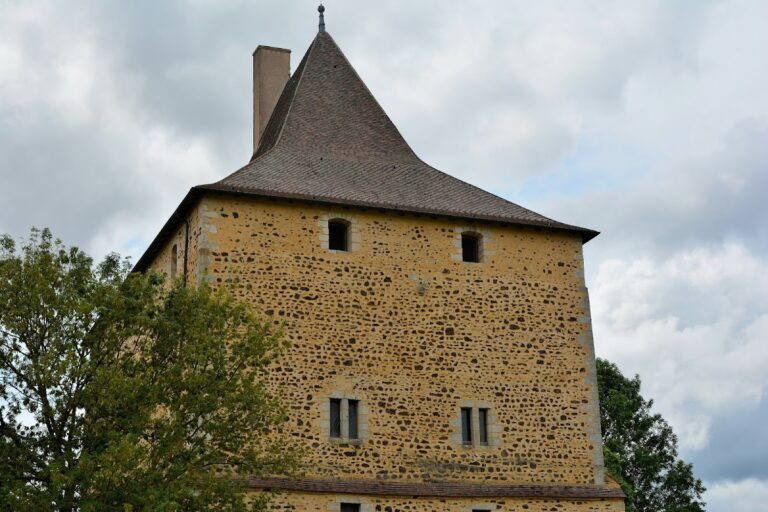
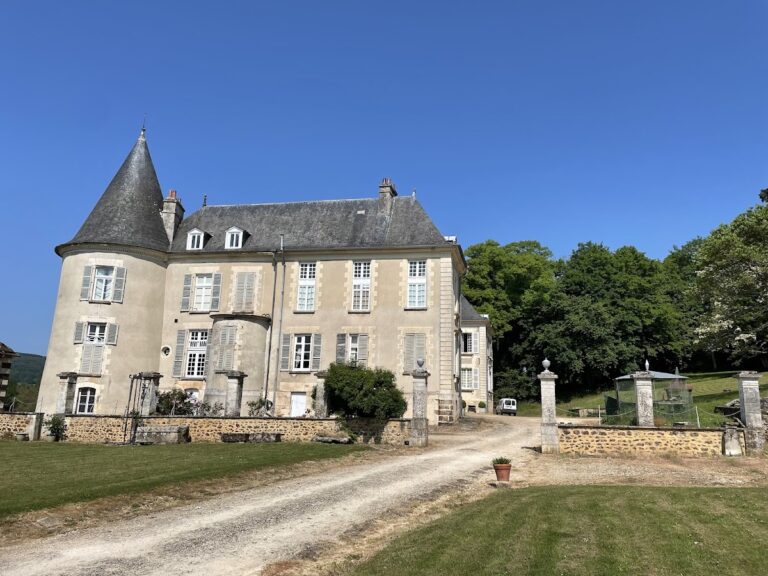
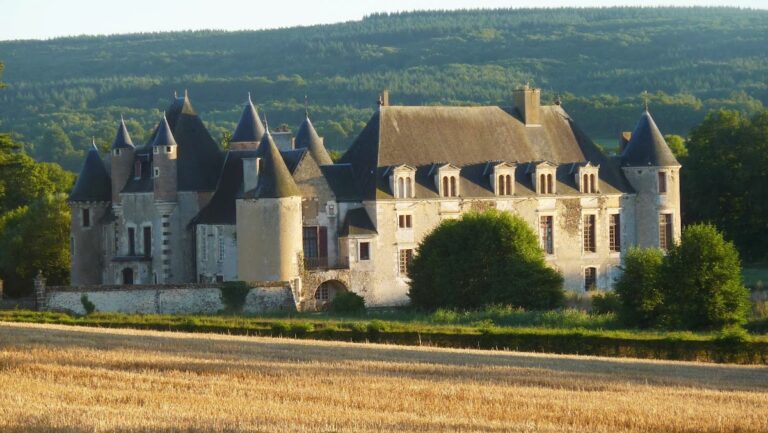
The château is organized around a principal façade facing the main courtyard, with a park-side elevation that retains medieval defensive references alongside later residential work. Its tall chimneys and façade are reinforced visually by a feudal tower crowned with crenellations, the raised sections and openings along the top of a defensive wall or tower. Stone cross-mullioned windows, divided by stone members in a cross-like arrangement, mark the façade.
Château architecture
Principal façade and donjon
Above the entrance to the donjon, the principal fortified tower of a medieval château, the gable bears the family motto Habiter c’est servir, meaning “To live is to serve.” On the park side, the crenellated feudal tower strengthens the château’s fortified character, while the main courtyard façade reflects the later Louis XV style.
South pavilion staircase
The tower of the south pavilion contains a monumental stone staircase dating from the eighteenth century. It forms part of the château’s formal interior and is associated with the building’s later residential development.
Interiors and decorative collections
The honor staircase displays 900 hand-decorated plates, almost all made of faience, a tin-glazed earthenware painted with decorative designs. Théophile Agard de Maupas arranged the collection during major modernization works in 1866. Each piece is unique, and the collection includes examples from prominent French and European manufactories at Moustiers, Nevers, Rouen, La Rochelle, Strasbourg, and Delft.
The furnished rooms include bedrooms, a salon, a games room, and a kitchen. Aubusson tapestries, woven wall hangings associated with the French tapestry-producing center of Aubusson, are also preserved within the château.
Nearby sites