Altenmuhr Castle: A Medieval Moated Castle in Germany


Site at a Glance
- Rating
- 4.4
- Popularity
- Very Low
- Country
- Germany
- Primary era
- Early Modern
- Eras represented
- Medieval, Early Modern, Modern
- Civilizations
- Holy Roman Empire
- Site type
- Military
- Remains
- Castle
On this page13 sections
History
Medieval origins
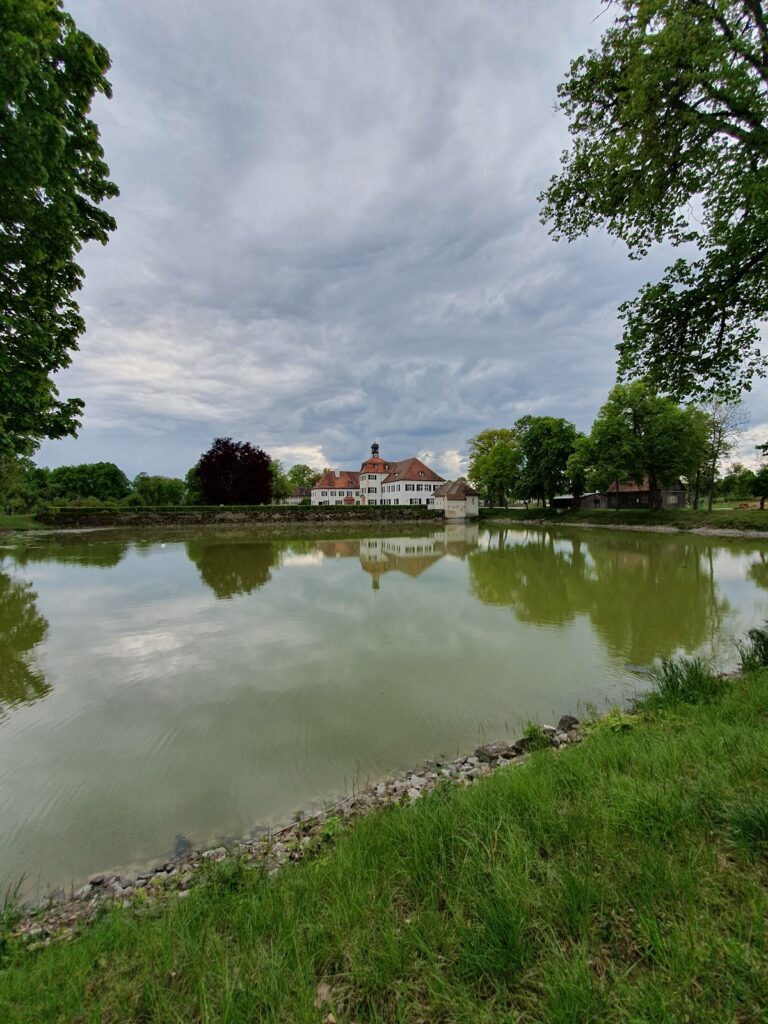
Altenmuhr Castle is a twelfth-century moated castle in Germany, in the village of Altenmuhr, now part of the unified municipality of Muhr am See. The Lords of Muhr built it in the twelfth century as ministeriales, members of the medieval service nobility who served the bishops of Eichstatt in administrative and military roles. Hartwich de Mure is documented in 1169.
Later legends placed the castle’s construction in the tenth century, associating it with the Hungarian invasions. The historical evidence instead identifies the twelfth century as the period in which the Lords of Muhr established the castle. The first comprehensive description appears in the 1551 Salbuch, a territorial register of property and administration.
Changes of ownership
The Lords of Lentersheim acquired Altenmuhr Castle in the fourteenth century. When their line died out, Altenmuhr and Neuenmuhr, together with their castles, passed to the Principality of Ansbach. This was a German Hohenzollern-ruled state that later became part of Prussia.
After Ansbach came under Prussian rule, King Frederick William III transferred the castle in 1799 to Karl August von Hardenberg, a Prussian minister and reforming statesman. Wilhelm von Le Suire received it in 1837, and the property remains privately owned by the Le Suire family.
Alterations and cultural associations
The castle was altered during the sixteenth, seventeenth, and nineteenth centuries. These successive changes reshaped the medieval complex and affected the survival of its defensive surroundings. The moat was leveled in the nineteenth century, although an eighteenth-century bridge remained.
Altenmuhr Castle was immortalized in Friedrich Schiller’s The Robbers in 1781. Schiller was an influential German poet and dramatist. The castle later became one of the filming locations for The Robber Hotzenplotz. It is listed as a protected architectural monument in the Bavarian monument register under designation number D-5-77-114-27.
Remains
Castle complex
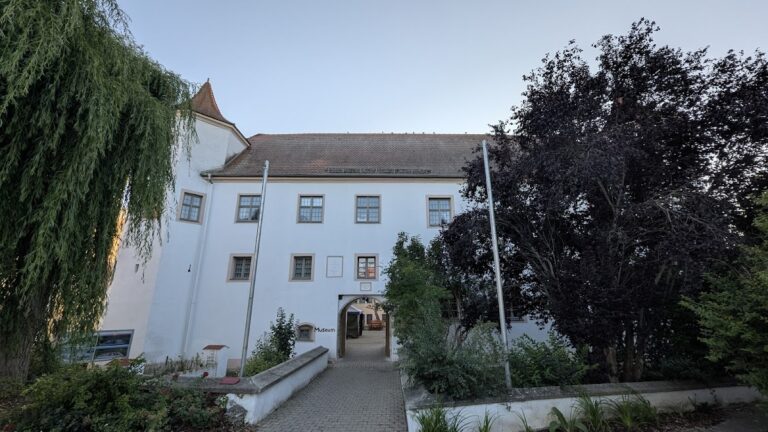
The castle stands east of the Altmuhl, at the edge of Altenmuhr and north of its historic center, at an elevation of 416 metres above sea level according to the Normalheight Null datum. The original complex was a square zwinger, an outer defensive enclosure between the main fortifications and the surrounding wall, with four round corner towers. Its enclosing walls and moat were removed in the nineteenth century, leaving the early-seventeenth-century main building as the principal visible structure.
Keep
A five-story keep survives in the south-western part of the complex. The tower rises 20 metres and has walls approximately 1.6 metres thick. A keep, or medieval defensive tower, it represents a substantial surviving element of the castle’s earlier fortified layout.
West building
The three-story west building has a volute gable. Its second upper floor contains richly decorated stucco ceilings from the early seventeenth century. Stucco is a molded or applied plaster used for architectural decoration, and these ceilings were made by the Nuremberg artist Hans Kuhn.
East wing
The almost tower-like east wing has four stories and dates from the fourteenth or fifteenth century. One of its halls contains valuable grisaille wallpaper from around 1810 to 1820. Grisaille uses shades of gray to imitate relief or monochrome imagery. The hall was last renovated in 2006.
Outbuildings and grounds
Former brewery
South of the main castle stands the former castle brewery, a protected building with a half-hipped roof dating from the early eighteenth century. Its position south of the principal complex forms part of the surviving arrangement of service buildings around the castle.
Barns and stables
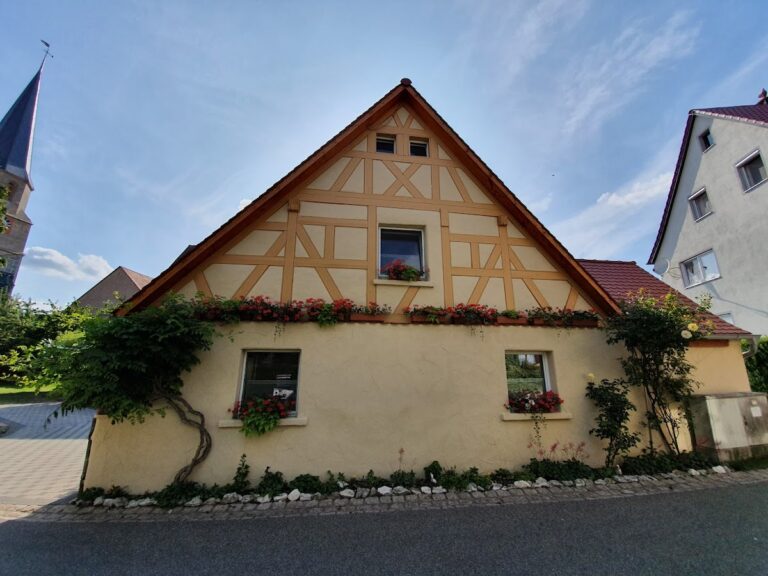
Several half-timbered barns and stable buildings also stand south of the main castle. They belong to the group of agricultural and service structures associated with the castle property.
Park and bridge
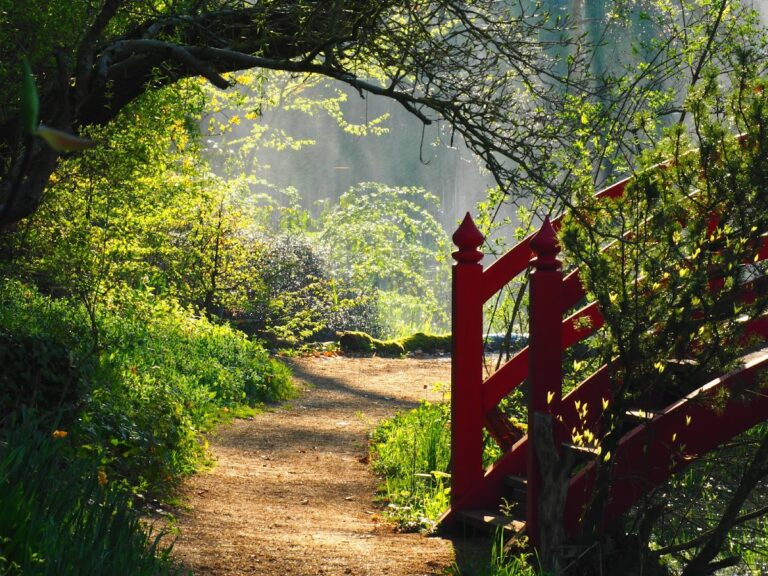
The castle park was laid out in the late eighteenth century and contains a nineteenth-century garden pavilion. An eighteenth-century bridge also survives from the approach across the moat, although the moat itself was leveled during the nineteenth century.