Schloss Falkenhausen: A Baroque Palace in Gunzenhausen, Germany


Site at a Glance
- Rating
- 4.3
- Popularity
- Very Low
- Country
- Germany
- Primary era
- Early Modern
- Eras represented
- Early Modern
- Civilizations
- Holy Roman Empire
- Site type
- Domestic
- Remains
- Elite Residence
On this page8 sections
History
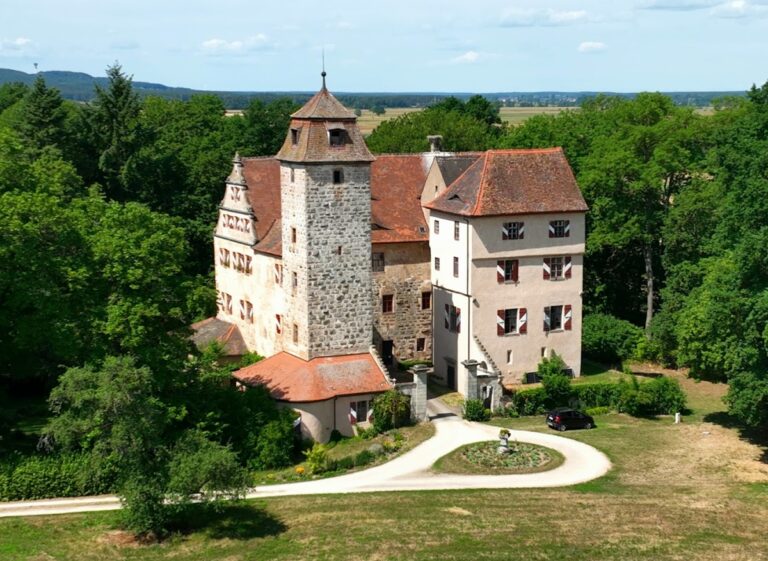
Schloss Falkenhausen is a Baroque palace in Wald, a locality of Gunzenhausen, Germany, built from 1730 on the site of a medieval castle. The earlier stronghold was known as Wald Castle and passed through the hands of regional nobles, burgraves, and later princely administrators before the present palace was erected.
Medieval Wald Castle
During the thirteenth century, Wald Castle was held as an imperial fief by the Lords of Truhendingen. An imperial fief was property granted by the Holy Roman Emperor in return for obligations. The Truhendingen family probably granted Wald onward as a sub-fief to a collateral branch of the Lords of Rothenburg.
Several members of the Wald family were associated with the castle and the surrounding locality. Chunrad II Gebeno, also called Chunrad of Chamer and Chunrad of Wald, served in 1284 as dean of Eichstätt Cathedral and as a notary to the bishop. His brother Walther was parish priest of Wald in 1323. Chunrad died around 1303, while his probable son Gebo appears in a document from 1304 as a likely ministerial of Count Ulrich of Truhendingen. A ministerial was a service noble who carried out administrative or military duties for a higher lord.
Gebo was probably the same person as Eberhart of Wald, or possibly his brother, who appears in records from 1323 and 1328. Walther of Wald, known from 1292 to 1329, administered the hospital at Auhausen, worked as a notary to the Bishop of Eichstätt between 1286 and 1288, and served as cathedral scholaster of Eichstätt from 1302 to 1329. A cathedral scholaster was responsible for education within the cathedral chapter. The castle later passed to other holders.
Destruction and Changing Tenures
By 1350, the castle had been divided into four equal shares. The co-owners were Eppelein of Gailingen, Konrad of Lentersheim, his cousin Konz of Lentersheim, and Apel of Crailsheim. Wald Castle was reputed to have served as a base for robber knights.
The Burgraves of Nuremberg destroyed the castle in 1375 after raids associated with Eppelein of Gailingen, remembered in Nuremberg tradition as Eppela von Galla. Emperor Charles IV then granted the burgrave the feudal rights to the castle.
The division of ownership continued to shape the property’s later history. In 1386, Konrad Fuchs of Suntheim of Gunzenhausen, acting as creditor of the Lentersheim co-owners, received 375 gulden in compensation. Apel of Crailsheim initially kept his quarter-share in return for a pledge of service to the burgrave. Burgrave Frederick V appears to have acquired that share in 1381 and granted the Fortress of Wald to a member of the Lentersheim family for life.
This life tenancy gave possession for a person’s lifetime rather than permanent hereditary ownership. Similar arrangements subsequently transferred the castle to Martin of Eyb, Hermann of Vestenberg of Wald in 1406, the Lords of Leonrod in 1448, and the Lords of Modschiedel in 1459.
From Margravial Property to Falkenhausen Palace
In 1518, Emperor Maximilian tried to obtain the castle from Margrave Frederick V so that it could be granted to his favorite, Veit of Lentersheim. The plan failed when the emperor died. In 1565, Michael of Dowitsch, the margrave’s master of the hunt, served as the administrative official at Wald. In 1610, the margrave granted the office and castle to the Lentersheim family.
The property passed to the von Zocha family in 1626. Carl Friedrich von Zocha then built the present palace from 1730 on the site of the earlier castle. The von Zocha family also laid out the garden complex in 1732.
In 1749, Karl Wilhelm Friedrich, the ruling Margrave of the Principality of Ansbach, acquired the building for the family of his non-marital partner, Elisabeth Wünsch. Her son became a Baron of Falkenhausen, and the palace has remained in the private ownership of the Falkenhausen family.
Schloss Falkenhausen is included in the Bavarian List of Monuments, the state register of protected cultural monuments in Bavaria, as a protected architectural monument under number D-5-77-136-214.
Remains
Main Palace
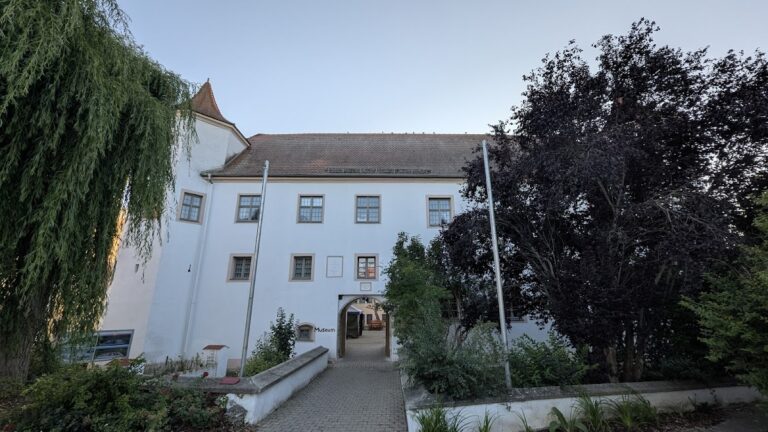
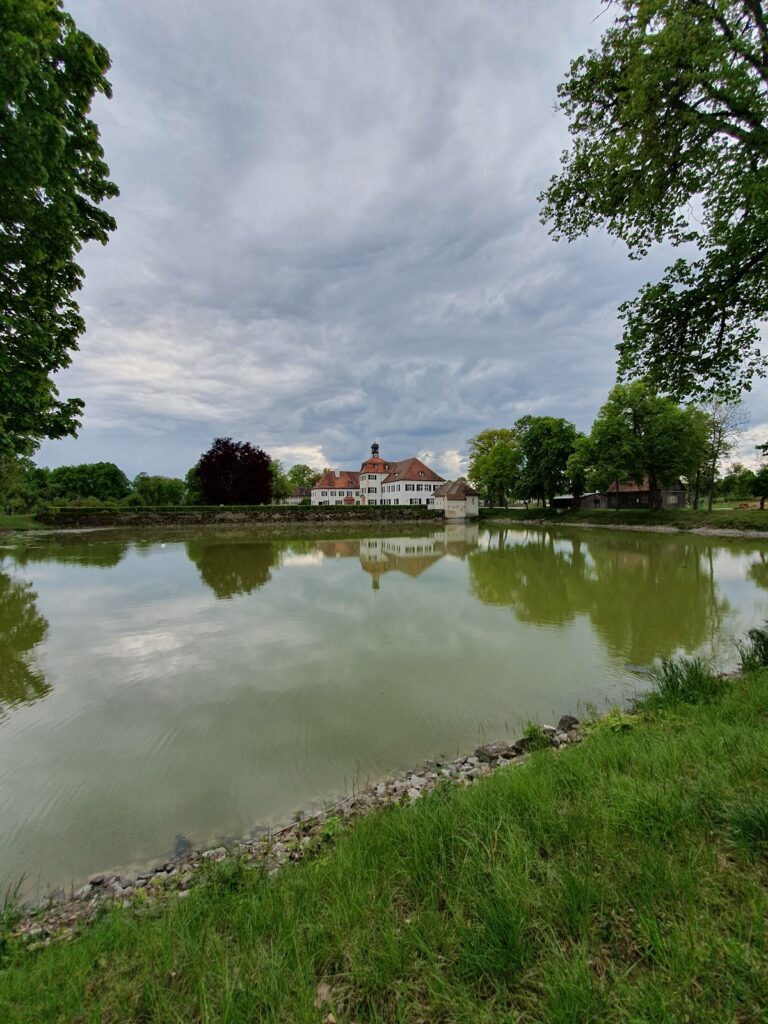
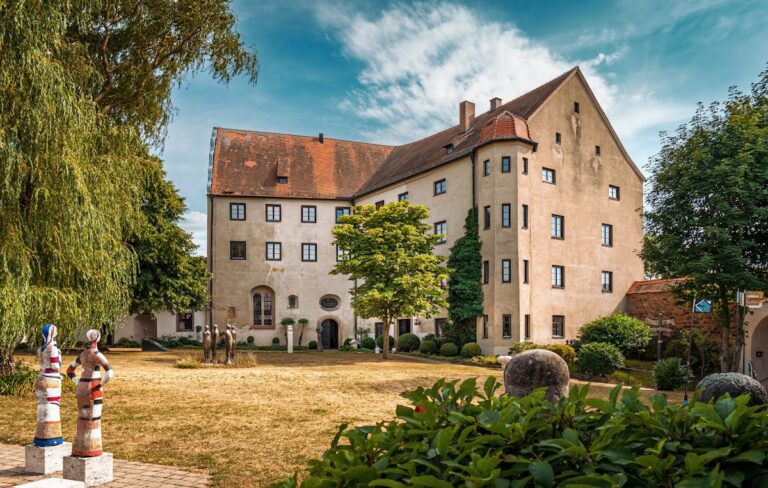
The surviving estate is centered on the Baroque main building, a two-storey palace with a hipped roof that slopes down on all sides. Rusticated corner pilasters project at the building’s corners and are treated to resemble strongly jointed masonry. Although Baroque architecture is generally associated with formal composition and elaborate visual effect, the interior of Schloss Falkenhausen is simply finished.
Pavilions and Garden Complex
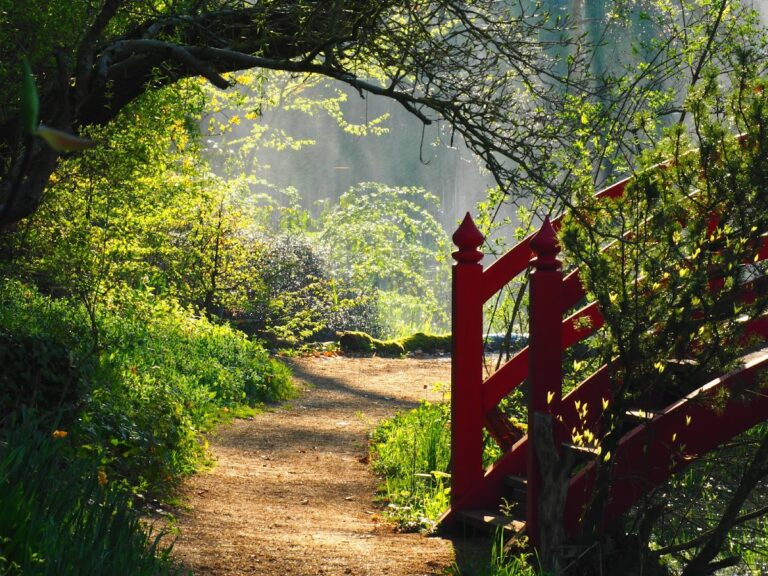
Two single-storey pavilions with hipped roofs and corner pilasters stand in front of the main facade. These small, distinct buildings form part of the palace composition. The enclosed garden belongs to the complex arranged by the von Zocha family in 1732.
Courtyard and Service Buildings
The protected estate also includes an eighteenth-century barn, a stable building, and the wall enclosing the courtyard. Together with the palace, pavilions, and garden enclosure, these surviving elements preserve the layout of the eighteenth-century Schloss Falkenhausen estate on the site of the medieval castle.
Nearby sites