Schloss Varenholz: A Weser Renaissance Castle in Germany

Site at a Glance
- Rating
- 3.1
- Popularity
- Very Low
- Country
- Germany
- Primary era
- Early Modern
- External website
- Open
- Eras represented
- Medieval, Early Modern, Modern
- Civilizations
- Holy Roman Empire
- Site type
- Military
- Remains
- Castle
On this page9 sections
History
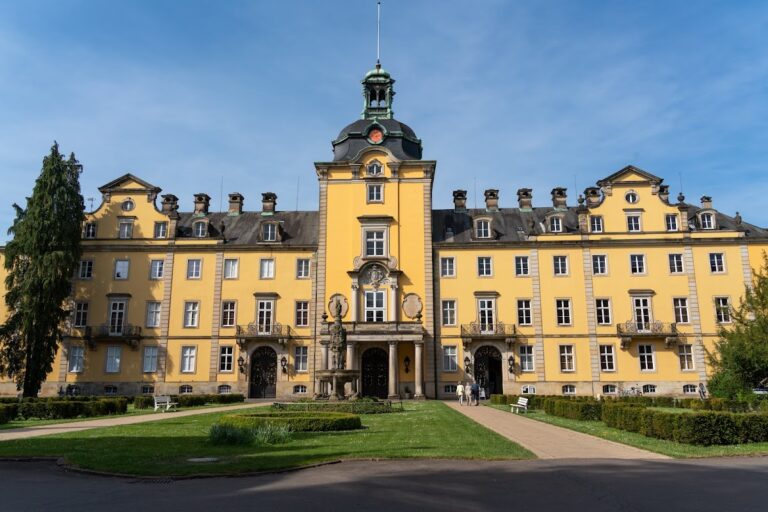
Schloss Varenholz is a castle in Kalletal, Germany, whose present complex has a building history reaching back to 1540. Its development culminated in the Weser Renaissance style, a regional form of late-sixteenth- and early-seventeenth-century Renaissance architecture known for elaborate façades and Renaissance decoration.
Medieval origins
A castle at Varenholz was first mentioned in 1188, when it was held by the Lords of Vornholte. In 1323, Simon I of Lippe acquired the castle from the Lords of Varenholz. Simon I, a medieval lord of Lippe, thereby extended his territory northward to the Weser.
Renaissance expansion
Between 1591 and 1600, Count Simon VI of Lippe expanded Varenholz into one of the major works of Weser Renaissance architecture. Simon VI was a later count of Lippe, and the rebuilding gave the medieval site its principal early modern character.
Twentieth-century changes
During the Nazi period, the castle served as a training centre for the Bund Deutscher Mädel, the female youth organisation of Nazi Germany. From 1945 to 1949, the UFA Universum Filmgesellschaft occupied the buildings. UFA was a major German film-production and distribution company.
In 1949, educator Elisabeth Engels established a boarding school at the castle, creating the foundation for the present youth-welfare institution and private secondary school. In October 1951, the Ministry of Education of North Rhine-Westphalia authorised her to operate a private Realschule for boys and girls there. A Realschule is a German secondary-school type traditionally associated with practically oriented education between primary school and more academically focused secondary schools.
Schloss Varenholz is now owned by the Lippe Regional Association. The complex houses Schloss Varenholz GmbH, a youth-welfare institution, and a private secondary school.
Legend and changing surroundings
The castle is associated with a local White Lady legend. According to the tradition, a benevolent female ghost appeared to pregnant women on clear nights with a full moon, although she was also sometimes regarded as a warning of approaching misfortune. A court lady named Katharina Gerstein lived at the castle and was said to have had ten children. The legend relates that she disappeared after her husband was forced into exile for political reasons.
Remains
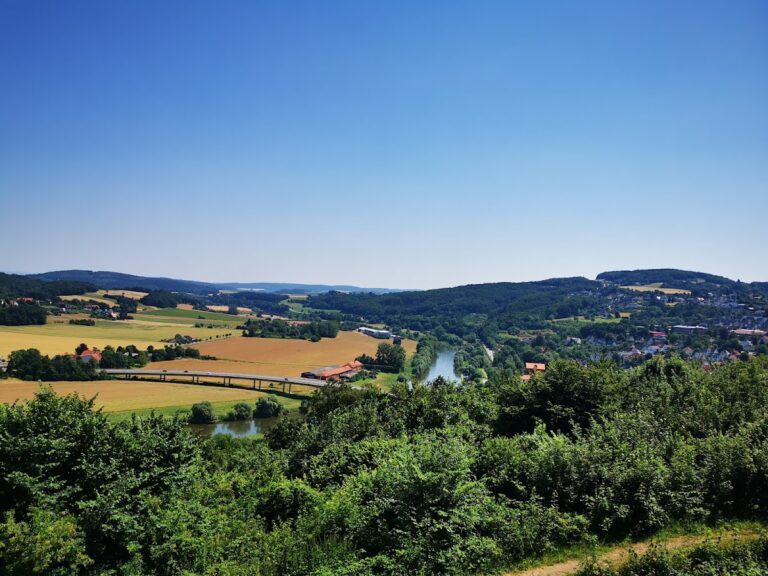
The surviving complex is associated with the Weser Renaissance rebuilding and extends across a site whose relationship with the river has changed. The original castle stood directly beside the Weser, but the river later shifted northward. South of the castle lies the estate that formerly belonged to it, while the outer ring wall incorporates the Evangelical Reformed Church of Varenholz.
Bridge and former river course
A four-arched bridge of rubble stone crosses the former course of the Weser. The bridge bears the year 1753 and marks the earlier position of the river beside the castle.
Church at the outer ring wall
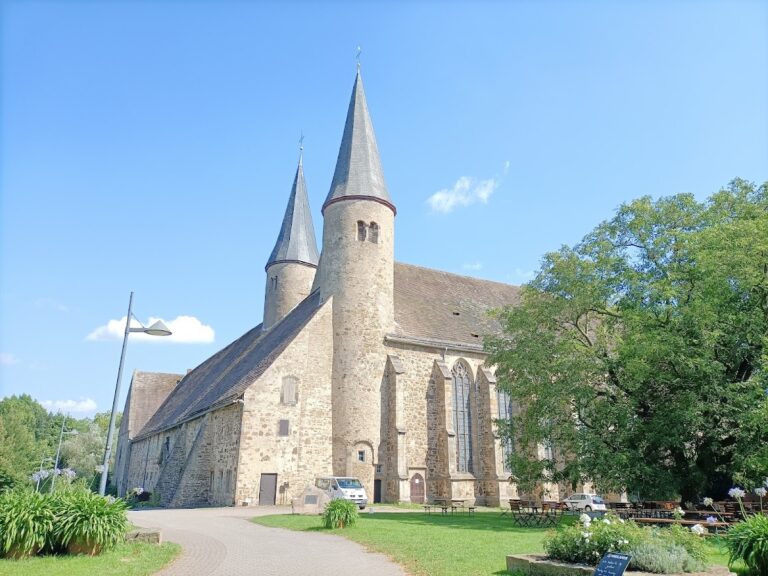
The Evangelical Reformed Church of Varenholz is a cruciform hall building at the outer ring wall. Its nave dates from 1500 and has a flat roof. The vaulted north wing dates from the fourteenth century, while the south wing has a portal dated 1839.
Castle church organ
The organ in the castle church was built in 1748 by Christian Klausing, an organ builder from Herford. It was made as a one-off instrument with nine stops and an attached pedal. An independent pedal division, the part of an organ played with the feet, was added in 1840.
The organ now has fourteen stops on one manual and pedal. A stop is a set of pipes producing a particular tone or timbre. The surviving historical components are the case, windchest, and seven stops.
Nearby sites