Ostia Antica: Rome’s Ancient Port City in Italy
Site at a Glance
- Rating
- 4.7
- Popularity
- Medium
- Country
- Italy
- Primary era
- Classical
- External website
- Open
- Eras represented
- Classical, Medieval
- Civilizations
- Papal States, Roman
- Site type
- City
On this page9 sections
History
Ostia Antica is an ancient Roman port city in Italy, near the mouth of the Tiber, traditionally founded under Rome’s fourth king, Ancus Marcius, around 630 BC. Its exact foundation date remains uncertain, but the settlement developed during Rome’s early history as a colony, military outpost, and center for the supply of salt and maritime resources.
Early colony and Republican settlement
Ancient tradition regarded Ostia as Rome’s first official colonia, a formally established Roman settlement created for strategic, administrative, or settlement purposes. Polybius associated its foundation with the reign of Numa Pompilius, an earlier period in Rome’s traditional, partly semi-legendary monarchy. The historian Jérôme Carcopino instead connected its origins with Roman victories over the Etruscans and the Anziates, and proposed that an earlier sanctuary of Vulcan stood at the site. No trace of that sanctuary survives.
Ostia’s first functions included the production and supply of salt, as well as probable support for Rome’s earliest fleets. Its military importance remained clear during the Second Punic War, Rome’s major late third-century BC conflict with Carthage, when Ostian citizens were exempted from military service. The exemption reflected the settlement’s continuing responsibilities in maritime supply and naval operations.
During the civil war between Marius and Sulla, Ostia was plundered. The city was subsequently rebuilt under Sulla’s dictatorship, during the period when the Roman Republic was still the governing system of Rome. Its position at the Tiber’s mouth allowed it to serve both the capital and maritime trade.
Augustan and imperial expansion
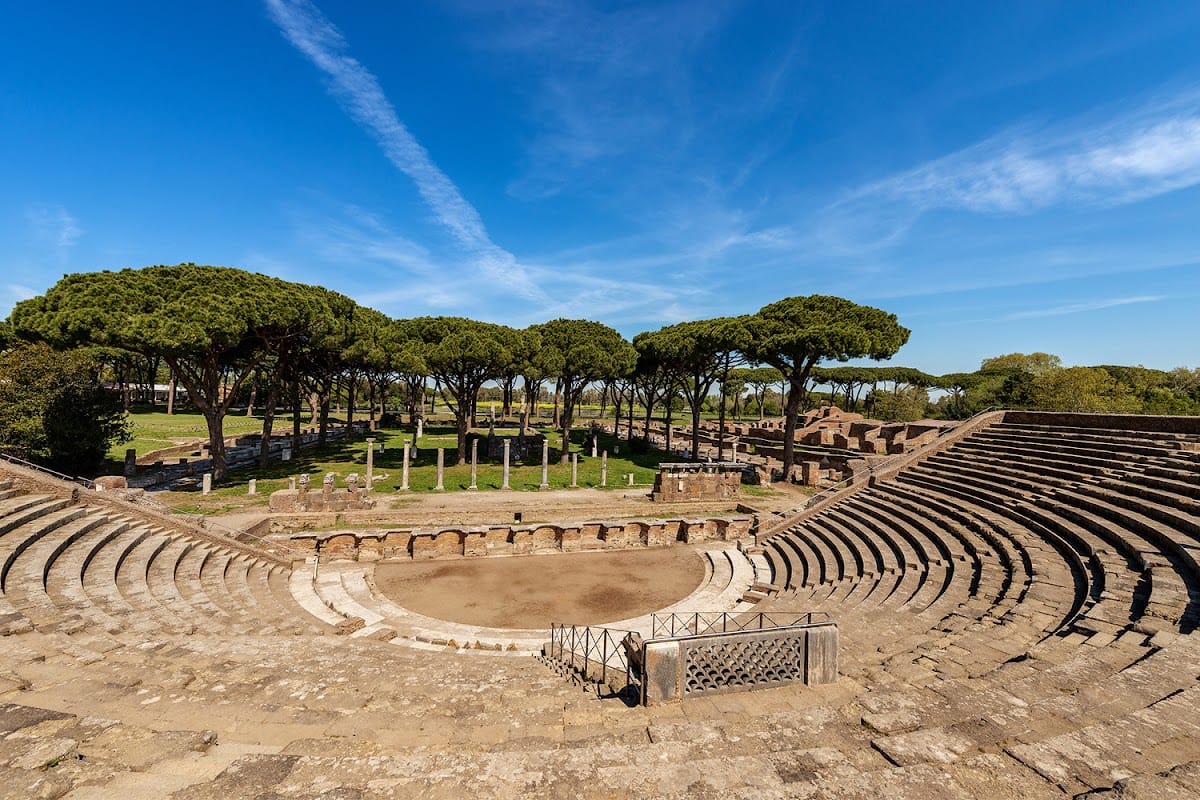
Ostia became a major port and commercial center during the Roman Empire, including a role in supplying grain to Rome. Under Augustus, the city received substantial improvements. The theatre was constructed and the forum was renewed, strengthening the urban center of a settlement whose maritime and commercial importance had grown considerably.
Augustus also planned a new harbor for Ostia. The basin was constructed farther along the Tiber by the emperor Claudius in AD 46, approximately 4 kilometres from the city. Repeated silting made the Claudian harbor unsuitable for large ships, and it was later replaced by Trajan’s hexagonal harbor, a six-sided basin designed by Apollodorus of Damascus, a prominent architect and engineer active under Trajan.
The harbor settlement developed as an autonomous suburb of Ostia before becoming an independent city under Constantine I. Ostia then entered a long decline as the imperial capital moved to Constantinople and the neighboring port of Portus gained greater importance.
Christian community and medieval decline
Ostia had a bishop by at least the third century. A bishop was the senior Christian authority responsible for an ecclesiastical territory, and the bishopric of Ostia later became one of the most important offices associated with Rome. Saint Monica, the mother of Augustine, died at Ostia in AD 387 in a house associated with the Diocese of Rome while travelling back to Africa after Augustine’s conversion to Christianity.
During the fifth century, the surviving city was repeatedly devastated and plundered by Alaric, king of the Visigoths, and Vitiges, a sixth-century Ostrogothic king. Arab raids in the Mediterranean further reduced maritime commerce. Abandonment was completed during the ninth century, when the remaining inhabitants moved to nearby Gregoriopolis.
In 849, the Battle of Ostia took place between the Campanian League led by Cesarius the consul and a Saracen fleet. The battle was later represented by Raphael in the Vatican Rooms, linking the abandoned port to one of the best-known artistic treatments of its medieval history.
Reuse and archaeological preservation
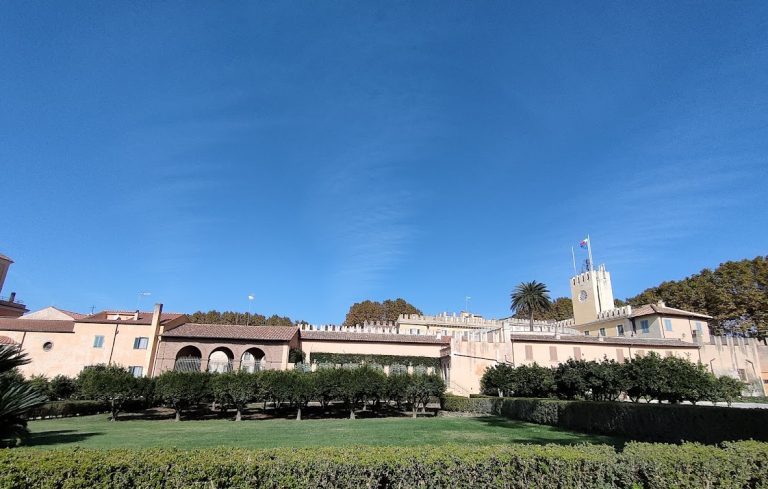
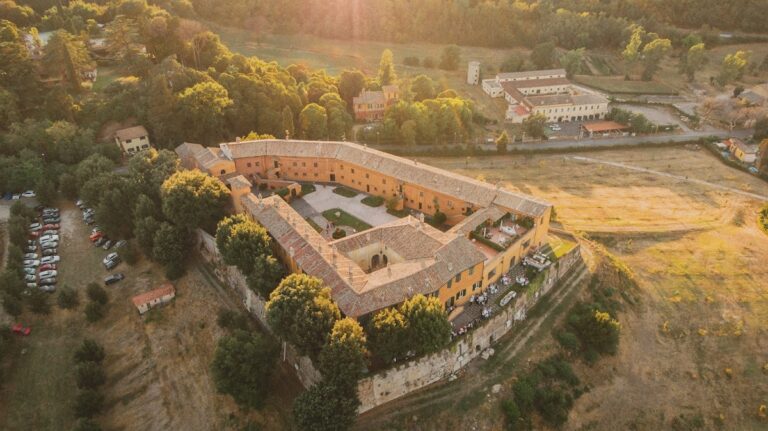
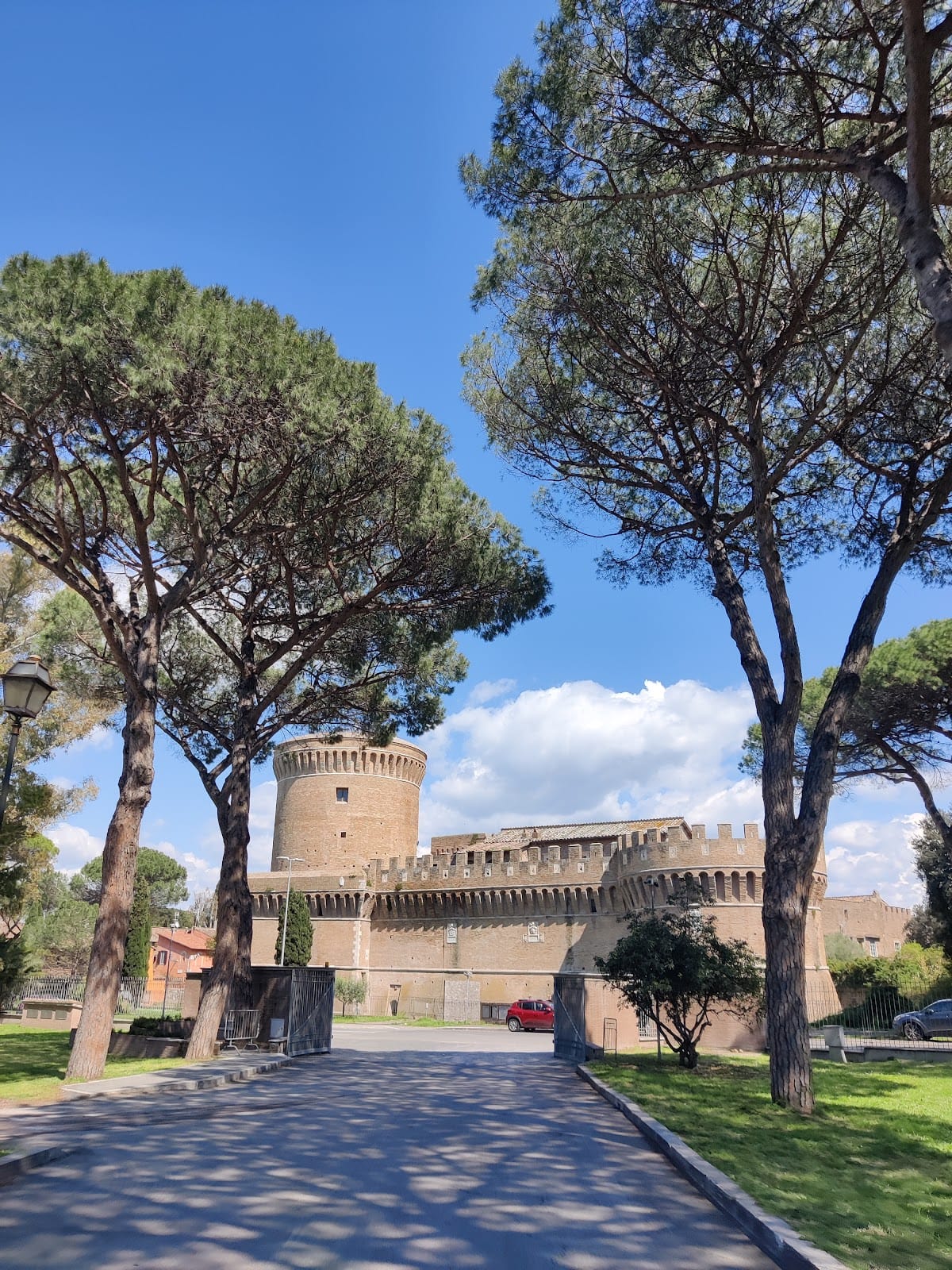
During the medieval period, the abandoned Roman settlement became a source of marble. Its position at the mouth of the Tiber remained strategically important, however. Cardinal Giuliano della Rovere, who later became Pope Julius II, ordered a fortress to defend the river against pirate raids. A major flood in 1557 diverted the river and ended the fortress’s strategic function. Tor San Michele and Tor Boacciana later replaced it in the defensive system.
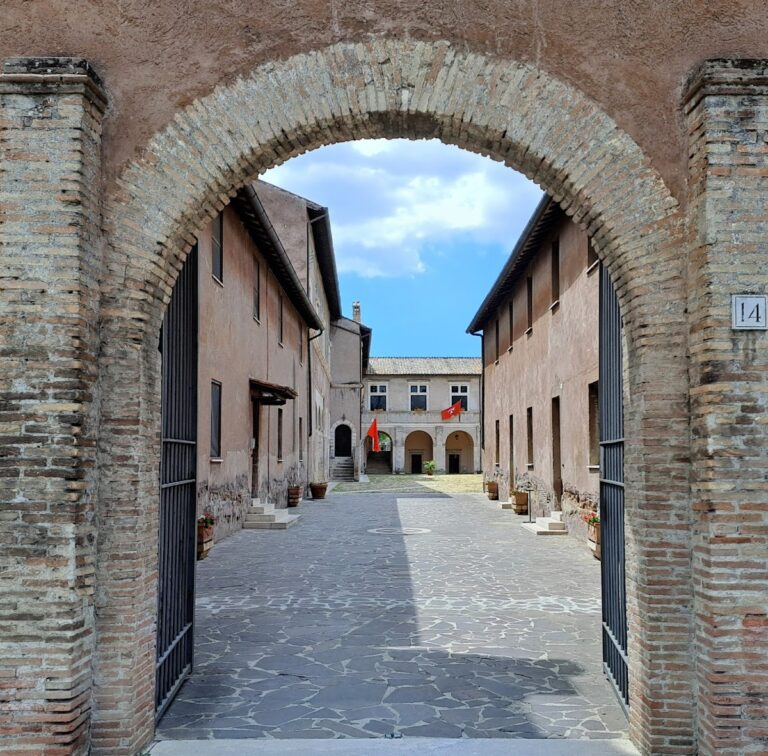
Ostia Antica is now administered as an archaeological park. The park includes the excavated ancient city and the Museo Ostiense, as well as the Castle of Giulio II, the Borgo of Ostia Antica, the Imperial Harbours of Claudius and Trajan, the Necropolis of Porto at Isola Sacra, the Museum of Ships, and the Basilica of Saint Hippolytus complex.
Remains
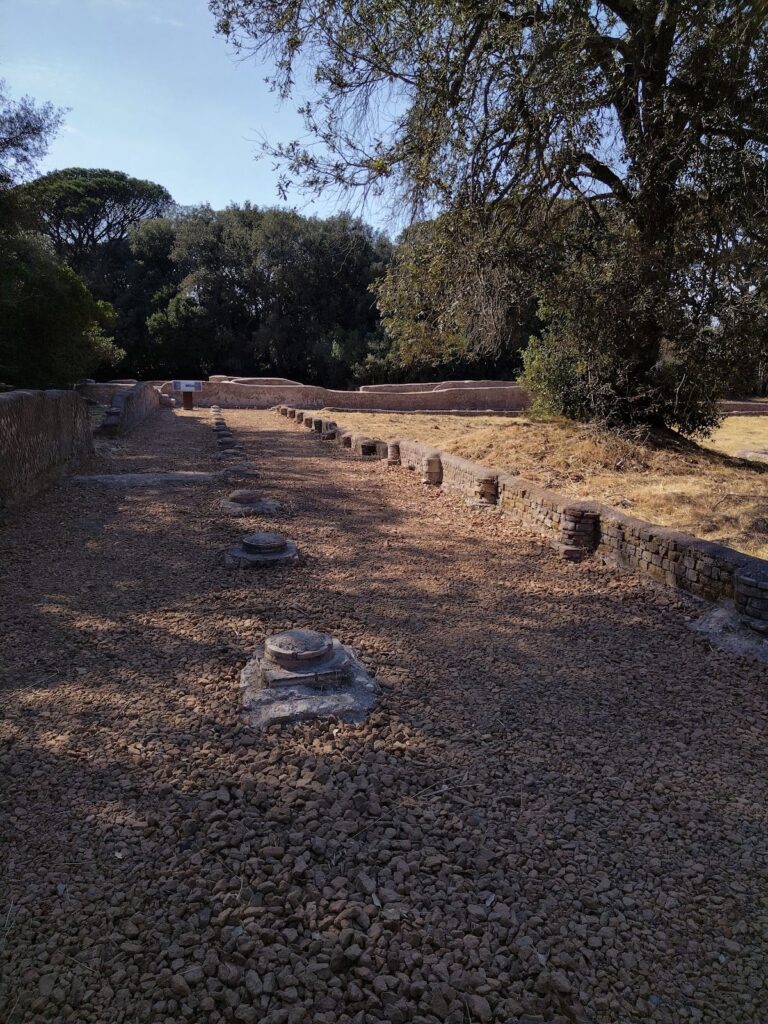
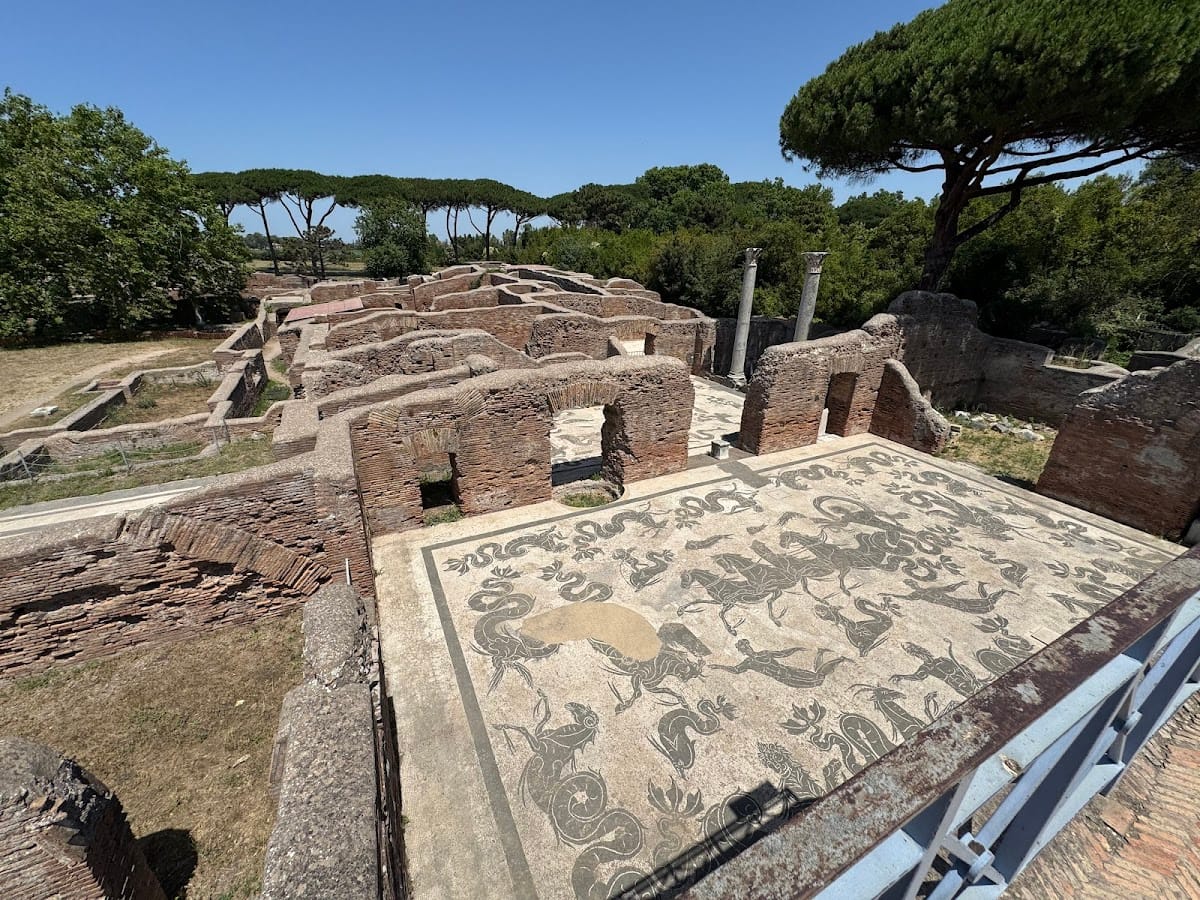
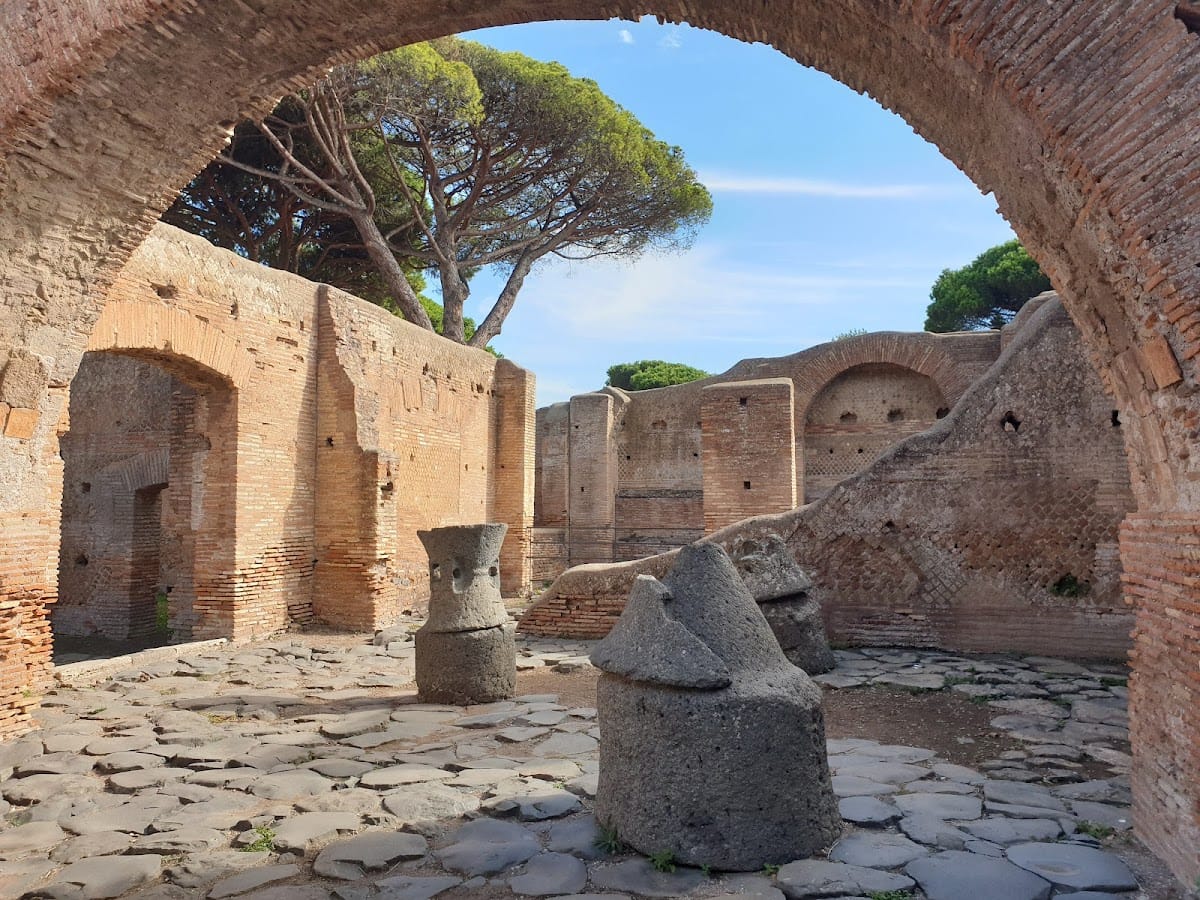
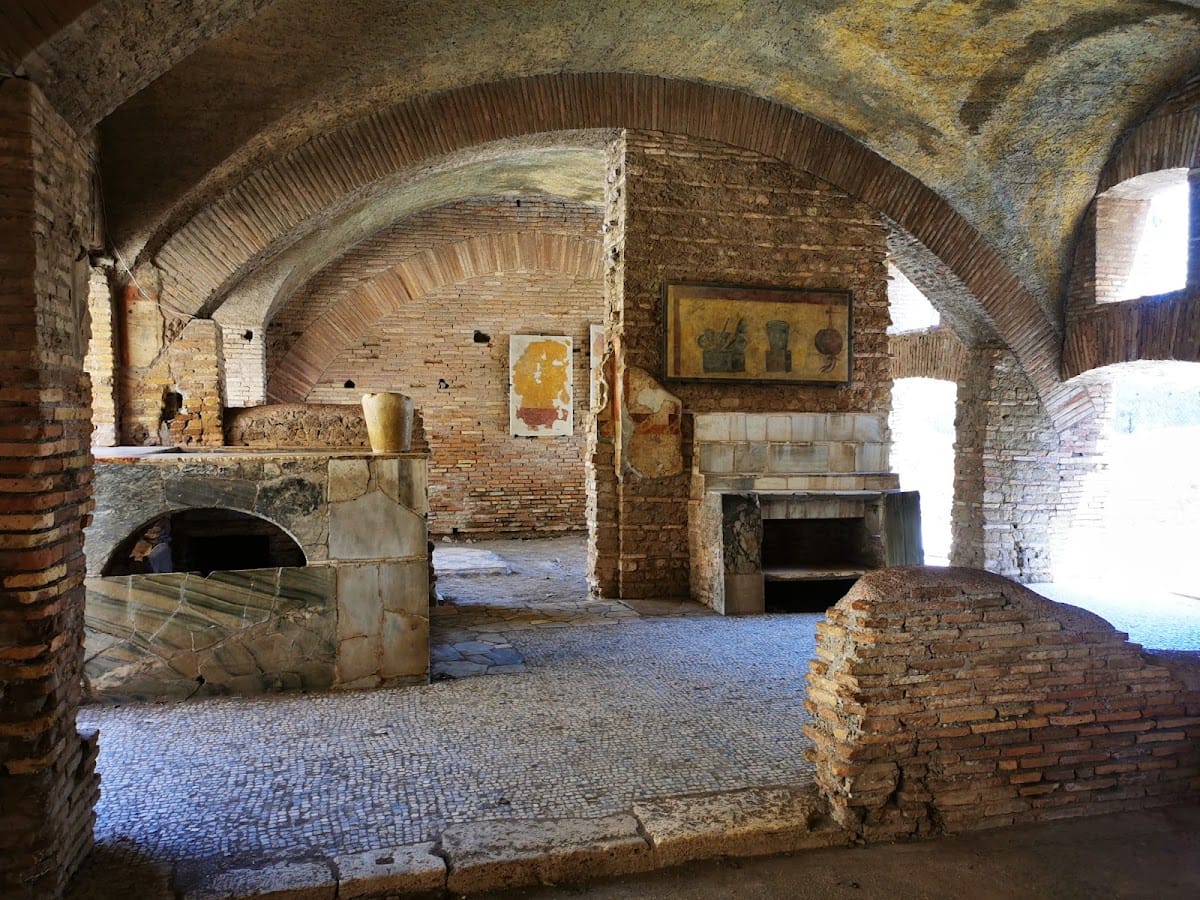
The ancient city stood beside the Tiber and the sea, which lay closer to the settlement in antiquity than it does today. The archaeological area covers approximately 150 hectares. About 40 percent of the excavations has been completed, while more than half of the ancient city remains buried. The surviving remains present Ostia as an extensive Roman urban and harbor landscape rather than as a single isolated monument.
Urban center
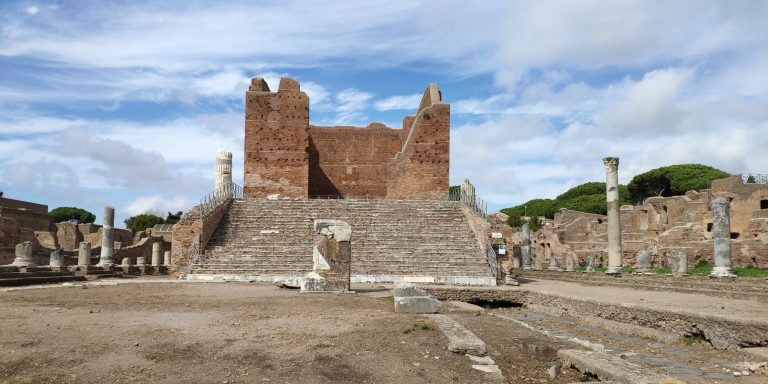
The excavated city contains the Roman theatre and the forum, whose renewal belongs to the Augustan period. These form the principal surviving urban monuments within the ancient settlement and represent the public center of a city that served commercial, administrative, and maritime purposes during the imperial period.
Harbors and associated archaeological areas
The Claudian harbor was built along the Tiber approximately 4 kilometres from Ostia. Its later replacement, Trajan’s harbor, had a hexagonal basin designed by Apollodorus of Damascus. The Imperial Harbours are administered as an associated archaeological area of the park, extending the physical interpretation of Ostia beyond the excavated city itself.
Museums and preserved collections
The Museo Ostiense occupies the Casone del Sale within the excavated area. The archaeological park also includes the Museum of Ships and other associated archaeological areas and monuments, bringing together remains from the city, its harbors, and the wider port environment.
Ostia Antica is described as one of the best-preserved Roman cities in the world and as the largest archaeological park in the world. Its excavations, buried areas, harbor remains, and associated monuments preserve the development of a settlement that connected Rome with the sea for many centuries.