Château de Bossey: Manor House and Ecumenical Institute in Switzerland
Site at a Glance
- Rating
- 4.4
- Popularity
- Low
- Country
- Switzerland
- Primary era
- Early Modern
- External website
- Open
- Eras represented
- Medieval, Early Modern, Modern
- Civilizations
- Unclassified
- Site type
- Domestic
- Remains
- Manor House
On this page9 sections
History
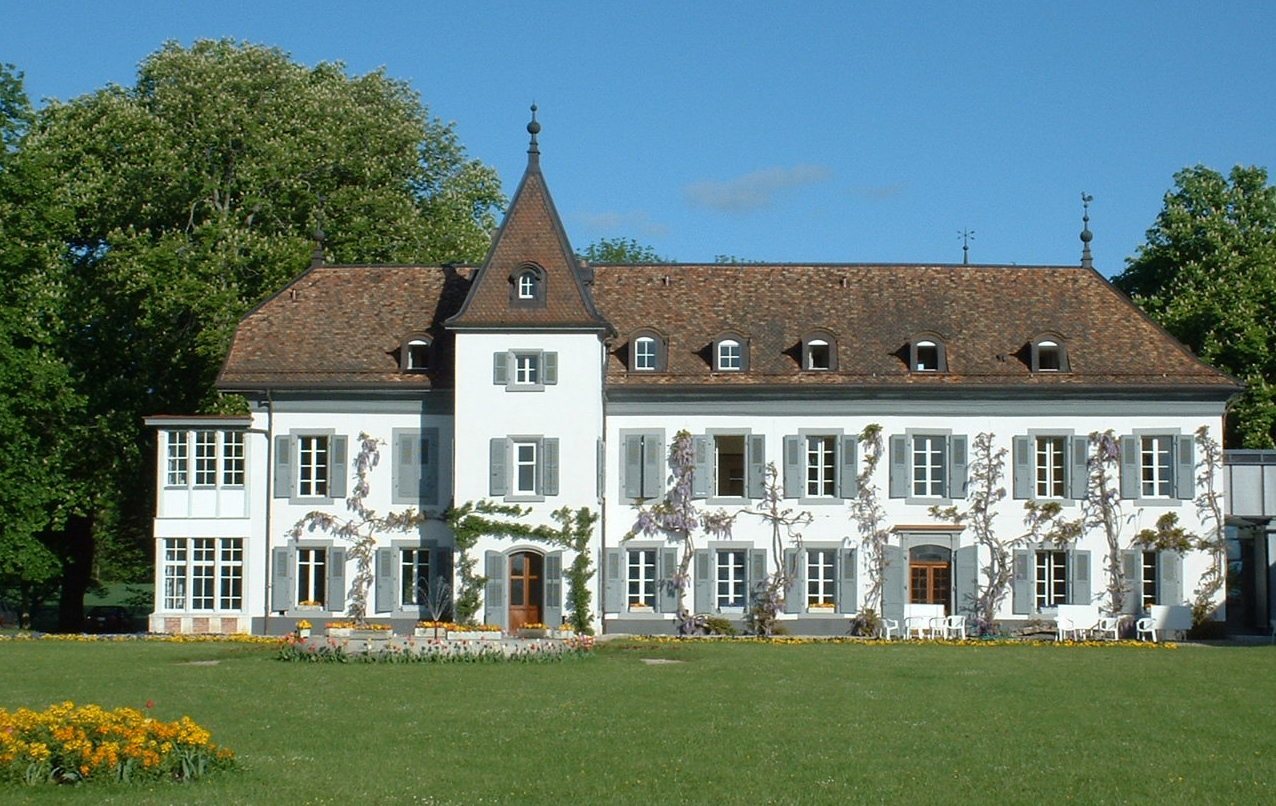
Château de Bossey is an eighteenth-century manor house and former feudal estate in Switzerland, near Geneva in the municipality of Bogis-Bossey, canton of Vaud. The principal manor house was built in 1722 by the Turrettini family, incorporating a medieval tower dating from the twelfth century. Its later history includes aristocratic ownership, international education, and its continuing role as the headquarters of the Ecumenical Institute of Bossey.
Medieval Domain and Turrettini Lords
The feudal domain of Bossey appears in the historical record in 1125, when Humbert de Grammont, bishop of Geneva, granted it to Bonmont Abbey, a medieval religious institution in the region. The domain remained dependent on the abbey until the Reformation, the sixteenth-century movement that divided Western Christianity and established Protestant churches.
Three successive members of the Turrettini family held the title “lords of Bossey.” Horace Bénédict Turrettini held it from 1651 to 1728, followed by his son Jean Louis from 1697 to 1753 and Jean Louis’s son Horace Jean Louis from 1746 to 1828. The family built the principal manor house in 1722, giving the estate its eighteenth-century architectural character.
Nineteenth-Century Ownership
The estate changed hands several times during the nineteenth century. Madame de Staël, the Swiss-born writer and intellectual, bought Bossey in 1809 for her son Auguste. He sold it two years later. During this period, Bossey was an intellectually and socially prominent center.
International Education at Bossey
During the 1930s, the estate accommodated two educational institutions. Petit-Bossey housed the Juillerat Institute, an active school that accepted boys and girls aged five to fourteen from 1931. Its teaching emphasized individually directed work, practical activity, and guided self-directed learning, and the school brought together children from many countries. The château housed a college for American girls, which is said to have become the Geneva College for Women in 1930.
The Juillerat Institute had an international profile. Sons of the Persian emperor, including the heir, attended in 1933 and 1934, while the empress stayed at Château de Bossey during the summer of 1934. Swiss educator Elisabeth Huguenin directed the institute from 1935 to 1937. In July 1938, its buildings and associated property were sold at auction to Louis-Édouard Juillerat, the institute’s head. The property included the farm and outbuildings, gardens, fields, sports and play areas, woods, and greenhouses in the cantons of Vaud and Geneva. The château also hosted cultural and philanthropic events from 1936 to 1939.
From 1939, the buildings at Bossey may have been used to intern Polish military personnel arriving from France. This possible wartime use preceded the estate’s post-war transformation into an international center for Christian cooperation and dialogue.
The Ecumenical Institute
The Ecumenical Institute of Bossey was established in 1946, with its headquarters at the château and additional use of Petit-Bossey. The estate became the property of the World Council of Churches in 1950. The council, an international fellowship of Christian churches established in 1948, subsequently operated the institute.
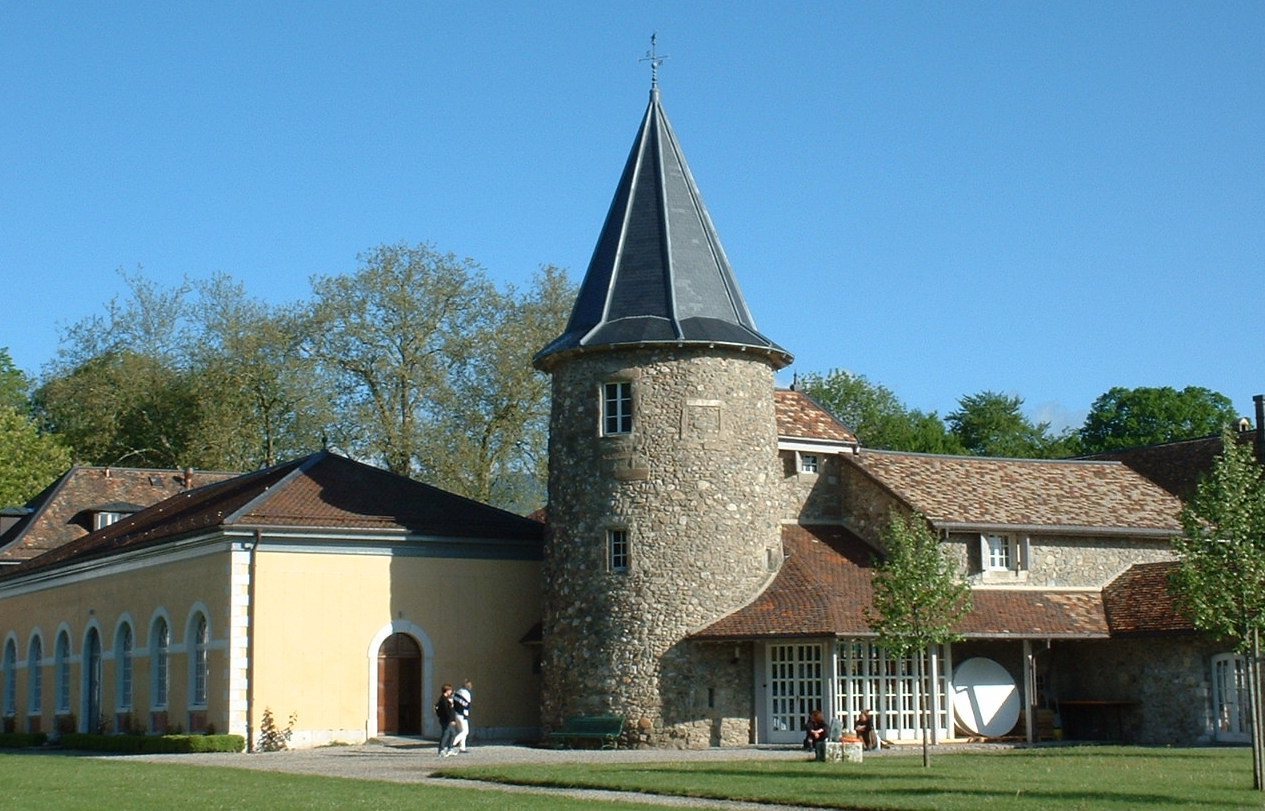
Major alterations in 1950 and 1951 changed the buildings substantially. Two dependencies were demolished, new annexes were constructed, one of the château’s towers was removed, and approximately thirty bedrooms were created on the upper floors. A separate building erected in the park in 1962 provided conference and teaching rooms and housed the World Council of Churches’ library. Since 2002, the château has also functioned as a conference and congress center for external groups.
Remains
Château de Bossey and its associated estate occupy a narrow strip of the municipality extending southeast of the village of Bogis. The hamlet and château of Bossey, Petit-Bossey, and the Belle-Ferme estate lie within this area. The eighteenth-century estate once extended as far as the lake, and its surviving organization still includes the château, dependencies, parkland, and the associated area of Petit-Bossey.
Avenue and Estate Landscape
A straight avenue, probably laid out around the time the manor house was built, survives as a feature nearly two kilometres long. It is described as possibly the longest avenue in Switzerland. Its lower section forms the boundary between Founex and Céligny, preserving a substantial element of the estate’s historic landscape.
Manor House
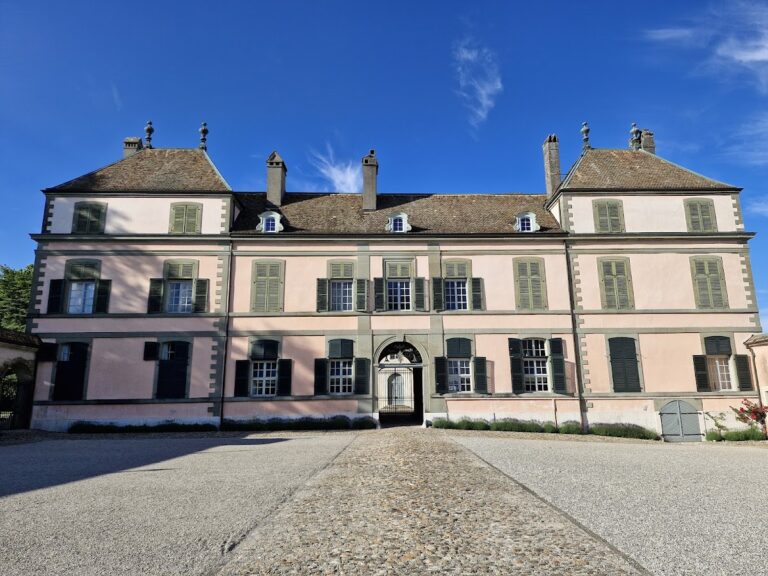
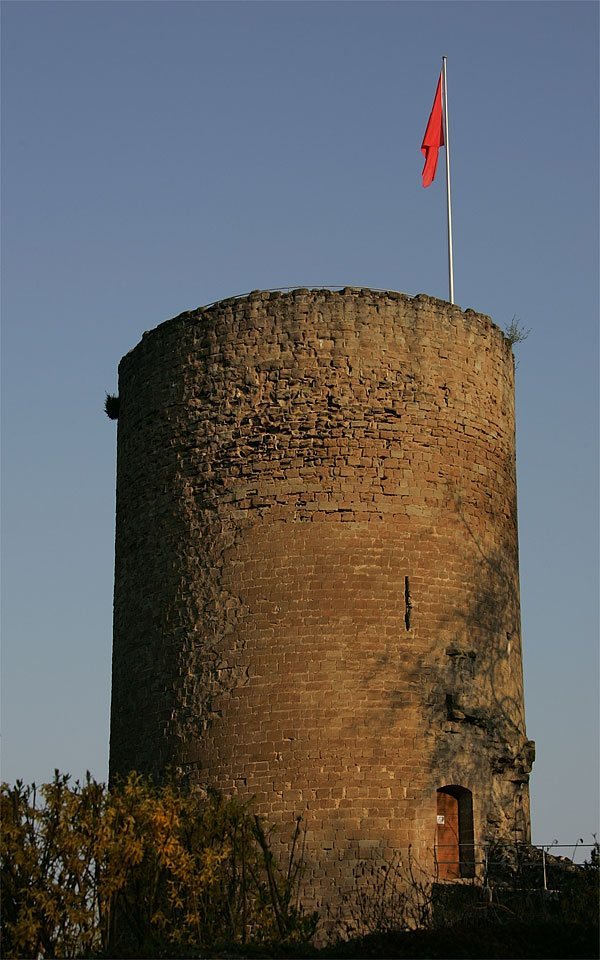
The principal building is an eighteenth-century manor house constructed in 1722 by the Turrettini family. A medieval tower dating from the twelfth century forms part of its architectural history, while one of the château’s towers was removed during the alterations of 1950 and 1951. The upper floors contain approximately thirty bedrooms created during that transformation.
Interior and Park Buildings
On the ground floor, the grand salon retains richly carved wood panelling attributed to Jean Jaquet, an eighteenth-century Genevan sculptor and woodcarver. Its parquet floor also survives. In the park, the building erected in 1962 contains conference and teaching rooms as well as the library of the World Council of Churches. Petit-Bossey remains an associated hamlet and estate area used together with the château by the Ecumenical Institute.