Dottenwil Castle: A Historic Estate and Cultural Center in Switzerland


Site at a Glance
- Rating
- 4.7
- Popularity
- Low
- Country
- Switzerland
- Primary era
- Early Modern
- External website
- Open
- Eras represented
- Early Modern, Modern
- Civilizations
- Holy Roman Empire, Swiss
- Site type
- Domestic
- Remains
- Castle
On this page11 sections
History
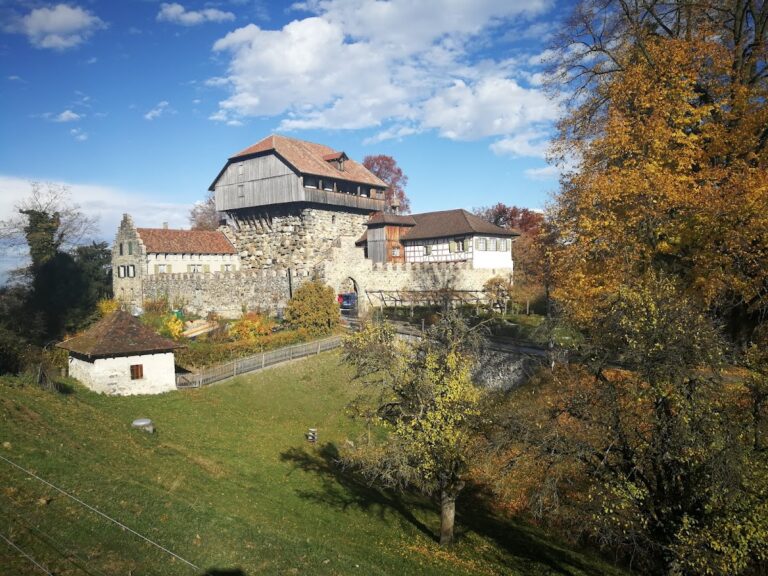
Dottenwil Castle is a historic estate in Wittenbach, Switzerland, whose documented history began with the estate’s first mention in 1302. Peter Graf, a wealthy resident of St. Gallen, built the small castle in 1543. Its later enlargement, nineteenth-century transformation into a spa property, and twentieth-century municipal uses shaped the complex that now houses the Wittenbach local museum and serves as a cultural center.
Sixteenth-century expansion
Graf’s daughter Weibratha inherited the castle and estate in 1587. After her marriage to Konrad Atzenholz, the building was expanded in two directions and equipped with corner towers. Atzenholz descended from the Tyrolean noble family Atzenholz of Tattenweiler. Their daughter Margaretha later married the merchant Christoph Buffler, bringing Dottenwil Castle and the estate into that marriage along with other possessions.
The nineteenth-century spa estate
Ownership changed repeatedly during the early nineteenth century. In 1807, Johann Baptist Blattmann, a former governor of Aegeri, purchased the castle for 7,000 guilders. He built a large spa house beside it and created an elaborate garden. The establishment became widely known and highly popular for its hotel and whey cure, a nineteenth-century health treatment based on drinking milk whey as part of a spa regimen.
Blattmann’s debts eventually led his creditors to auction the property in 1816. Caspar Bernet, a government councillor of St. Gallen, bought it for 12,000 guilders. In 1825, the nearly new spa house was partly converted into a stable and barn. The property then passed through further changes of ownership by inheritance and sale.
Municipal ownership and changing uses
The political municipality of Wittenbach acquired the castle estate on 18 July 1886 to establish a poorhouse and retirement home. A roof turret with a bell was added to the castle in 1890. On New Year’s Day 1901, the spa house burned down. It was later rebuilt in a similar form, although on a considerably smaller scale.
Renovations during the 1950s and 1960s modernized the Neo-Gothic chapel. Neo-Gothic architecture uses forms inspired by medieval Gothic buildings, including pointed arches and historically derived decorative details. The work also removed much of the interior decoration, including paintings and inlays. Fragments that survived were transferred to the local museum in 1962, while the old Stations of the Cross pictures were loaned to Oberrindal Chapel.
Museum and cultural center
The retirement-home operation ended at the close of 1997. After possible new uses had been considered, Wittenbach permitted an interest group led by Paul Huber to establish a museum and meeting and cultural center at the castle. Trial operations began in 1998, the same year that the Wittenbach local museum moved into the building. A loan agreement between the municipality, the interest group, and the Museum Society of Wittenbach was signed at the end of 2001. The agreement has been extended several times, most recently at the end of 2021 for five years through 2026.
The modern renovation campaign began with the trial operation. Volunteers contributed approximately 30,000 hours of work between 1998 and 2004, and about 200,000 hours had been invested in renovation by 2018. The municipality renovated the facades and windows and worked on the roof space, the western schoolroom on the second floor, and the stairwell connecting the first floor with the roof space. Later projects included the workshop and cat stable. The municipality owns the property, while the municipality, the Museum Society of Wittenbach, and the Dottenwil Castle interest group support its operation. The castle now combines the local museum with a gallery for contemporary art, a cultural center, and a restaurant operated by changing volunteers from the interest group.
Remains
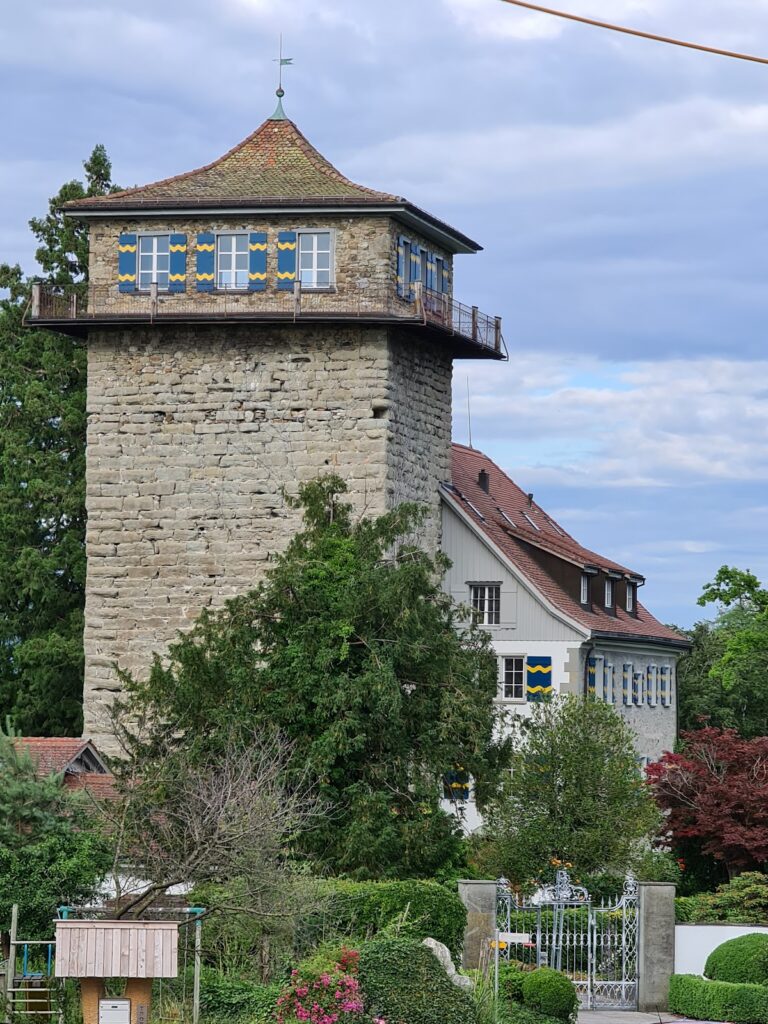
Dottenwil Castle stands at about 617 metres above sea level on a drumlin northwest of the hamlet of Dottenwil, within the municipality of Wittenbach. A drumlin is a smooth, elongated hill formed beneath glacial ice, and the castle occupies the elevated ground of this hill. The castle and its large garden restaurant form an elevated viewpoint toward Lake Constance and the Alpstein.
Castle complex and former spa buildings
Main castle
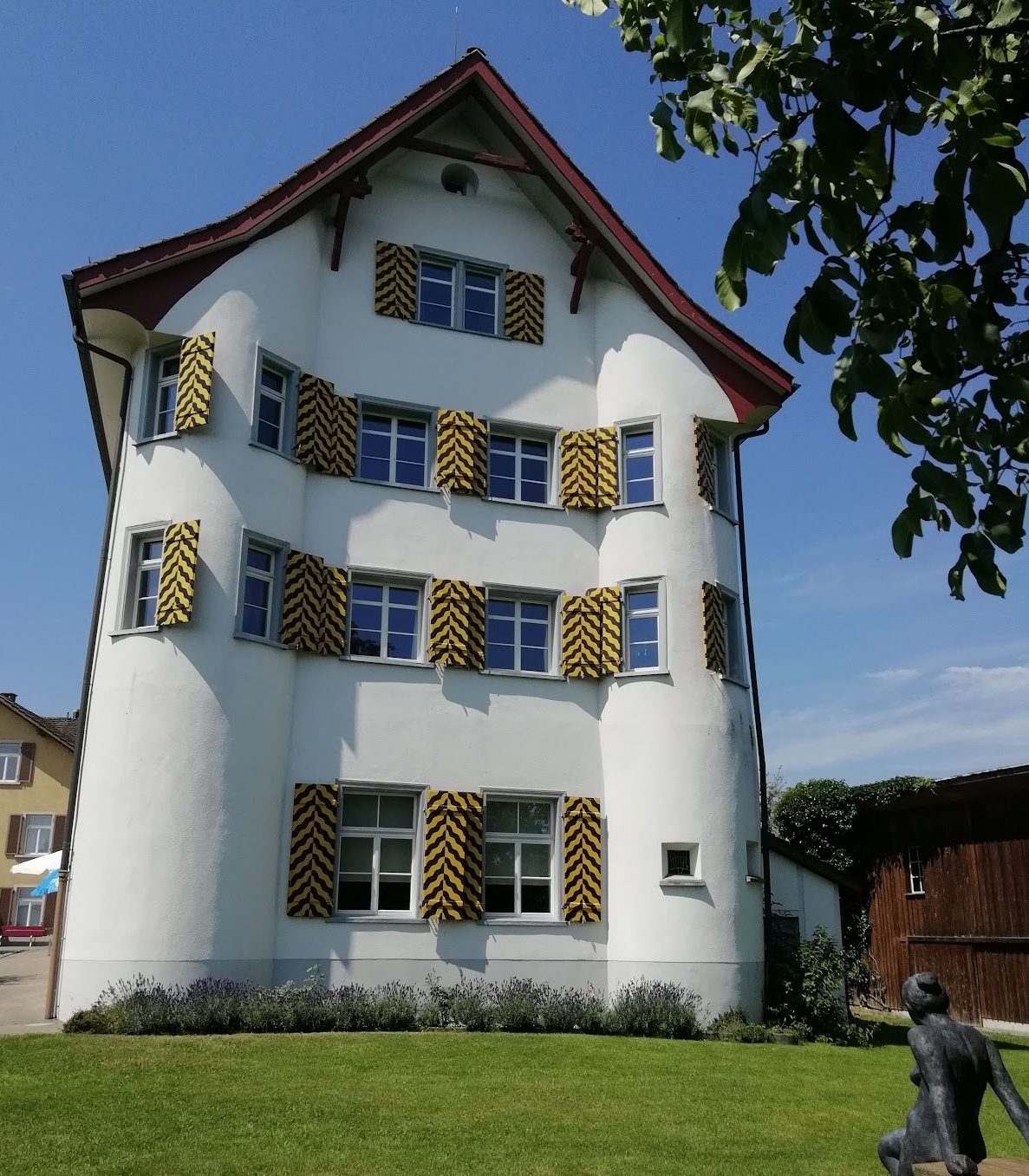
The castle began as the small building erected in 1543 on the Dottenwil estate. At the end of the sixteenth century, Konrad Atzenholz extended it toward two sides and added corner towers, creating the enlarged form associated with Dottenwil Castle. A roof turret carrying a bell was installed on the ridge in 1890. A draw well behind the castle was demolished and covered in 1957. Renovation work has included the roof, facades, windows, interior rooms, and operating facilities.
Spa house and agricultural buildings
The large spa house beside the castle belonged to the early nineteenth-century hotel and whey-cure establishment created by Johann Baptist Blattmann. It was partly converted into a stable and barn in 1825. After the fire of 1901, the building was reconstructed in a similar but substantially smaller form. A shed behind the castle was later converted into an equipment building for historical tools from households and farms, especially tools associated with the former Wittenbach cooperative cider-making facility.
Chapel and supporting spaces
The complex includes a Neo-Gothic chapel, a workshop, a cat stable, a roof space, and a western room on the second floor that was formerly used as a schoolroom. Renovation of the chapel in the 1950s and 1960s resulted in the loss of most of its interior paintings and inlays. Fragments preserved from the interior are held in the local museum, while the former Stations of the Cross pictures were loaned to Oberrindal Chapel.
Vineyard and garden setting
The southern part of the castle hill, between approximately 600 and 615 metres above sea level, was planted with a vineyard in 2001 and 2002. Covering about 33 ares, it contains approximately 700 disease-resistant white Johanniter vines and approximately 1,000 red Gamaret vines.
A winery in Berneck processes, matures, and bottles the vineyard’s grapes. Gamaret is usually matured in small oak barrels and is also made into rosé, a fortified wine in the style of port, and marc distilled from fermented grape pomace. Verjus, an acidic juice made from unripe grapes, is produced occasionally. The resulting wines and spirits are served and sold at the castle restaurant.