Necessidades Palace: Royal Residence and Foreign Ministry Headquarters


Site at a Glance
- Rating
- 4.4
- Popularity
- Low
- Country
- Portugal
- Primary era
- Early Modern
- External website
- Open
- Eras represented
- Early Modern, Modern
- Civilizations
- Portuguese
- Site type
- Domestic
- Remains
- Palace
On this page8 sections
History
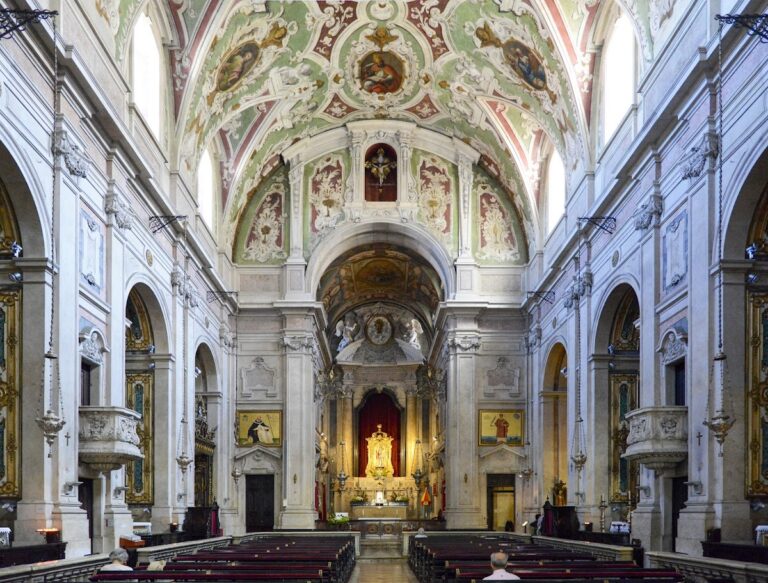
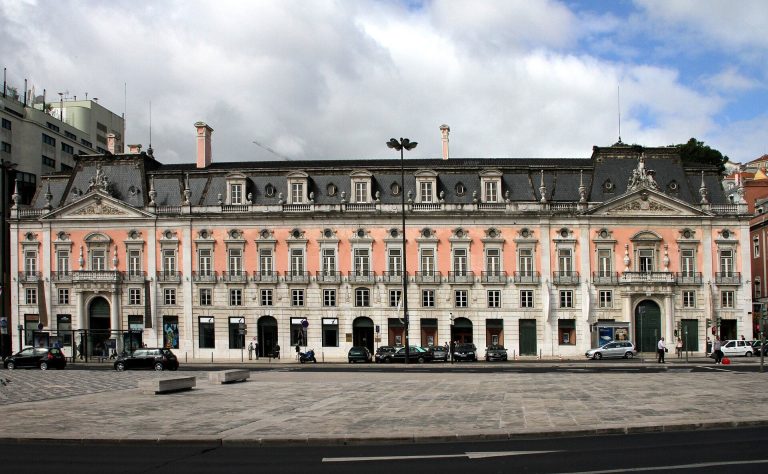
Necessidades Palace is an eighteenth-century Baroque palace complex in Lisbon, Portugal, built by order of King John V on the site of a chapel dedicated to Our Lady of Needs. Its foundation is dated to 1750, and its name preserves the earlier devotional association that shaped the site’s beginnings.
Chapel, convent, and royal foundation
According to tradition, a couple of weavers fleeing Lisbon during a plague built the chapel beside the Tagus. Sailors soon visited it to seek divine protection, and miracles attributed to Our Lady of Needs made the chapel widely known. King Peter II was believed to have escaped death after placing himself under her protection, while John V continued the devotion.
John V enlarged the chapel, acquired the surrounding land, and commissioned a residential palace together with a convent. By a royal decree of 8 February 1747, the Congregation of the Oratory of Saint Philip Neri was installed in the convent. The Oratorians combined religious life with preaching and education, teaching Christian doctrine, grammar, rhetoric, moral theology, and philosophy there. Several architects contributed to the developing complex, including José da Cunha, Manuel Antunes Feyo, Máximo de Carvalho, Caetano Tomás de Sousa, and Jorge de Abreu. John V died before the works were completed, but the 1755 Lisbon earthquake caused no damage to the complex.
Royal residence and political setting
The palace accommodated distinguished visitors for many years, among them the future King George V and the Duke of Wellington during the Napoleonic invasions. King Miguel I stayed there periodically from 1828. On 26 January 1821, the convent library hosted the first Constituent Cortes, an assembly convened to draft or establish a constitution.
After the dissolution of the religious orders, Necessidades became the official residence of the Braganza monarchs beginning with Queen Maria II. The House of Braganza was the Portuguese royal dynasty that occupied the throne from the seventeenth century until the republic was established in 1910. In 1833, King Peter IV adapted the palace as a residence for his daughter, the future Maria II. Her husband, Ferdinand II, remodelled the park as an English-style garden in 1843 and continued living at the palace after her death. He assembled a large art collection that was later dispersed.
Successive monarchs repeatedly altered the complex. King Peter V commissioned a greenhouse for his wife, Stéphanie of Hohenzollern-Sigmaringen, and installed a letter slot in the front door through which subjects could leave messages and complaints for him. After the couple’s premature deaths, their heir abandoned the palace and its royal associations. Luís I preferred the Palace of Ajuda, while his son, King Carlos I, later returned to Necessidades so that his widowed mother would not have to leave Ajuda.
Revolution, abandonment, and public service
At the beginning of the twentieth century, Carlos I enlarged the state dining room to accommodate intensive diplomatic activity. He also added a pavilion that Queen Amélie of Orléans used as a painting studio and a tennis court for Princes Luís Filipe and Manuel. The funerals of Carlos I and his son, Prince Luís Filipe, held in February 1908 after their assassination by radical republicans, were among the palace’s last major royal events.
During the revolution of 5 October 1910, the cruiser Adamastor shelled Necessidades because it was the official residence of King Manuel II. Manuel initially took refuge in a pavilion in the palace grounds. After leaving Lisbon several hours later, he sought refuge at Mafra and eventually went into exile in London. A palace employee removed the royal standard, leading republicans to believe that the king had already left and helping to prevent the building’s destruction.
Manuel II took his privately owned works of art with him into exile, while most of the remaining royal art collections, furnishings, and other objects were later transferred to the museum of the Palace of Ajuda. Necessidades remained unoccupied for almost forty years after the proclamation of the republic. Around 1950, it became the headquarters of Portugal’s Ministry of Foreign Affairs, a function it continues to serve. The palace has been classified as a Property of Public Interest since 1983. In modern Portuguese usage, “Necessidades” also serves as shorthand for the Foreign Ministry and, more broadly, for Portugal’s foreign policy.
Remains
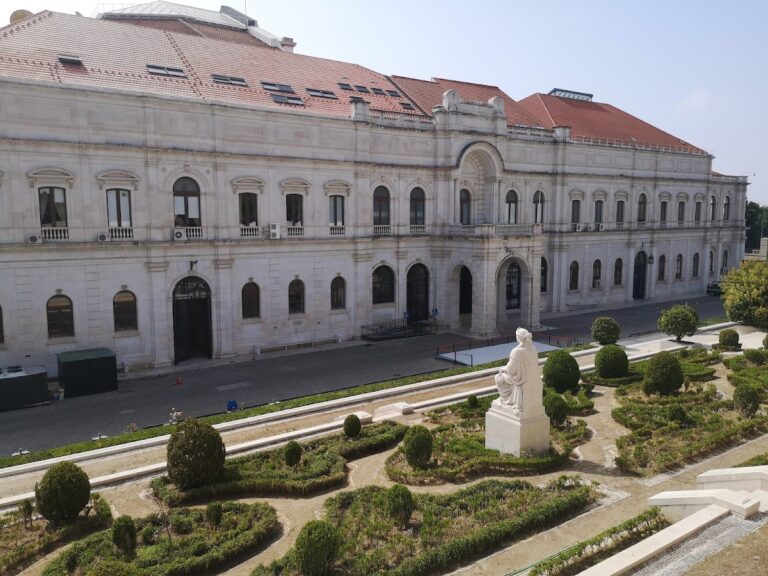
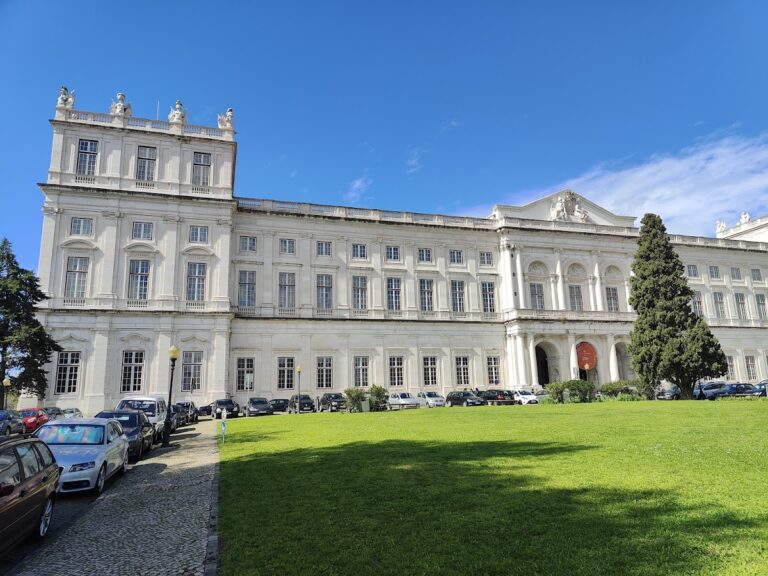
Necessidades survives as a Baroque architectural ensemble in Largo do Rilvas, in Lisbon’s Estrela district. The complex grew from a chapel beside the Tagus and expanded to include a palace and convent. Its grounds incorporated wheat fields, a kitchen garden, and a Portuguese garden during the convent’s early period. Later royal interventions reshaped parts of the grounds and added buildings associated with court life.
Palace and interior features
The palace contains the state dining room enlarged during Carlos I’s early twentieth-century alterations. Its expanded form accommodated the diplomatic activity conducted there. A letter slot installed in the front door by Peter V survives as a small feature linked to the monarch’s communication with his subjects.
The 1910 bombardment damaged the building, including the king’s private apartments. Manuel II’s temporary refuge was a pavilion within the palace park. The royal contents were subsequently reduced when his privately owned artworks followed him into exile and most of the remaining royal collections were transferred to the Palace of Ajuda museum.
Gardens and royal additions
Ferdinand II remodelled the park as an English-style garden in 1843. The grounds also contain a metal-and-glass greenhouse commissioned by Peter V for Stéphanie of Hohenzollern-Sigmaringen, a pavilion used as Queen Amélie of Orléans’s painting studio, and a tennis court constructed for Princes Luís Filipe and Manuel. These additions reflect the changing domestic and ceremonial uses of the royal complex.
Convent and library
The convent formed part of the original eighteenth-century development and included a library. That room later provided the setting for the first Constituent Cortes on 26 January 1821, linking the surviving complex to the constitutional politics of the final years of the monarchy.