Palazzo del Ridotto: Historic Civic Palace and Cultural Venue in Cesena

Site at a Glance
- Rating
- 4.2
- Popularity
- Low
- Country
- Italy
- Primary era
- Medieval
- External website
- Open
- Eras represented
- Medieval, Early Modern, Modern
- Civilizations
- Italian, Papal States
- Site type
- Civic
- Remains
- Palace
On this page9 sections
History
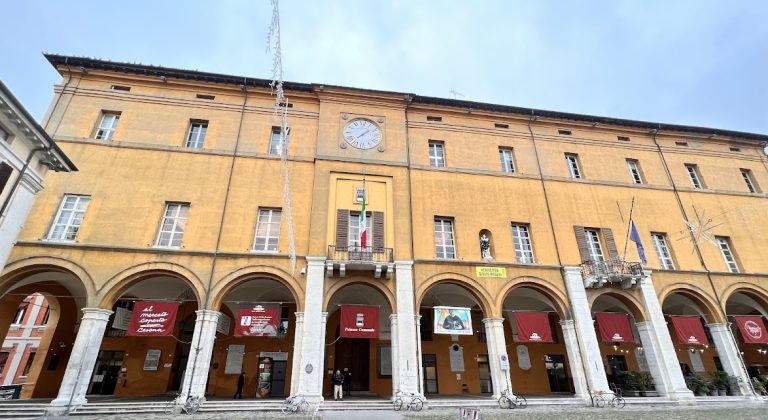
Palazzo del Ridotto is a historic civic palace in Cesena, Italy, built between 1401 and 1403 on the remains of the earlier palatium comunitatis, where the Palazzo del Podesta had previously stood. Its present appearance also incorporates a late Mannerist facade, rebuilt in the eighteenth century, and the building served for centuries as a center of Cesena’s municipal and civic life.
Fifteenth-century civic government
Between 1466 and 1472, Pope Paul II ordered the enlargement of the palace with battlements, a frescoed open-sided gallery, and a civic tower. During papal rule, the building housed the Council of Conservators, the Council of Elders, and the Municipal Council, the principal representative bodies of Cesena. Its role as the seat of the Council of Conservators gave it the additional name Palazzo dei Conservatori, or Conservato. It was also known as the Palazzo del Capitano.
From municipal seat to noble meeting place
In 1722, Cesena’s municipal bodies moved to Palazzo Albornoz. The former government palace then became a meeting place for the city’s nobles. The name Ridotto came from the local dialect word ardota, meaning a gathering or meeting place. Cristoforo Barzanti restored the bell tower in 1742, producing the form later known as the Campanòn.
The Pius VI rebuilding
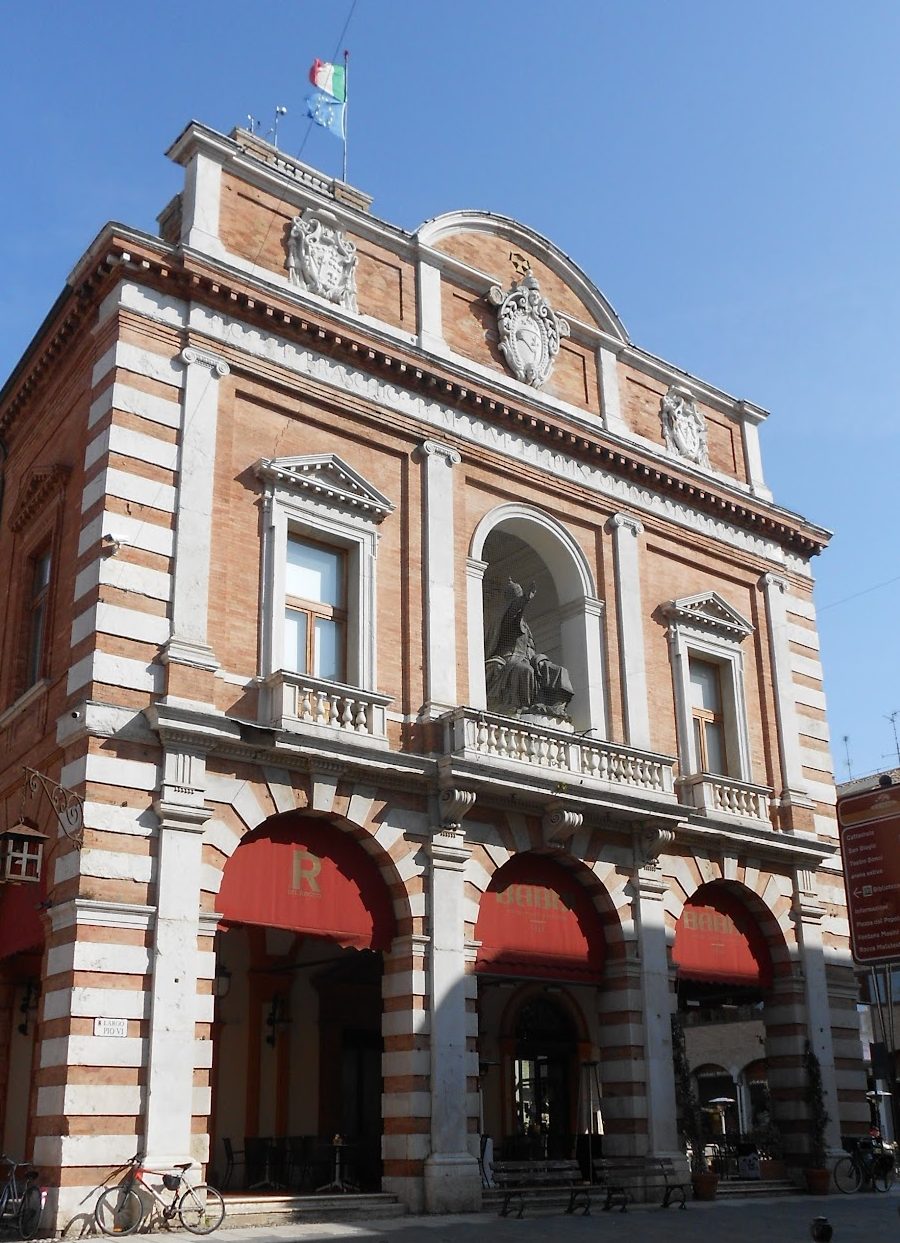
After the election of Pius VI, who came from one of Cesena’s influential families, the city’s nobles planned a monument in his honor. When the pope passed through Cesena on his return from Vienna in 1782, they commissioned the restoration of the palace and the rebuilding of its facade. Cosimo Morelli of Imola, described as Cesena’s papal architect, directed the work, which began that year and ended in 1787.
The niche prepared for Pius VI’s statue remained empty when the facade was completed. A bronze statue was installed in 1791 and formally inaugurated on 30 September 1792. Pius VI was head of the Roman Catholic Church from 1775 to 1799, and his papacy shaped this late phase in the palace’s history.
Later alterations and new uses
After the unification of Italy, extensive alterations removed much of the palace’s original character, while the facade retained the building’s former grandeur. During the Second World War, after a partisan attack on the Casa del Fascio in Palazzo Fantaguzzi, Palazzo del Ridotto became the headquarters of the Republican Fascist Party and was also used to detain prisoners. Its lower loggia now serves as the municipal art gallery, and a conference hall was created on the upper floor during the 1970s.
Remains
Layout and surviving medieval fabric
Palazzo del Ridotto stands in Cesena’s historic center on Piazza Almerici, along Corso Giuseppe Mazzini. Piazza Bufalini lies behind the palace and separates it from the former Malatesta Library. The building incorporates distinct chronological sections. Its eastern side belongs to the first fifteenth-century palace, while the western side dates from 1870. The bell tower retains the shape given to it by the restoration of 1742.
Facade and commemorative features
The facade, rebuilt between 1782 and 1787, is a notable late Mannerist work by Cosimo Morelli. It carries three papal coats of arms and the inscriptions “PIO VI BRASCHIO” and “VINDOBON REDUX,” which refer to Pius VI and his return to Cesena from Vienna. A monumental bronze statue of the pope stands on the facade. The statue is 3.15 meters high, was modeled by Francesco Calligari, cast by Carlo Ruffini, and installed in 1791. The sculptor’s and caster’s names appear on the sides of the pedestal, while its upper front identifies the commissioner. An inscription commemorating Cesena’s Jewish martyrs is located on the eastern side.
Gallery and conference hall
The lower loggia contains the Galleria del Ridotto, the municipal art gallery, where major local art exhibitions are held. The upper level contains the conference hall established during the 1970s, giving the historic palace continuing civic and cultural functions.