Schloss Thannegg: A Historic Castle Residence in Austria


Site at a Glance
- Rating
- 5
- Popularity
- Low
- Country
- Austria
- Primary era
- Early Modern
- External website
- Open
- Eras represented
- Medieval, Early Modern
- Civilizations
- Habsburg, Holy Roman Empire
- Site type
- Military
- Remains
- Castle
On this page8 sections
History
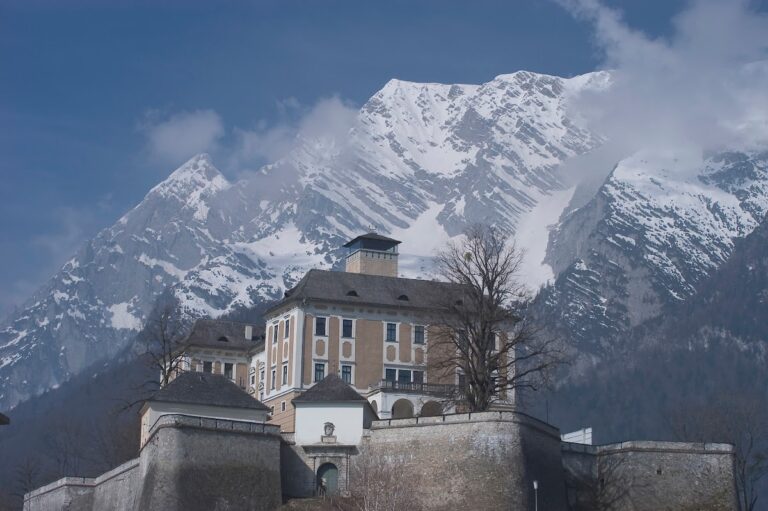
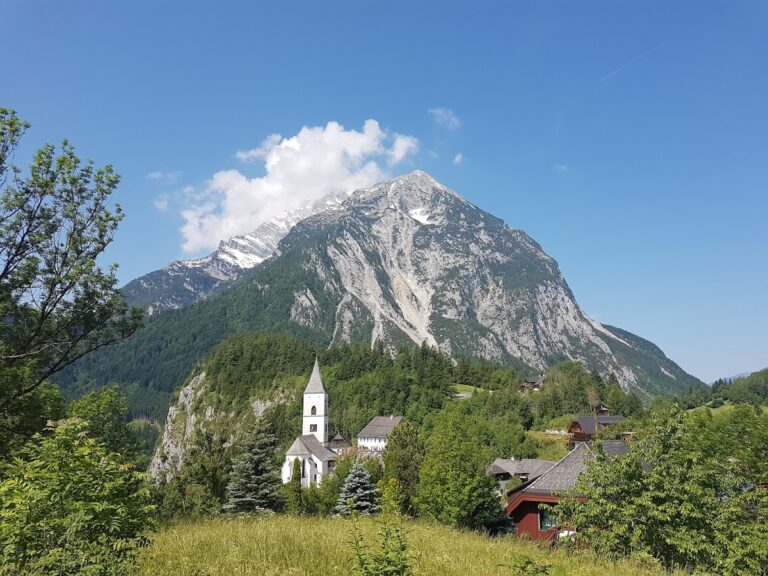
Schloss Thannegg is a historic castle in Austria, located at Moosheim in Michaelerberg near Gröbming, Styria. Records of the old castle, including a tower and the church of St. Michael, extend back to 1150. The site is protected as a listed monument and stands on the right bank of the Enns.
Medieval Estate
During the first half of the fourteenth century, the Lords of Wildon enfeoffed Eckbert von Thann with several estates in the Sölk. He may have begun developing the property as a noble residence, but later granted it as a subfief, land passed on by a vassal while remaining within the original feudal relationship, to Amelreich von Sankt Michael. In 1346, Amelreich’s widow sold the estate to the Bishop of Chiemsee, while Eckbert von Thann renounced his feudal rights.
Markwart von Thanpeck, a judge in Admont, appears as the owner in 1369, when the castle was already known as Thanneck. Land registers concerning the parish house and the associated Kapuzinerstöckl begin in the sixteenth century.
Expansion and Confessional Change
In 1529, the Bishop of Chiemsee sold the “seat at St. Michael” to Bartholomäus von Moosheim to raise the Turkish tax. His grandson Benedikt expanded the castle during the later sixteenth century, adding two side wings, the parish house, and the Kapuzinerstöckl, a small building whose name refers to the Capuchin religious order. The parish house contained the residence of the parish priest and a school.
Toward the end of the sixteenth century, Thannegg also housed a Kreidfeuer warning station. This system used signal fires on elevated sites to transmit warnings, especially of approaching military danger. Heavy construction costs and severe storms that repeatedly destroyed harvests between 1567 and 1580 weakened the Lords of Moosheim financially. They mortgaged Thannegg to Johanna von Rorbach in 1599, and the estate was later sold to Achatz Hagen zu Niederdorf. When he could not pay the purchase price, the Moosheim family recovered the property and sold it permanently in 1642 to Franz Schörkhmayr, a citizen of Gröbming. The Moosheims had already been forced to leave the region as the last Lutheran nobles of the Enns Valley.
Later Owners and Decline
Franz Schörkhmayr’s son, also named Franz, sold Thannegg in 1671 to Count Peter Bonaventura von Crollolanza. Count Karl von Stainach acquired it in 1777 and administered it from Schloss Stainach. A public auction transferred Moosheim to Count Alois Khuenburg in 1810, followed by its acquisition by Knight Franz von Friedau in 1819 and further changes of ownership.
The municipality of Michaelerberg bought the castle in 1911 and used it as a poorhouse. By the first quarter of the twentieth century, the building had nearly become a ruin. The short ownership of Count Charles Henry Bardeau in 1919 and Prince Colloredo in 1929 did not halt its decline. After the municipality reacquired the old castle in 1933, part of it was demolished in 1941, and its stones were reused for road construction.
Restoration and Archaeology
Ernst and Gerlinde Schrempf acquired the nearly uninhabitable ruin in 1984 and 1985. They revitalized its masonry and converted Schloss Thannegg zu Moosheim into a castle hotel. Excavations in 2002 and 2003 exposed a basement vault dating to 1150 and recovered the original stone floor.
Remains
Castle Complex
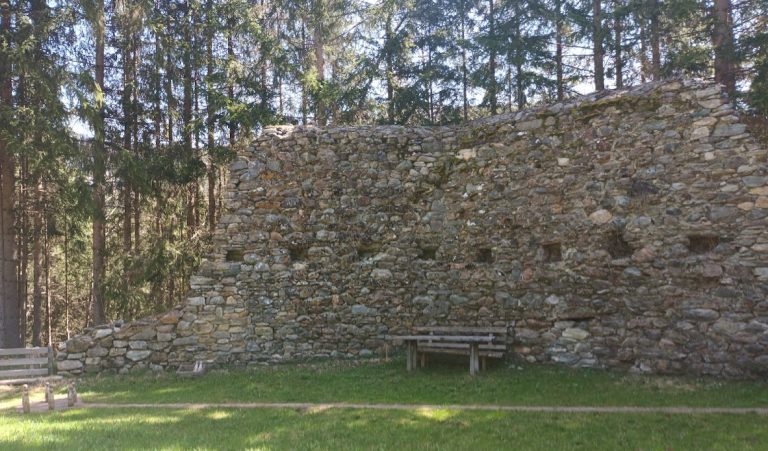
The old castle and its former service buildings, including the parish house and Kapuzinerstöckl, enclose a courtyard in a horseshoe-shaped arrangement. Sections of the surrounding walls survive, and the former moat can still be faintly discerned. The predominantly three-storey complex is architecturally plain, with a projecting bay above the entrance gate as its only external ornament. The wings have half-hipped roofs, whose gable ends are partly truncated rather than rising to full triangular peaks.
Renaissance sgraffito decoration survives in the courtyard. Sgraffito is made by scratching through contrasting surface layers to reveal the layer beneath and create patterns or figurative designs. Little of the original interior remains after the building’s use as a poorhouse. The interior was newly adapted and furnished when the ruin became a hotel.
Church of St. Michael
The small late Romanesque church of St. Michael stands immediately beside the castle and served as its castle church. Romanesque architecture is characterized by heavy masonry, rounded arches, and solid forms. The church has a rounded apse and early Gothic windows, reflecting the transition toward the later medieval style associated with pointed arches and larger windows. A fragment of the Moosheim genealogical tree survives on the rear of the church altar.