Jagdschloss Groß Schönebeck: A Historic Hunting Lodge in Germany


Site at a Glance
- Rating
- 4.5
- Popularity
- Low
- Country
- Germany
- Primary era
- Early Modern
- External website
- Open
- Eras represented
- Medieval, Early Modern, Modern
- Civilizations
- Holy Roman Empire, Kingdom of Prussia, Margraviate of Brandenburg
- Site type
- Domestic
- Remains
- Palace
On this page15 sections
History
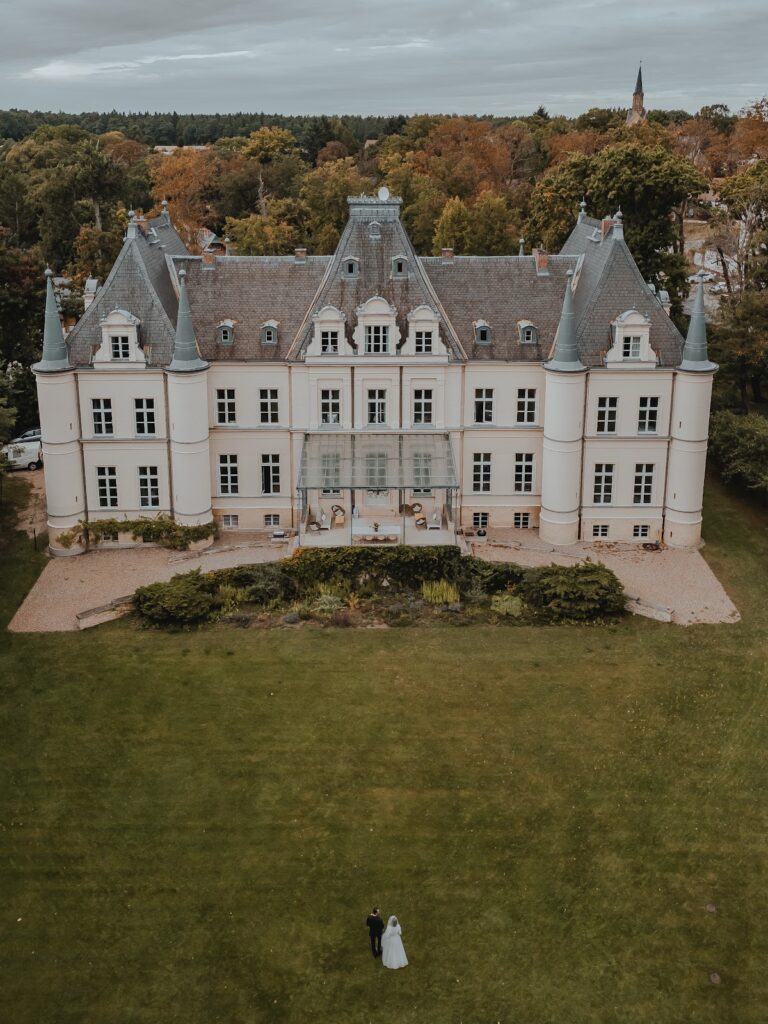
Jagdschloss Groß Schönebeck is a historic hunting lodge in Germany, in Groß Schönebeck within the municipality of Schorfheide, Brandenburg. The present early Baroque lodge was built after 1660, although a site record gives 1545 as a construction year. It stands on the site of an earlier castle associated with the territorial history of Brandenburg and later served the Prussian royal household during hunting stays in the Schorfheide.
Medieval castle and early records
The date of the first Schönebeck castle is unknown. It may have replaced an earlier predecessor from the Slavic period, although this possibility remains uncertain. During the thirteenth century, the Askanian rulers, a medieval German dynasty that ruled Brandenburg, are thought to have established or controlled a chain of castles between the Havel and Oder. The fortifications at Liebenwalde, Groß Schönebeck, Werbellin, and Grimnitz formed part of this regional network.
By the sixteenth century, the castle had developed beyond a primarily defensive role. A document from 1550 refers to the “house at Schönebeck” in connection with an exemption granted to Jacob and Adam Grape. The Liebenwalde office register of 1589 described the complex as a hunting house. It contained princely rooms, kitchens, cellars, and other buildings, and appears at that time to have been intact and inhabited.
Destruction and the postwar hunting lodge
The earlier castle was destroyed during the Thirty Years’ War, the major European conflict of 1618 to 1648 that caused widespread devastation in Brandenburg. After the war, the ruins remained on the site. In 1663, the official Vogelsang received permission to take building materials from them, while the surrounding moat continued to serve the village as a watering place for livestock.
Elector Friedrich Wilhelm, who ruled Brandenburg from 1640 to 1688 and is known as the Great Elector, described his intention to build a new hunting lodge at Groß Schönebeck in a letter dated 29 December 1662. He also planned to purchase Vogelsang’s four farms and an unoccupied cottager’s farm. The old ruins appear to have been dismantled under his rule and replaced by a simple lodge whose ground plan was close to that of the present building.
Prussian royal use
The new lodge later fell into disrepair. King Friedrich Wilhelm I, who reigned in Prussia from 1713 to 1740 and was known as the Soldier King, renewed it thoroughly. He used the building during hunting trips in the Große Heide, but it also served wider administrative purposes. In December 1721, he wrote down his basic ideas for the General Directory at Groß Schönebeck. The institution later became the basis for a major reform that centralized and reorganized Prussian state administration.
The lodge stood at the edge of the Schorfheide, a hunting district valued by Brandenburg and Prussian rulers. Members of the royal family and their hunting guests stayed there. During the early nineteenth century, the building was renovated in a Gothicizing style. When King Friedrich Wilhelm III visited in 1833 and ordered the old castle preserved, the adjoining forestry office was found to have serious dry rot. The government therefore decided to enlarge the unoccupied castle and demolish the roughly century-old half-timbered building.
Rebuilding began in 1834 and finished in 1836. The forester then occupied the ground floor, while the upper floor was reserved for high-ranking guests. Friedrich Wilhelm III stayed at the lodge during hunting trips in 1844 and 1845. The hunting parties of the king and of Crown Prince Wilhelm, later Emperor Wilhelm II, also used the building.
Museum and preservation
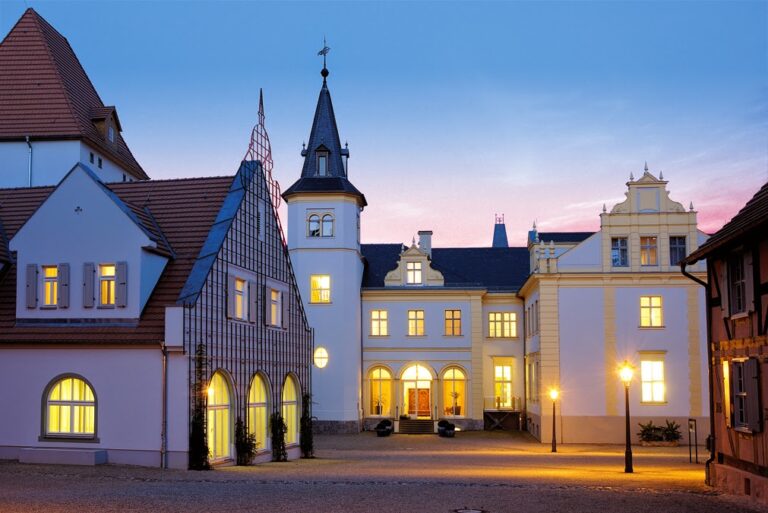
After German reunification, the Association of Nature and Local History Friends carried out a complete renovation in the early 1990s with its own resources and public assistance. The interior rooms were returned to their former dimensions, and the building has housed the Schorfheide Museum since 1991. Its exhibits include the history of the castle and lodge.
Preservation work on the half-timbered barn began in September 2006 on behalf of the municipality of Schorfheide, with the intention of adapting it for exhibitions. Pencil notes found on several timber components include one made by the forestry apprentice Wendeborn, who died on 14 September 1891 while the roof frame was being erected. The adjoining building now contains the Schorfheide tourist information office and the permanent exhibition “Hunting and Power.”
Remains
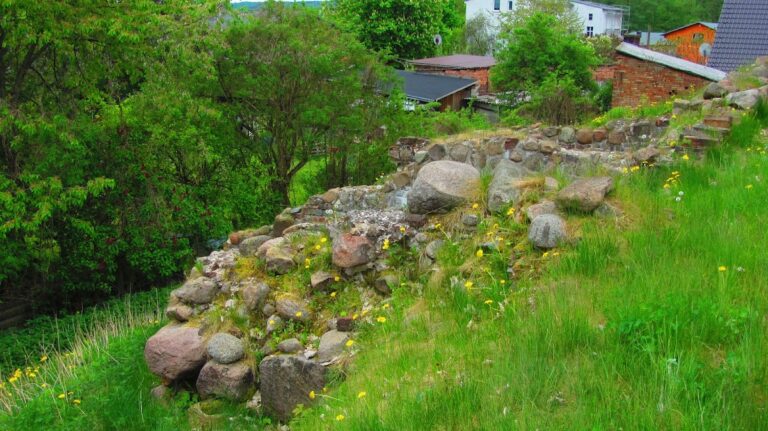
Jagdschloss Groß Schönebeck occupies a low-lying castle site whose earlier form was a square water castle. Ground remains survive in the soil, including foundation walls that may have formed part of the enclosing wall. The present lodge is thought to stand on the earlier castle’s walls, although establishing that relationship conclusively would require extensive archaeological excavation. The site’s surviving layout therefore combines the remains of the earlier fortified residence with the later hunting lodge and its associated buildings.
Castle site and water defenses
Earlier water castle
The earlier castle was built as a square-plan water castle, meaning a fortified residence protected partly or wholly by an artificial moat. Its foundation remains lie beneath the present site. Some of the surviving underground walls may belong to the enclosure that surrounded the medieval castle, while the relationship between these remains and the current building remains to be fully established.
Moat and bridges
The hunting lodge was originally encircled by a moat approximately 6 to 16 metres wide. Large sections were filled during the rebuilding of 1834 to 1836, changing the extent of the water defenses around the lodge. Two wooden bridges crossed the moat. They measured about 11.40 metres and 17.20 metres in length, and one provided access to the building now known as the Hunter’s House.
Present lodge and surviving interior
Main building
The main building preserves the basic ground-plan arrangement associated with the post-1660 hunting lodge. Its upper-floor hall contains a valuable stucco ceiling from the period when the building served the royal household and its hunting guests. By 1825, the lodge already had its present hipped roof, a roof that slopes down on all sides, but the small corner turrets had not yet been added. The building acquired its current appearance through the nineteenth-century alterations.
Hunter’s House
The Hunter’s House was reached by one of the wooden bridges over the moat. It contained the castle kitchen, a bread oven, and a washroom. During the second half of the nineteenth century, the building was used by forestry trainees, linking the former hunting complex with the practical administration of the surrounding forest.
Former forestry buildings and park structures
Forestry office
A half-timbered forestry office once stood in the present castle park. The building measured approximately 29 metres by 13 metres and contained living and working rooms. A courtyard and several stables were located behind it. Because the structure was affected by dry rot, it was demolished during the rebuilding associated with the 1834 to 1836 expansion of the castle.
Stable and exhibition barn
A horse stable ran transversely to the castle. The moat was partly considered for filling because water rats had become so numerous around the stable’s foundations that the building was thought to be at risk of collapse. The half-timbered barn is the surviving associated structure that received extensive preservation work from 2006. It was intended for exhibition use, while the restored castle itself houses the Schorfheide Museum.
Nearby sites