Castle Schenna: A Fourteenth-Century Hilltop Castle in Italy


Site at a Glance
- Rating
- 4.4
- Popularity
- Low
- Country
- Italy
- Primary era
- Medieval
- External website
- Open
- Eras represented
- Medieval, Early Modern, Modern
- Civilizations
- Holy Roman Empire
- Site type
- Domestic
- Remains
- Castle
On this page7 sections
History
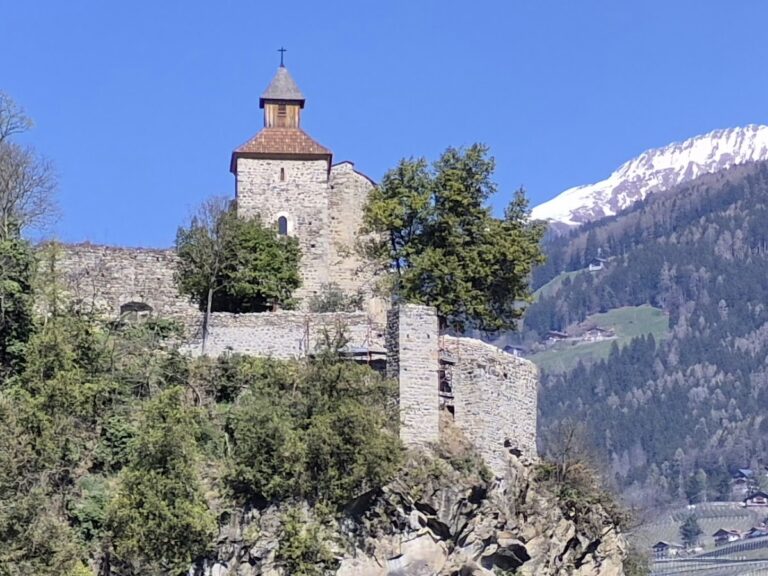
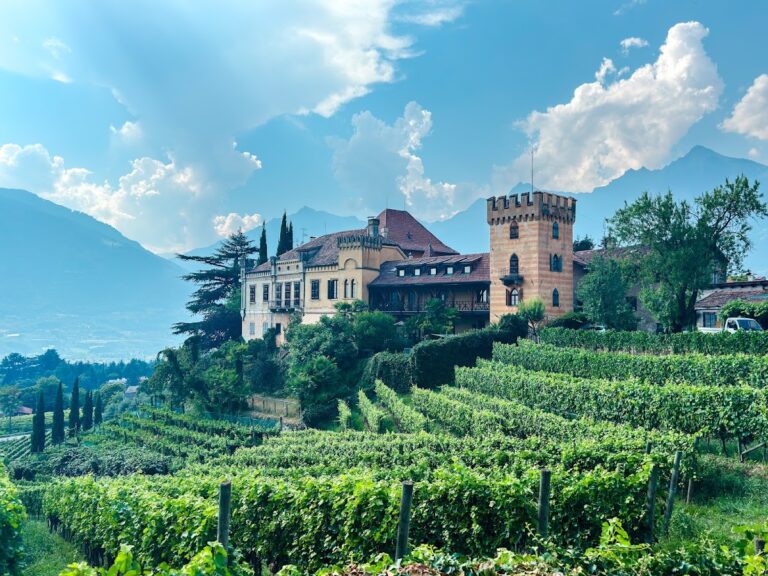
Castle Schenna is a preserved hilltop castle in Italy, standing in Schenna near Merano, with fourteenth-century origins and a later neo-Gothic character. Its history is connected with the Lords of Schenna, the Counts of Tyrol, the Habsburgs, and the Counts of Merano, who still own and manage the estate.
The Lords of Schenna
The Lords of Schenna appear in the historical record during the twelfth century as ministerials, medieval officials of noble or knightly status who served a territorial ruler, to the Counts of Tyrol. Their earlier principal seat was an older castle near St. George, also known as Alt-Schenna. That site was first mentioned in 1231 and was still recorded in 1346.
In that year, Petermann of Schenna received a residence on the hill from Margrave Ludwig of Brandenburg. He built the present Castle Schenna there in 1350, while his cousins retained the older castle site. Petermann later served as governor of Tyrol and as burgrave of Tyrol Castle from 1352 to 1369. A burgrave was responsible for governing and administering a castle or fortified district. In 1363, the Habsburgs, a major European ruling dynasty that later controlled Tyrol and other Austrian territories, also granted him Reineck Castle in the Sarntal Valley.
Inheritance and Transformation
Castle Schenna arose during the final period of the Gorizia dynasty’s rule in Tyrol, when Margaret of Carinthia was the last Countess of Tyrol from that dynasty. Petermann died without male heirs in 1369, and his son-in-law Hans of Starkenberg inherited the lordship, which was burdened by debt.
The Lords of Starkenberg lost Schenna to Duke Frederick, known as “with the Empty Pocket,” in 1423. The castle initially continued to serve a defensive purpose, but successive changes gradually transformed it into a representative aristocratic residence. The Lords of Liechtenstein-Kastelkorn owned it from 1496. The Counts Bettoni followed from 1753 to 1813, then Johann von Goldrainer in 1818 and Jakob Hinterwaldner in 1838.
Archduke Johann and the Counts of Merano
Archduke Johann acquired Castle Schenna in 1845. A member of the Austrian Habsburg dynasty, he connected the estate with the family history and collecting traditions later represented in its rooms. After his death, the castle passed to his descendants, the Counts of Merano. They continue to occupy and manage it, while part of the building serves as a museum.
The estate also includes a mausoleum erected in 1869 near the church hill of Schenna by Archduke Johann’s son. It became the burial place of Archduke Johann and members of his family, including Anna Plochl. The Thurnerhof, an agricultural property and traditional inn, forms another part of the estate.
Remains
Castle Schenna survives as a hilltop complex whose original defensive character was reshaped into a noble residence. The building preserves extensive interior rooms, Renaissance state rooms, halls with seventeenth-century stoves, and collections associated with Archduke Johann. The older castle near St. George survives in part through the foundation of its keep, while the keep of Castle Schenna collapsed during the 1460s and was not rebuilt.
Castle Rooms and Collections
The surviving interiors reflect the castle’s transformation from a fortified seat into a representative aristocratic home. Renaissance rooms and halls furnished with seventeenth-century stoves form part of the preserved arrangement. Paintings include numerous portraits of Archduke Johann’s Habsburg ancestors and landscapes by his court painters Eduard Gurk and Matthäus Loder. Household objects from Johann’s private possessions are also preserved.
The castle holds the largest private collection devoted to Andreas Hofer, the Tyrolean military and popular leader associated with the 1809 uprising against Napoleonic rule. A collection of weapons dating from the twelfth to the nineteenth century is displayed in the castle, including in its Renaissance rooms.
Estate Mausoleum
The estate mausoleum stands on the church hill of Schenna. Built in 1869, it serves as the final resting place of Archduke Johann and members of his family, including Anna Plochl. Its position and function preserve the family’s funerary connection with the castle estate.
Nearby sites