Palazzo Davia Bargellini: A Baroque Palace and Museum in Bologna


Site at a Glance
- Rating
- 4.5
- Popularity
- Low
- Country
- Italy
- Primary era
- Early Modern
- External website
- Open
- Eras represented
- Early Modern
- Civilizations
- Papal States
- Site type
- Domestic
- Remains
- Elite Residence
On this page7 sections
History
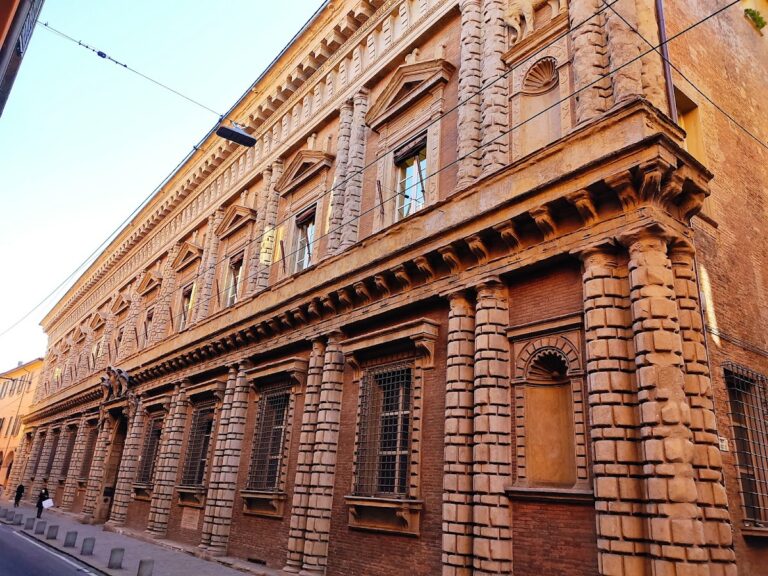
Palazzo Davia Bargellini is a seventeenth-century historic palace in Bologna, Italy, built in the Baroque period for the Bolognese Bargellini family. Commissioned in 1638 by Camillo Bargellini, a member of one of the city’s hereditary governing families, the palace was designed by Bartolomeo Provaglia. Antonio Uri directed the building work, which concluded in 1658.
Construction and family history
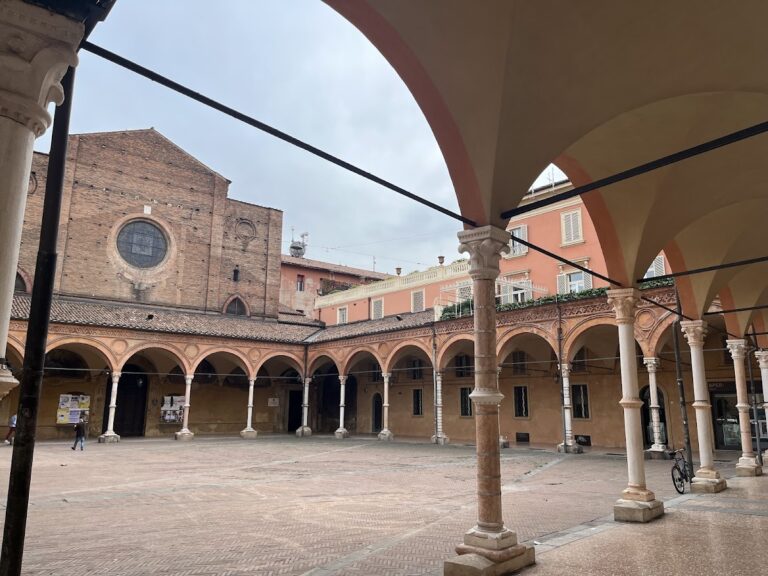
Provaglia gave the building a deliberately severe and distinctive character. Rather than following the classical arrangement of a porticoed palace, he set the massive structure in an open space opposite the portico of the Basilica of Santa Maria dei Servi. The result expressed the status of its patrons while departing from the usual architectural pattern of the period.
In the late seventeenth century, a feud between the Bargellini and Ariosto families ended with the extinction of both families. The Davia family then inherited the Bargellini name, property, and wealth. Members of the Davia family occupied the palace from 1839 to 1874, after which the last Davia heir left the estate to public institutions.
Creation of the museum
A museum initiative connected with the palace began in the 1920s under Francesco Malaguzzi Valeri, an Italian art historian and museum official who was then both the owner and Superintendent of Galleries. The planned museum brought together paintings collected by the Davia and Bargellini families with Malaguzzi Valeri’s own collection of applied art, objects valued for their practical use as well as their craftsmanship.
The palace now houses the Civic Museum of Industrial Art and the Davia Bargellini Gallery. Their holdings include applied and decorative arts, together with objects associated with the curiosities of old Bologna. Palazzo Davia Bargellini is protected as an Italian cultural property.
Remains
Baroque exterior and entrance
The palace survives as a monumental Baroque building with a massive structure. Its entrance portal is flanked by two large stone telamons, sculpted male figures used as architectural supports. Locally called giants, the figures were made in 1658: Gabriele Brunelli carved the figure on the right, while his pupil Francesco Agnesini made the one on the left.
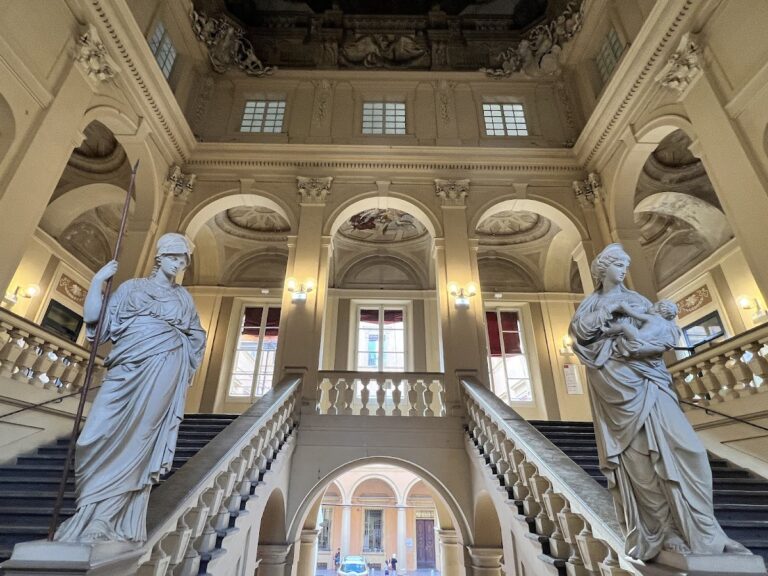
The monumental entrance staircase dates from around 1730. Carlo Francesco Dotti designed it, Alfonso Torreggiani constructed it, and Giuseppe Borelli executed its stucco decoration. Together, the portal, supporting figures, and staircase form the principal sculptural focus of the palace’s approach.
Paintings and sculpture
The museum collections include paintings dating from the medieval period to the nineteenth century, from religious icons to portrait miniatures. Works named among the holdings include Vitale da Bologna’s Madonna dei Denti, Simone dei Crocifissi’s 1368 Pietà con Giovanni da Elthinl, Cristoforo da Bologna’s Madonna and Child, Jacopo di Paolo’s Saint John the Baptist, and Michele di Matteo’s Saint John the Evangelist.
Other represented painters include Marcantonio Franceschini, Bartolomeo Cesi, Alessandro Tiarini, Prospero Fontana and his daughter Lavinia, Giuseppe Maria Crespi, and his son Luigi. Bartolomeo Passerotti’s portraits of members of the Bargellini family connect the collection directly with the palace’s former owners.
The sculpture holdings include a bust of Virgilio Bargellini by Vincenzo Onofri, statuettes by Giuseppe Maria Mazza and Angelo Gabriello Piò, and an extensive group of figures made for nativity scenes.
Applied arts and historic objects
The applied-arts collection ranges across ceramics, liturgical robes, keys, ornamental door handles, marionettes from street theaters, furniture, iron grilles, and elaborately carved wooden frames. These objects present both practical forms and decorative workmanship within the palace museum.
Among the larger objects is a gilded Berlin-type carriage, a four-wheeled enclosed carriage with a suspended body. It bears the heraldic shield of Filippo de Angelis, although it may previously have belonged to the Pepoli family. Its ownership history remains uncertain.
Nearby sites