Nelahozeves Chateau: A Late-Renaissance Monument in Bohemia


Site at a Glance
- Rating
- 4.6
- Popularity
- Medium
- Country
- Czechia
- Primary era
- Early Modern
- External website
- Open
- Eras represented
- Early Modern
- Civilizations
- Habsburg, Holy Roman Empire, Kingdom of Bohemia
- Site type
- Domestic
- Remains
- Castle
On this page11 sections
History
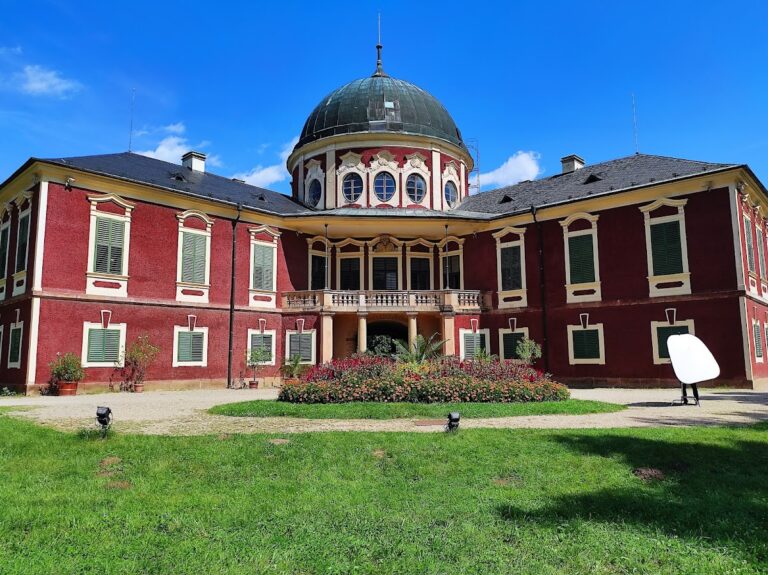
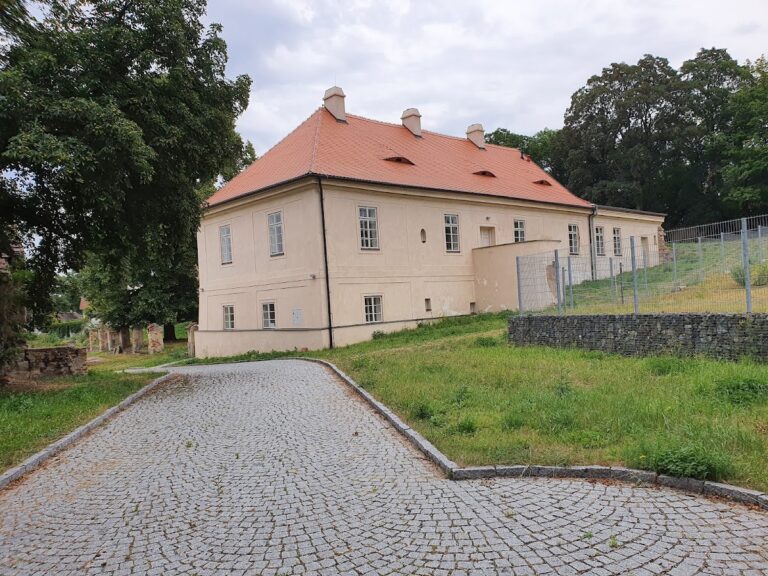
Nelahozeves Chateau is a sixteenth-century late-Renaissance complex in Nelahozeves, Czechia, and is regarded as one of the most important late-Renaissance monuments in Bohemia. Florian Griespek von Griespach began construction in 1553, after acquiring Nelahozeves and its surrounding estates in 1544. As an adviser to Ferdinand I, the Habsburg ruler who became king of Bohemia, he may have chosen the site partly because it lay near the royal residence in Prague.
Construction under the Griespek family
The building campaign continued for decades. Florian Griespek von Griespach died in 1588, before the château was complete, and his son, Blasius Griespek von Griespach, carried the work forward until 1614. The result was a three-wing complex with a Renaissance character that has remained central to the identity of the building.
War, reconstruction, and Lobkowicz ownership
In 1623, a niece of Florian Griespek von Griespach sold the château to Polyxena von Lobkowicz. The Thirty Years’ War, the major European conflict fought from 1618 to 1648 amid religious, dynastic, and political struggles, brought severe damage. Marauding troops destroyed the newly acquired château several times. After the war, Polyxena’s son, Prince Wenzel Eusebius von Lobkowicz, began its reconstruction.
The château remained in Lobkowicz family possession until its confiscation in 1950, apart from the period between 1950 and 1993. In 1993, the building and its furnishings were returned to the Lobkowicz princely family. A permanent exhibition drawn from the family’s private collection opened at Nelahozeves in 1997 and was inaugurated by Václav Havel, the Czech writer, dissident, and statesman who served as president of Czechoslovakia and later the Czech Republic.
Collections and cultural history
The collections at Nelahozeves include material assembled over generations by the Lobkowicz family. The library began with the books of Bohuslav Felix von Lobkowitz and Hassenstein, a sixteenth-century Bohemian humanist and writer. The Czech state returned the library to the family in 1993. Some irreplaceable books had spent more than forty years after 1945 packed in crates in various depots.
The library now contains approximately 65,000 volumes, while its music archive holds about 4,000 items. Among the musical manuscripts are works by Wolfgang Amadeus Mozart and Ludwig van Beethoven. Joseph Franz Maximilian Lobkowitz, the seventh Lobkowicz prince, was one of Beethoven’s major patrons, and the composer dedicated part of his work to the Lobkowicz family.
Minor cosmetic repairs were undertaken during the 1860s. In 1876, Franz Riedl prepared a proposal to remodel the château in the neo-Renaissance style, a nineteenth-century revival of Renaissance forms, but the plan was never implemented. The building therefore retains much of its late-Renaissance character, together with the later history reflected in its collections and ownership.
Remains
Château structure
Nelahozeves Chateau stands on a rock above the Vltava River, approximately 25 kilometres north of Prague. Its surviving form is a three-wing complex. The Renaissance facade remains almost entirely in its original condition and is decorated with figurative sgraffito, a technique that scratches through contrasting layers of plaster or coating to create ornamental and figurative designs. Some interiors have also survived in substantially original form.
Exhibition collections
Decorative arts and instruments
The permanent exhibition presents ornate furniture, medieval reliquaries, ecclesiastical objects, silver and porcelain, weapons, and historical musical instruments. A reliquary is a container made to preserve and display a religious relic, while an ecclesiastical object is used in Christian worship or church administration. The musical instruments include violins associated with Amati, Stradivari, and Steiner, as well as a Stolz Steiner double bass.
Painting collection
The painting collection forms the most valuable part of the Lobkowicz holdings. It includes works by Lucas Cranach the Elder, Pieter Bruegel the Elder, Pieter Bruegel the Younger, Paolo Veronese, Peter Paul Rubens, Diego Velázquez, and Bernardo Bellotto. Among the named works are Bruegel the Elder’s The Hay Harvest of 1565, Rubens’s The Goddess Hygieia of 1615, and Velázquez’s Portrait of the Infanta Margaret of 1653.
Portraits
The exhibition also contains so-called Spanish portraits from the late sixteenth and early seventeenth centuries. Other portraits depict noble families and members of the House of Habsburg, connecting the visual collection with the political and aristocratic world in which the château developed.
Library and music archive
The Lobkowicz Library preserves approximately 65,000 volumes, including a tenth-century Gospel book probably originating in southern England. A Gospel book contains the readings from the Gospels used in Christian liturgy. The associated music archive contains approximately 4,000 items, among them manuscripts by Mozart and Beethoven, and complements the château’s collection of historical instruments.
Nearby sites