Hrádek u Nechanic: A Romantic Gothic Castle in Czechia


Site at a Glance
- Rating
- 4.7
- Popularity
- Medium
- Country
- Czechia
- Primary era
- Modern
- External website
- Open
- Eras represented
- Modern
- Civilizations
- Habsburg
- Site type
- Domestic
- Remains
- Castle
On this page10 sections
History
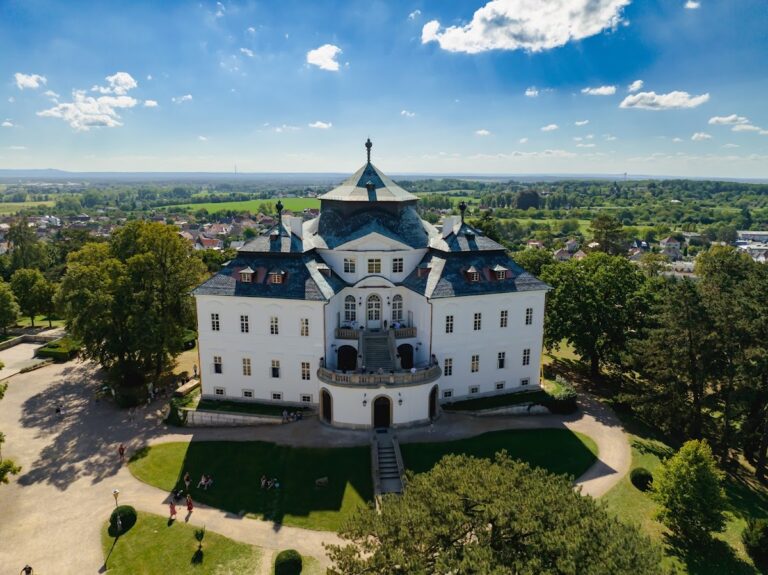
Hrádek u Nechanic is a nineteenth-century Romantic Gothic castle in Czechia, built between 1839 and 1857 as a summer and hunting residence for Count František Arnošt Harrach. The count belonged to the Jilemnice branch of the Harrach noble family and drew inspiration from English architecture after travelling in England with Jan Adolf of the Schwarzenberg family.
Construction and design
Harrach used Edward Buckton Lamb’s unrealized Tudor Gothic reconstruction design for Crewe Hall as a model. Lamb was a British architect associated with the nineteenth-century Gothic Revival. The young Austrian architect Karl Fischer directed construction, modified the general plan, and proposed the interior design. During the building period, the surrounding grounds were reshaped into an English-style park, including a managed forest reserve, a pheasantry for breeding pheasants, and a field intended for golf.
War, nationalization, and museum use
During the Seven Weeks’ War of 1866, the conflict between Prussia and Austria and their respective allies, Hrádek u Nechanic became a military hospital for wounded participants. Crown Prince Albert of Saxony visited the castle during this period.
In 1945, the castle was used as the residence of Major General I. P. Govorov, commander of one of the Red Army armies on the Ukrainian Front. After the war, the property was nationalized under the Beneš decrees, post-Second World War Czechoslovak measures that included the confiscation of property from specified owners and groups. Hrádek u Nechanic opened as a museum in 1953 and is administered by the National Heritage Institute and the Czech Ministry of Culture.
Repeated restoration campaigns changed the castle’s exterior color. After several years painted yellow, it was restored to its original red, giving rise to the popular alternative name “The Red Castle.” The castle became a national cultural monument in 2001. Its museum continues to present the historic interiors and collections, while the Chapel of St. Anne is also used for wedding ceremonies.
A local tradition concerns an antique rocking chair in the castle’s Neo-Gothic salon. According to the story, Count František Arnošt Harrach died while sitting in it. The related “funeral chair” legend says that a tired person who sits there may fall asleep, after which the count’s spirit is said to emerge from the castle wall at night and take the chair.
Remains
Hrádek u Nechanic is a two-storey castle organized around a central prismatic tower. Its exterior includes battlements, a small shooting tower at the centre, projecting polygonal sections on both sides, and two symmetrical wings. The west wing contains the Chapel of St. Anne, while the east side incorporates economic and administrative buildings together with a theatre.
Castle interiors
Rooms and decoration
The interiors were recreated in an Early Renaissance style, with four years of work by thirty-six woodcarvers. Local artisans made much of the furniture, while other furnishings and antiques came from Italy and Austria. The rooms retain parquet flooring, coffered ceilings divided into recessed ornamental panels, marble fireplace portals, luxurious wallpapers, and antique furnishings acquired from historic European estate sales.
Collections and principal rooms
The museum’s collections include a picture gallery, a library of 5,500 volumes, Count Harrach’s hunting trophies, Meissen porcelain, and Bohemian glass from the Harrach glassworks. The historic interiors include the Knights’ Hall, the Golden Hall, a study, salons, and the count’s apartments. Distinctive surviving holdings also include wooden furniture, wall panelling, and household objects.
Park and managed grounds
Landscape park
The park covers 30 hectares and contains meadows, deciduous and coniferous woodland, and trees of exotic origin. Its grounds include the forest reserve and pheasantry established during the castle’s construction, together with the area laid out as a golf field.
Architectural character
The castle’s Tudor Gothic inspiration and arrangement of towers, wings, battlements, and projecting sections have led to the nickname “Little Hluboká,” reflecting its resemblance to Hluboká Castle in southern Bohemia.
Nearby sites