Bury Château: A Renaissance Residence on a Medieval Fortified Site
Site at a Glance
- Rating
- 5
- Popularity
- Very Low
- Country
- France
- Primary era
- Early Modern
- Eras represented
- Early Modern, Modern
- Civilizations
- French
- Site type
- Domestic
- Remains
- Castle
On this page10 sections
History
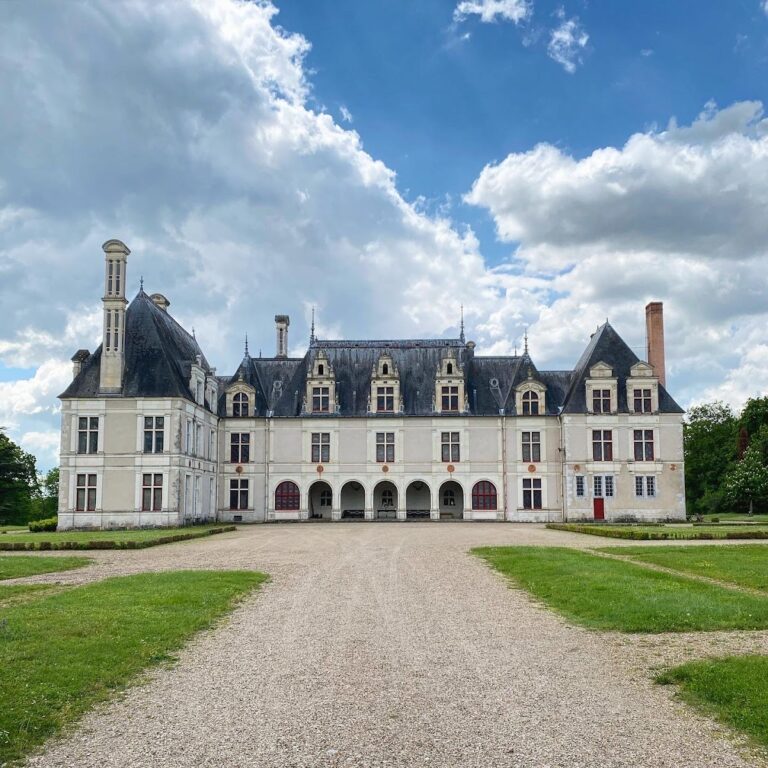
Bury Château is a partially ruined historic residence and fortified site in France, near the Cisse and the entrance to the forest of Blois. Its Renaissance château was commissioned in 1511 by the royal treasurer Florimont Robertet, built between 1515 and 1525, and later became known for a reported rivalry with Chambord. The Renaissance building succeeded a fortress founded around 1090 during the conflicts between the counts of Blois and the counts of Anjou.
Medieval fortress and lordship
The site was transferred in 1080, along with the church of Saint-Secondin, by the knight Gervais de Vendôme to Marmoutier Abbey, a major medieval monastery near Tours. Around 1090, Thibaud III, count of Blois, commissioned a fortified castle to protect the Blois territory near the Cisse and at the forest’s entrance. Its defensive purpose reflected the repeated wars between the counts of Blois and their neighboring rivals, the counts of Anjou.
Sulpice II of Amboise destroyed the first fortress in 1145 after becoming independent of the count of Anjou and entering into conflict with neighboring powers. A second fort was subsequently built on the site. Between the twelfth and thirteenth centuries, a châtellenie, a feudal lordship organized around a castle, was re-established and entrusted to the lords of Burel de Buracio. Under the probable rule of Thibaut VI, Geoffroy I of Bury, also known as Geoffroy Bourreau and the son of Ascho Borellus, became lord of Bury. During the thirteenth century, the lords of Bury also acquired a second castle at Onzain.
Counts of Blois and the Hundred Years’ War
During the first half of the fourteenth century, Bury served as a country residence of the counts of Blois. The Hundred Years’ War, the prolonged conflict between the English and French crowns conventionally dated from 1337 to 1453, brought the site into a shifting frontier zone. The forest of Blois formed a boundary between areas controlled by the two sides, and English forces occupied Bury from 1356 to 1365. Louis II of Blois-Châtillon eventually liberated the village. The occupation is associated with the survival of the local name “Valley of the English.”
Robertet’s Renaissance château
Florimont Robertet acquired the domain in 1511 and ordered the construction of a new residence. Built from 1515 to 1525 during the Renaissance, a period that revived classical forms in European art and architecture, the château was a substantial residential monument. Its reported splendor led to comparisons with Chambord, the major French Renaissance château. Robertet died in 1527, while his wife, Michelle Gaillard of Blois, died at Bury in 1549.
In 1566, King Charles IX raised the châtellenie to a barony, a higher-ranking feudal territorial dignity, for Claude Robertet, the son of Florimont Robertet and Michelle Gaillard. After Claude’s death, the estate passed to his cousin, Marshal Nicolas de Neufville de Villeroy. Charles de Neufville de Villeroy sold Bury in 1633 to the marquis Charles de Rostaing, another descendant of Robertet. During the following decade, Rostaing secured the union of Bury and Onzain into the county of Rostaing. He died in Paris in 1660.
Decline, ownership changes, and reconstruction
After the death of her second son in 1666, his widow, Anne-Marie d’Urre d’Aiguebonne, allowed Bury to fall into ruin. In 1680, she went to the court of Louis XIV as lady-in-waiting to the king’s favorite daughter, Mademoiselle de Blois, and remained at Versailles for nearly ten years. Having no descendants, she donated her lordship, castles, and debts in 1720 to her maternal nephew Alexandre-Louis Perrachon, count of Varax.
Ambroise-Julien-Clément de Feillet, a councillor of the Parlement of Paris, bought the château in 1753 and sold it in 1760 to Michel-Jean-Hugues de Péan, governor general of Quebec until 1759. Péan was imprisoned in the Bastille from November 1761 to June 1764 for speculating on grain prices in Quebec. After his death in 1782, his wife, Angélique-Renaud d’Avène des Méloizes, sold the château during the French Revolution in 1791.
The post-Revolutionary owner was Eugène-Joseph-Stanislas Foullon d’Ecotier, formerly intendant of Guadeloupe and Martinique. Imprisoned in Paris’s Conciergerie in 1794, he was acquitted at trial on 31 October. He later became a councillor general of the Herbault canton and mayor of Onzain in 1812. Financial reverses led him to leave for Martinique in 1816, when the property was seized and sold in lots for incorporation into the communes of Onzain and Molineuf.
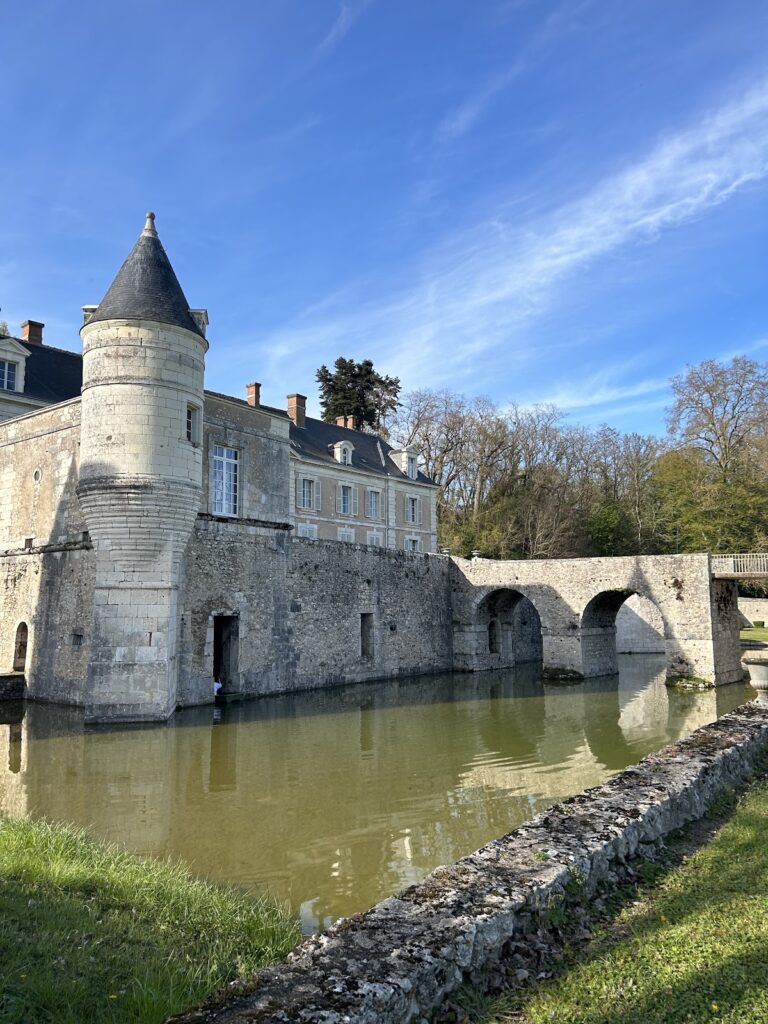
M. Crognon-Bonvalet acquired Bury, and the estate later passed by inheritance to François-Philippe Gastebois, who sold it in 1868 to M. Ragnon, an inspector general of the university. In 1882, the wealthy Englishwoman Mrs. Trawford acquired the ruins. After her death, her husband sold the estate to Paul Jousselin, who built the present house against a surviving château tower in a reconstruction dated around 1890.
Mrs. Lenoir bought the château in 1921. Ownership passed to M. Alibert, a councillor of state, in 1925 and to Henry Reverdy in 1933. The Reverdy family retained the estate until 1969, after which it passed to the Guillenchmidt family. Bury has been privately owned and was listed as a historic monument in 1926. A local legend connects its ruins, together with those of Montfrault, with the cursed spirit of Thibaud the Trickster, said to haunt the forests of the Blois region around midnight.
Remains
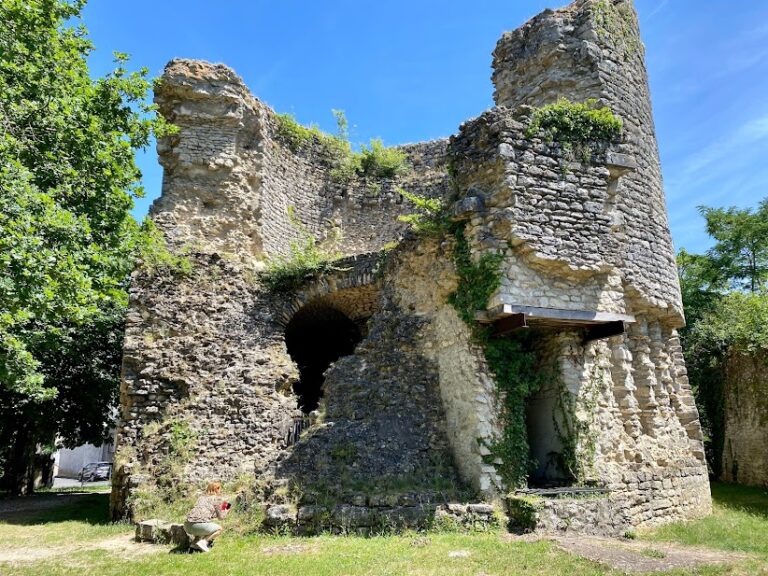
The remains of Bury Château lie approximately 10 kilometres west of Blois and 10 kilometres north of Chaumont-sur-Loire, near the Cisse and at the entrance to the forest of Blois. The surviving complex combines the ruins of the former fortified and residential château with the later house built against one of its towers. The site is partially destroyed and survives in a ruined condition, while the Cisse forms part of the natural setting associated with the property.
Fortified and Renaissance structures
Medieval fortifications
The medieval complex developed through two fortified phases. The first castle, founded around 1090, was destroyed in 1145, and a second fort was built on the same site. These successive defensive structures occupied ground near the Cisse and the forest entrance, where the river and wooded landscape formed part of the site’s physical setting. Their surviving remains are incorporated into the broader ruined complex.
Renaissance residence
Florimont Robertet’s Renaissance château was constructed between 1515 and 1525 as a substantial residential monument. Its reported architectural splendor led to its description as a rival of Chambord. By around 1680, the building had fallen into ruin, leaving the remains of the former residence as a principal part of the present site.
Later house and surviving tower
Paul Jousselin’s house, built around 1890, was set directly against a tower of the former château. This surviving tower preserves a physical connection between the nineteenth-century reconstruction and the earlier fortified and residential buildings. The house and the adjoining ruins together form the current remains of the property.