Château de Cossoles: An Eighteenth-Century Estate in France


Site at a Glance
- Rating
- 4.7
- Popularity
- Very Low
- Country
- France
- Primary era
- Early Modern
- External website
- Open
- Eras represented
- Medieval, Early Modern, Modern
- Civilizations
- French
- Site type
- Domestic
- Remains
- Castle
On this page11 sections
History
Château de Cossoles is an eighteenth-century château in France, located about 5 kilometres east of Chevilly at the northern edge of the forest of Orléans. Built on the site of a medieval fortified castle, it stands at the centre of the former seigneurie of Chevilly, a feudal lordship whose holder exercised authority over its lands and dependents. The estate, also known as Andeglou, was associated for long periods with the de Bombel family and with religious institutions.
Medieval lordship and religious possessions
The fortified predecessor belonged to the medieval defences of the forest of Loge, now known as the forest of Orléans. Its surviving evidence is limited, while the present château occupies the same site. Between the tenth and twelfth centuries, the Cossoles estate depended on the parish of Saint-Germain d’Andeglou and the Seminary of Saint-Magloire in Paris, an institution for the education and training of clergy. The seminary was directed by Oratorian priests, members of a Catholic congregation devoted to religious education, pastoral work, and clerical training.
In 1186, the parish of Andeglou and the lordship of Chevilly belonged to the cathedral chapter of Sainte-Croix in Orléans. A cathedral chapter was the corporate body of canons responsible for assisting in a cathedral’s administration and worship. In 1200, Garnier and Herbert de Gratelou gave Saint-Euverte Abbey 20 arpents of woodland from lands that now form part of the Cossoles estate. An arpent was a historical French land measure whose size varied by region.
Further donations followed between 1204 and 1239, involving Guillaume de Celariis, Robert and Robin de Coissoles, and Garnier de Gratelou. In 1204, Philippe Auguste, the commonly used name of Philip II, king of France from 1180 to 1223, confirmed an alms donation of 20 arpents of woodland at Cossoles in the presence of the bishop of Orléans. The family known as de Coissoles still held some land between 1239 and 1253. Renaut Mignart, an esquire associated with Saint-Euverte Abbey, was recorded as lord of Coissoles in 1253.
Between 1292 and 1312, Coissoles was under the authority of the bishopric of Orléans. A monk from Toury was recorded in 1403 as receiving a daily cartload of wood from the forest of Coissolles, illustrating the continuing connection between the estate and its woodland resources.
Early modern ownership and the present château
In 1654, the Treasury of France at Orléans recorded taxes linked to the seizure and sale of the Cossoles estate. The transaction named the families Radin, Rien de La Salle, Villereau, Bombel, and Godart. Jean de Bombel was lord of Coussoles from 1627 to 1637, Jacques de Rien was lord of La Salle and Cossoles in 1649, and a woman identified as de Beaufilz was lady of Cossoles in 1663.
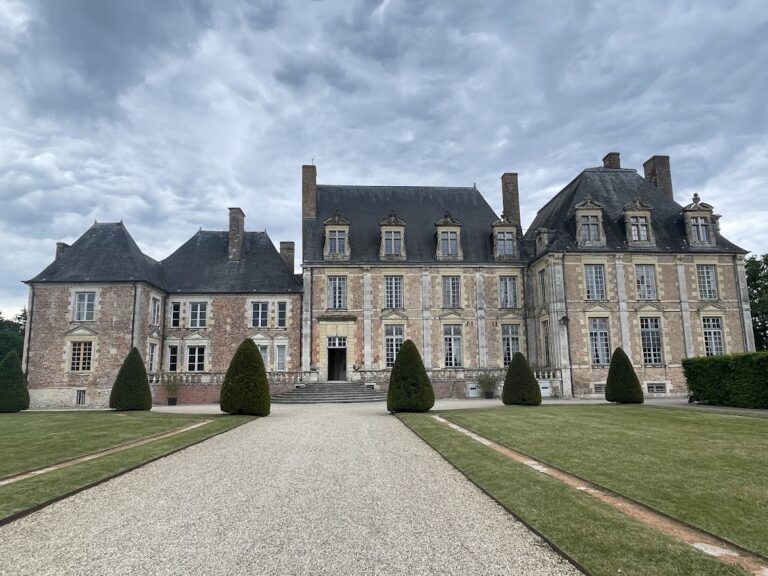
The present château was built during the eighteenth century over the medieval fortified site. Philippe de Challet de Chanceville, a sub-lieutenant, was recorded as living at Cossoles in 1752. At the beginning of the French Revolution, the political upheaval that ended France’s old royal order, Alexandre François de Tournay held the lordship. He was a royal councillor and a corrector of the Chamber of Accounts, the royal institution responsible for auditing and overseeing financial administration, and lived at Cossoles from 1789 to 1790. An inventory and valuation dated 3 March 1793 assessed the estate at 136,000 livres.
Ownership and estate activity after 1800
The recorded succession after the Revolution began with Jean-Baptiste Ouvrard, husband of Marie-Jeanne Hervouet, who held Cossoles from 1800 to 1815. Elisabeth Nortberg, widow of Urbain Lemoine, followed from 1815 to 1825, and Amédée Jean Antoine de Gars held the property from 1825 to 1834. Cossoles was offered for sale for 110,000 francs on 11 September 1834.
During the nineteenth century, the estate combined residential, agricultural, pastoral, and forestry activities. M. Vialon lived there in 1851. A farm and a windmill were offered for lease in 1860, woodland was cut in 1861, and the Cossoles farm was leased in 1864. Livestock and farming equipment were sold in 1864 and 1866, while trees were publicly sold in 1869.
The vicomtesse de Courcelles, a woman holding the French noble title below a countess, lived at Cossoles in 1866. On 11 July 1874, the estate covered 231 hectares, 41 ares, and 25 centiares and was offered for 330,000 francs. It was sold to the de La Tour d’Auvergne family. Further transactions in the 1870s and 1880s concerned woodland, the farm, the windmill, livestock, and agricultural land. A sale notice dated 16 July 1881 included the château, park, woods, farm, and 162 hectares of land.
Twentieth-century succession
Émile Léon Marie Nail Demelette became owner in 1896. Lucie Nail Demelette, the wife of Charles Lefèvre, inherited Cossoles in 1926. In 1964, Hélène Lefèvre and Gilbert Binoche owned the château and its lands, while their children Xavier and Didier owned the stable and farmstead. The property is currently held by the Binoche family, heirs of the Demelette family.
Remains
Château and fortified site
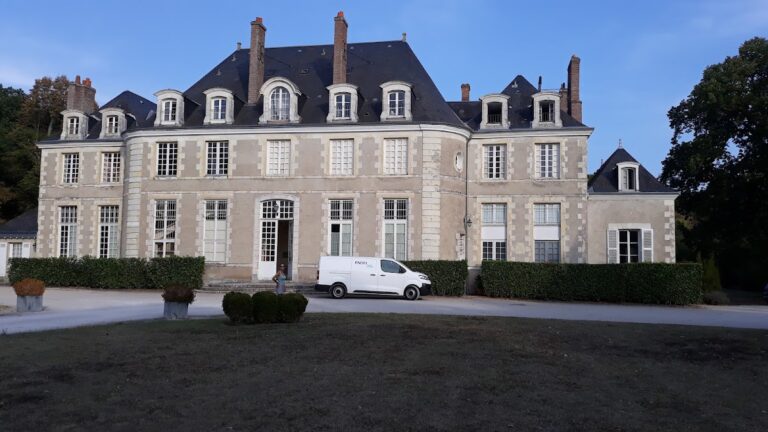
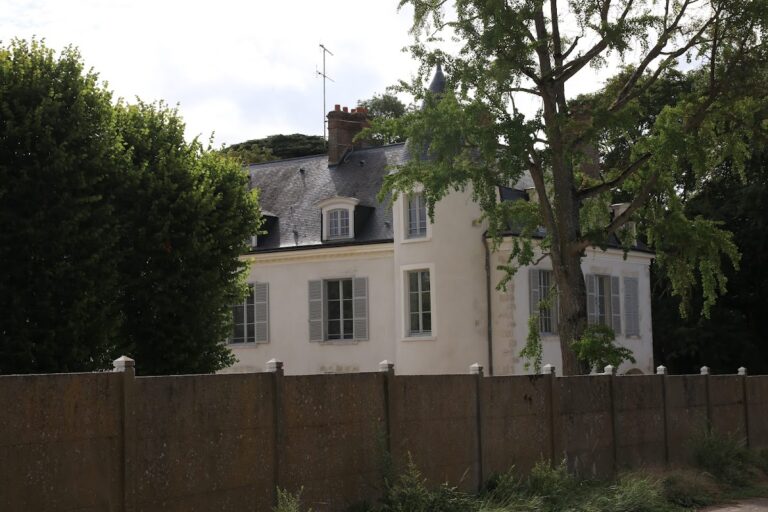
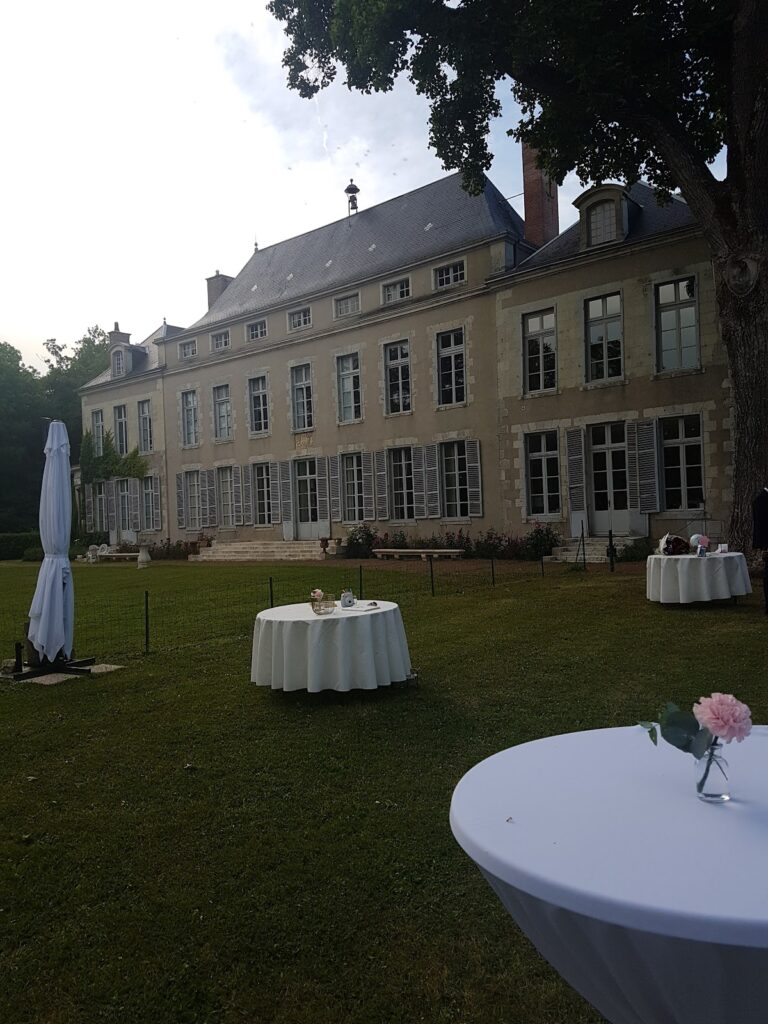
Château de Cossoles stands at approximately 125 metres above sea level near the Chapelles forest road and the locality called La Table aux Loups. The eighteenth-century main building has five bays, one full storey, and an attic lit by dormer windows. A dormer is a window projecting from a roof. In the nineteenth century, the château was enlarged with a square pavilion, a distinct projecting section of the building. This pavilion was raised to include a second full storey, an attic level, and an additional storey within the roof structure.
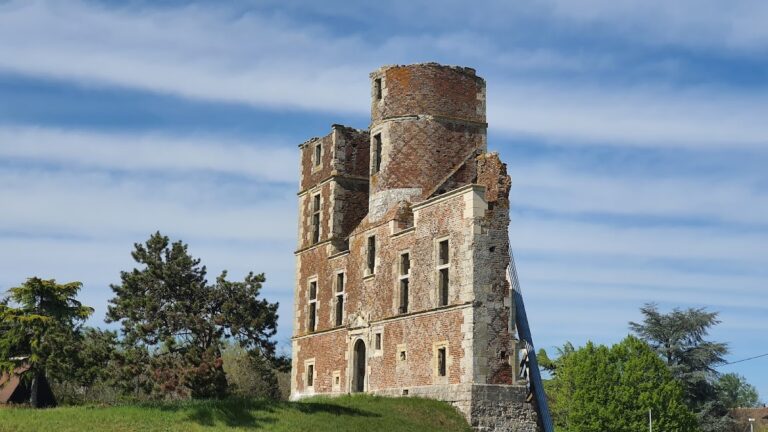
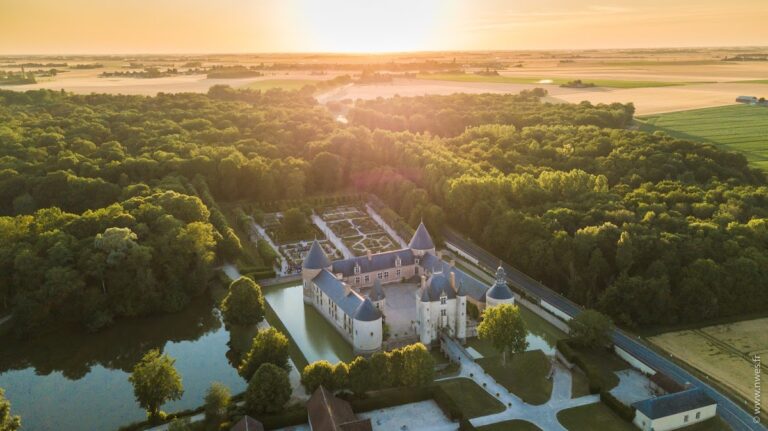
The medieval fortified castle survives chiefly through the site’s marsh, which marks the position of the surrounding moats. A route shown on the Cassini map led from Orléans toward Cossoles in the seventeenth century. The map does not establish whether its destination was the present château or the earlier fortified site.
Estate buildings and landscape features
Stable, gardener’s house, and farmstead
The estate includes an equestrian stable, a gardener’s house, and a farmstead. These buildings formed part of the wider residential and agricultural complex associated with Cossoles, alongside the château, park, woodland, and cultivated land.
Windmill site
A windmill stood several hundred metres north of the château, immediately below the group of houses called La Pointe. It appears on the Napoleonic cadastre, the standardized land register and map system established in France under Napoleon, in Chevilly section S D. The château is shown farther south in section S D bis. The windmill’s construction date is unknown, and the area formerly occupied by it has been converted to cultivated fields.
The windmill was included among the 407 windmills of the Loiret listed during agricultural inquiries on 3 December 1793 and 4 October 1801. Those records also concern woodland management, farming, animal husbandry, and leasing at the Cossoles estate.
Chapel of Andeglou
The Chapel of Andeglou was built in 1866 at Les Chapelles, a small village about 2 kilometres from Cossoles. The vicomte de Courcelles commissioned it for local residents. Dupanloup, bishop of Orléans, blessed the chapel on 7 October 1867, and the first Mass was celebrated there by the parish priest of Chevilly on 16 February 1868.
Nearby sites