Cockermouth Castle: A Medieval Fortress in Cumbria

Site at a Glance
- Rating
- 5
- Popularity
- Very Low
- Country
- United Kingdom
- Primary era
- Medieval
- External website
- Open
- Eras represented
- Medieval
- Civilizations
- Norman
- Site type
- Military
- Remains
- Castle
On this page7 sections
History
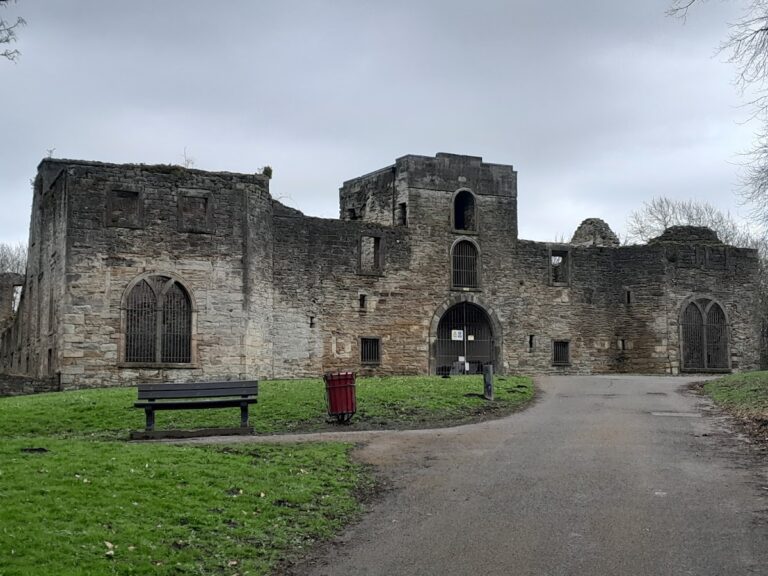
Cockermouth Castle is a medieval fortress in Cockermouth, United Kingdom, built by the Normans, the ruling group that conquered England in 1066. Its first castle was a motte, a raised mound for a defensive stronghold, constructed in 1134, and the site was expanded during the thirteenth and fourteenth centuries. Standing at the junction of the Rivers Cocker and Derwent, it became an important military and aristocratic centre in the surrounding region.
Medieval expansion and dynastic conflict
The original Norman stronghold was followed by substantial additions in the thirteenth and fourteenth centuries. These changes created the larger fortified complex that developed around the early motte. The castle later played an important part in the Wars of the Roses, a series of fifteenth-century dynastic conflicts fought mainly between the houses of Lancaster and York.
From the fifteenth to the seventeenth century, the castle was held most prominently by the Percy earls of Northumberland. During the English Civil War, the mid-seventeenth-century conflict between supporters of Parliament and King Charles I, Cockermouth Castle was badly damaged.
Later ownership and protection
The castle passed to the Wyndham family in the eighteenth century, and the family remains its owner. The dowager Lady Egremont, a widowed woman retaining a title associated with the Egremont family, lived there until her death in 2013.
Cockermouth Castle is a Grade I listed building, a category reserved in England for buildings of exceptional architectural or historic interest, with that designation recorded in 1951. It became a scheduled monument in 1961, giving national legal protection to an archaeologically or historically important site.
The castle was included in the Heritage at Risk Register, which identifies nationally important historic places whose condition or circumstances put them at risk. The 2008 entry stated that most of the castle was in good repair but drew attention to serious problems at the bell tower and kitchen tower. Exceptional rainfall in northern England in December 2015 overwhelmed Cockermouth’s flood defences. A landslide developed near the castle, while the river washed away part of its bank. The bank was reinforced, although no permanent solution had been agreed by 2022.
Remains
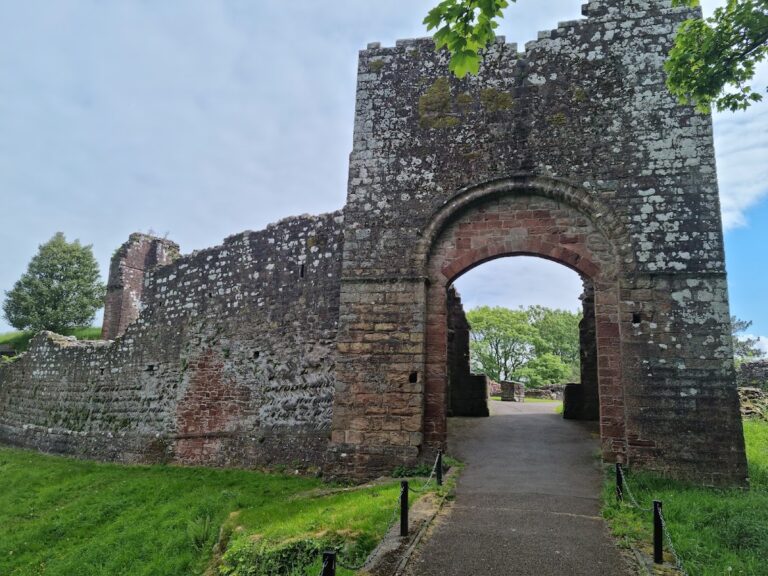
Cockermouth Castle survives as a partly ruinous and partly inhabited complex beside the confluence of the Cocker and Derwent. Most of the surviving buildings were in good condition, although some sections were deteriorating. River erosion has affected part of the bank, making the castle’s position at the meeting of the rivers an important factor in its physical preservation. Some of the stone incorporated into the castle came from the Roman site of Derventio, now Papcastle.
Medieval towers
Bell tower
The thirteenth-century bell tower is one of the vulnerable parts of the surviving complex. In the 2008 Heritage at Risk assessment it was described as badly leaning and potentially dangerous, distinguishing it from the generally well-maintained areas of the castle.
Kitchen tower
The fourteenth-century kitchen tower formed another distinct part of the medieval building group. Water ingress was affecting the tower in the 2008 assessment, contributing to the deterioration recorded within the otherwise largely well-repaired castle.
Nearby sites