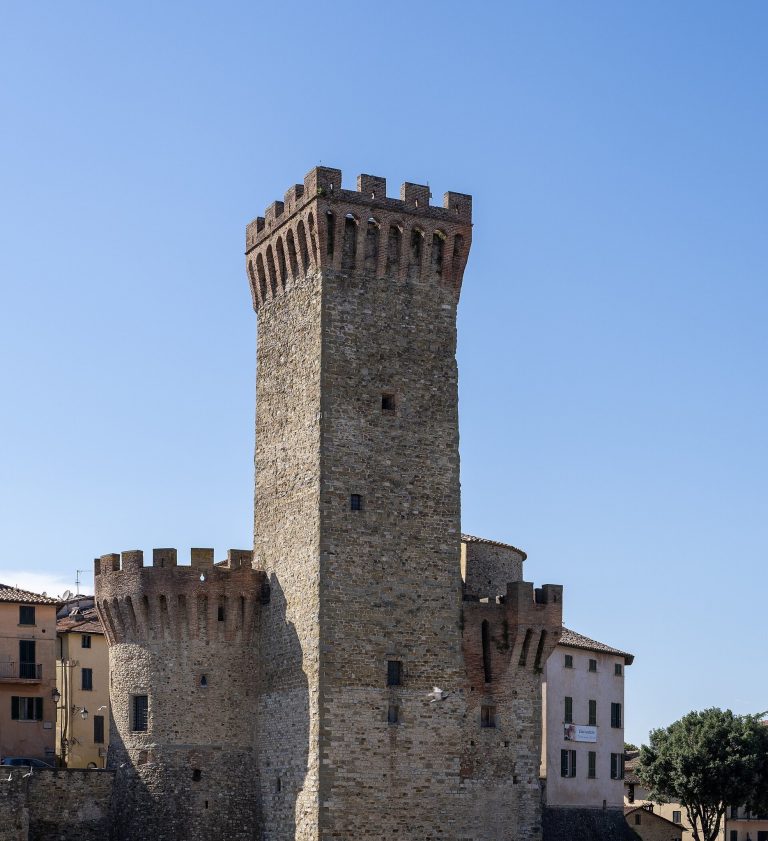
Carbonana Castle: A Medieval Fortress in Italy
Site at a Glance
- Rating
- 5
- Popularity
- Very Low
- Country
- Italy
- Primary era
- Medieval
- Eras represented
- Medieval
- Civilizations
- Papal States
- Site type
- Military
- Remains
- Castle
On this page11 sections
History
Carbonana Castle is a medieval fortress in Italy, first documented in 1192 when Pope Celestine III, head of the Catholic Church from 1191 to 1198, confirmed the castrum Carbonana to Bentivoglio, bishop of Gubbio. The castle formed part of the medieval defensive landscape of the Gubbio area and later became associated with the Porcelli family.
Early Lords and Municipal Defence
The castle’s first lords were descendants of Bino di Pietro of the Gabrielli family. Bino was the younger brother of Cante Gabrielli, who served as podesta of Florence in 1302. A podesta was a chief civic magistrate appointed to administer an Italian city.
During the fourteenth century, the Municipality of Gubbio used Carbonana’s fortress and tower for defence and territorial control. The complex therefore served both as a lordly possession and as part of the municipality’s system for securing its territory.
The Porcelli Counts
In the 1420s, the castle entered the estates of the Porcelli family through the marriage of Giacomo di Galeotto to Checca. She was the widow of Giacomo Gabrielli and, through her mother, belonged to the noble Atti family of Sassoferrato. The Porcelli traced their descent to Rigo campsor olim de Florentia, a money changer formerly associated with Florence whose presence in Gubbio is documented from 1286.
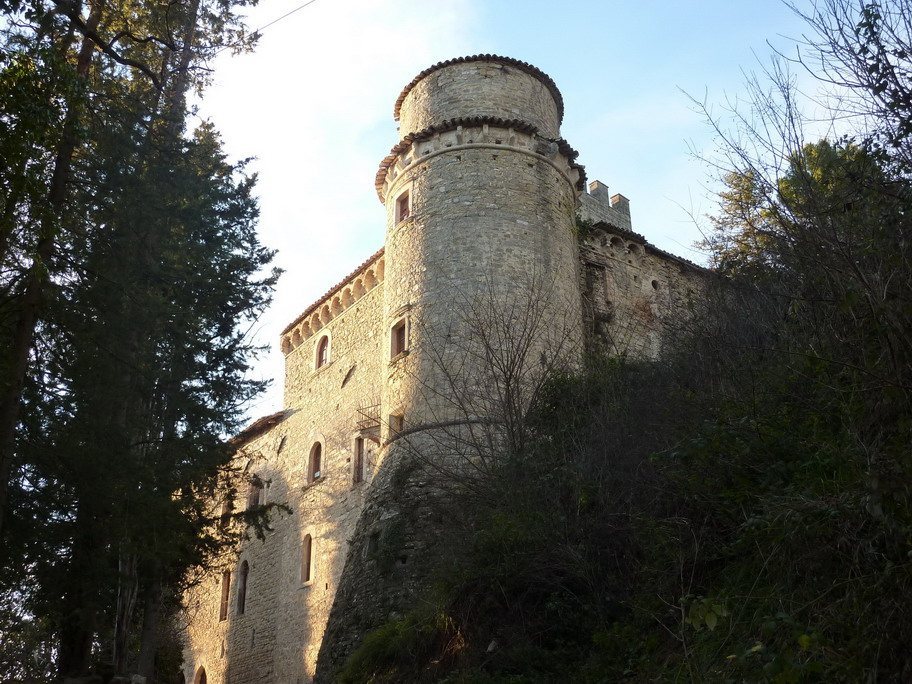
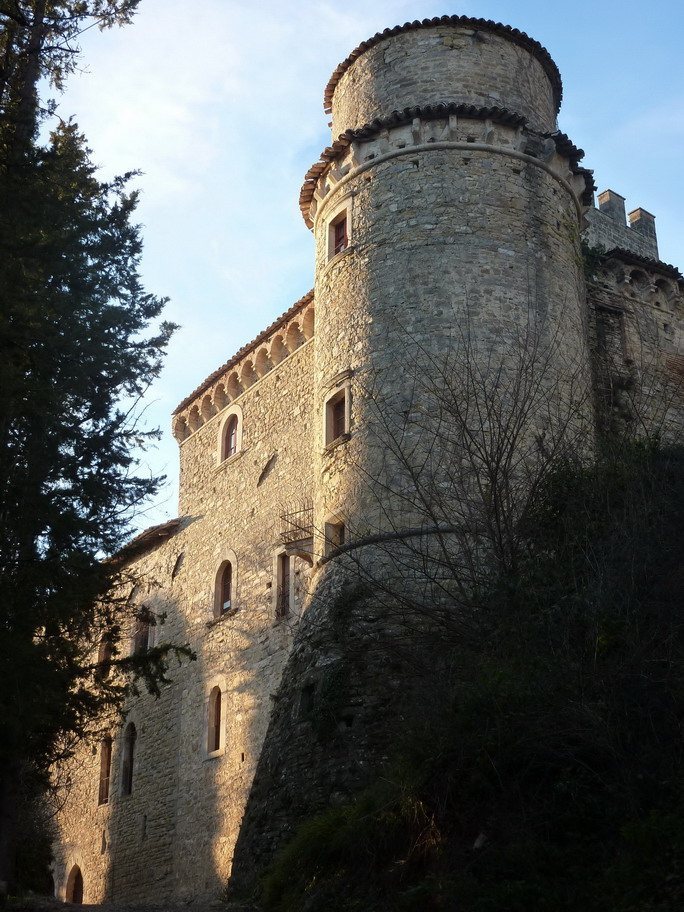
The Porcelli later became the counts of Carbonana. During the sixteenth and seventeenth centuries, members of the family held important offices in Gubbio and served as soldiers for the Republic of Venice. Their interventions enlarged the southern side of the castle and added a circular tower at the southeastern corner of the enclosure. Later alterations were minor and did not substantially change the complex’s appearance or proportions.
Restoration
The castle remained privately owned until two Canadian citizens purchased it in 2011. A complete restoration followed in 2014 under the supervision of the Superintendency for Architectural and Landscape Heritage of Umbria. The work preserved the character of a complex that has remained substantially intact.
Remains
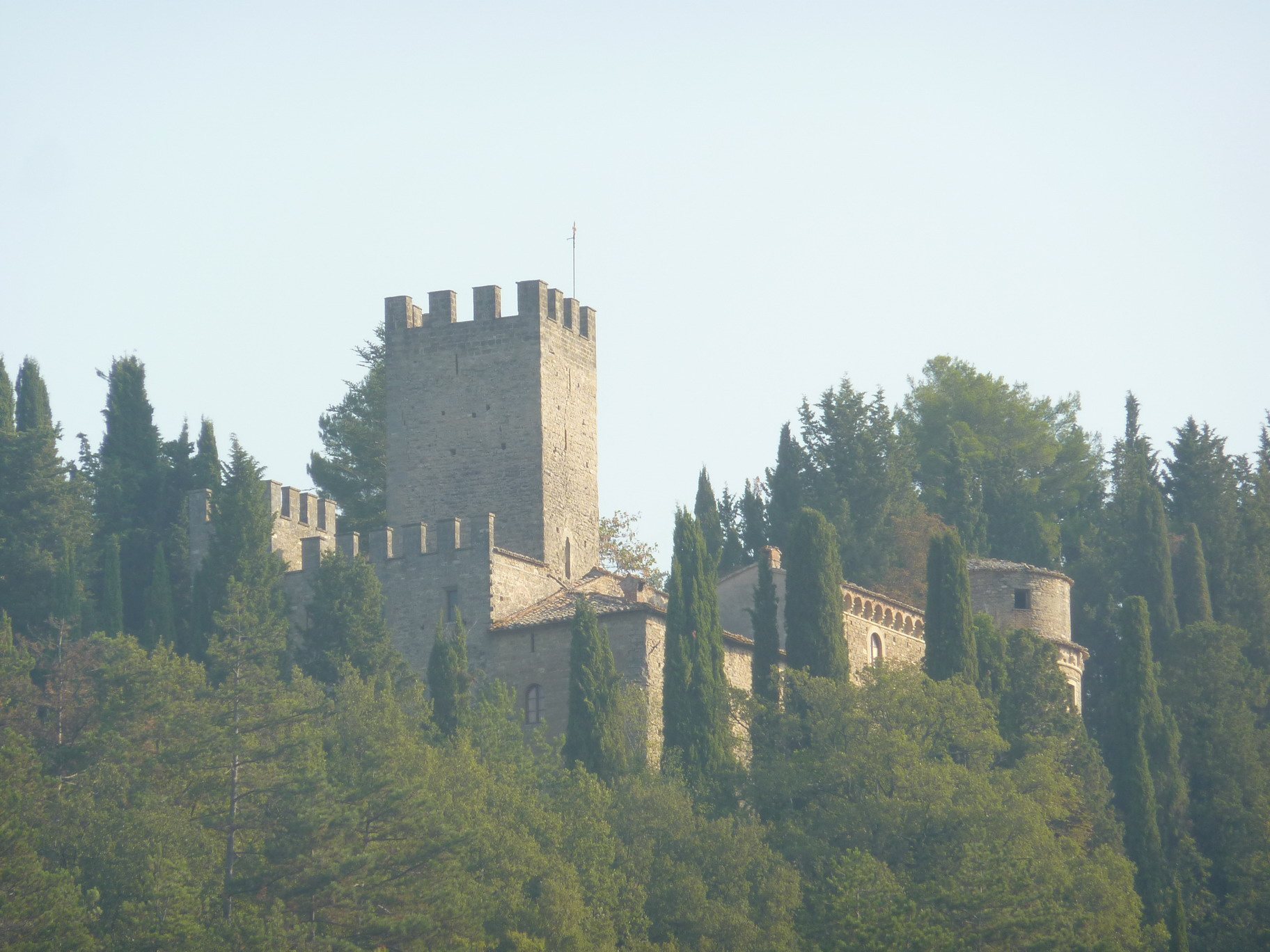
Carbonana Castle occupies a dominant position on a promontory overlooking State Road 219 between Gubbio and Umbertide. Its surviving defensive complex consists of a fortress, a tower, and a walled enclosure, or bailey, meaning an enclosed area within or immediately around a castle that is protected by defensive walls.
Fortress and Towers
Fortress and Main Tower
The fortress and tower form the principal defensive elements of the complex. Their relationship reflects the castle’s use for defence and territorial control during the fourteenth century. The structures have retained the proportions and general appearance associated with the medieval complex.
Circular Southeastern Tower
The Porcelli enlarged the castle on its southern side and built a circular tower at the southeastern corner of the walled enclosure. This tower remains part of the defensive arrangement that surrounds the castle.
Enclosure and Chapel
Walled Enclosure
The walled enclosure surrounds the castle’s defensive area and provides the setting for the fortress and towers. Its survival contributes to the substantially intact character of the complex.
Castle Chapel
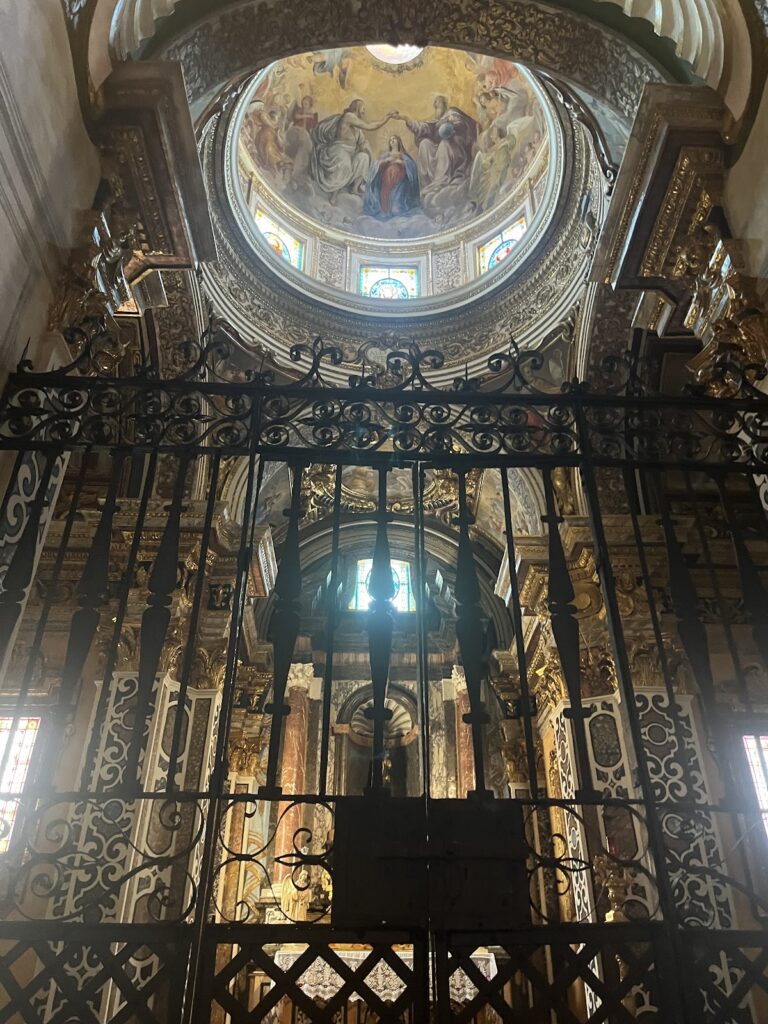
The castle chapel was decorated under the patronage of the Porcelli family. It forms part of the surviving architectural complex alongside the defensive structures and enclosure.
Carbonana Castle is privately owned and has been completely restored. Its limited later alterations and preserved proportions have led to its description as one of the most authentic and best-preserved castles in Umbria.