Castle of Peñalcázar: A Fortified Settlement in Soria, Spain
Site at a Glance
- Rating
- 5
- Popularity
- Very Low
- Country
- Spain
- Primary era
- Medieval
- Eras represented
- Iron Age, Classical, Medieval
- Civilizations
- Celtiberian, Crown of Castile, Roman
- Site type
- Military
- Remains
- Fortified Town
On this page8 sections
History
From Celtiberian city to Roman settlement
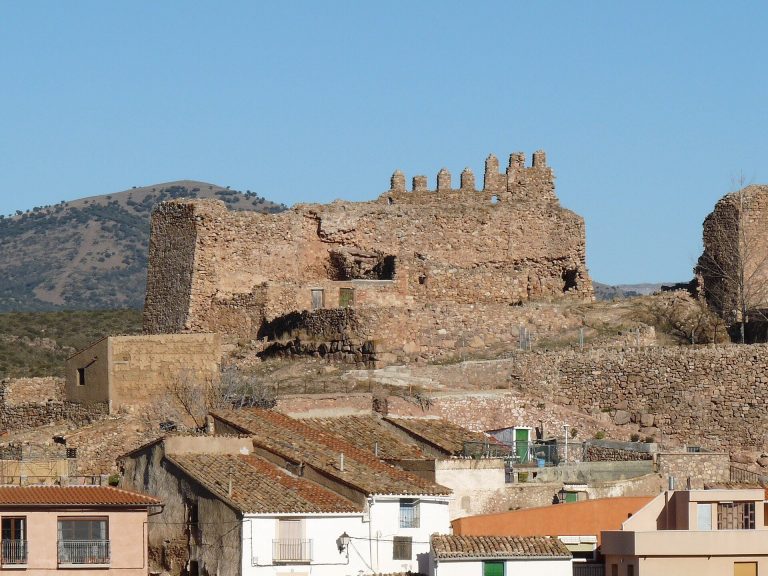
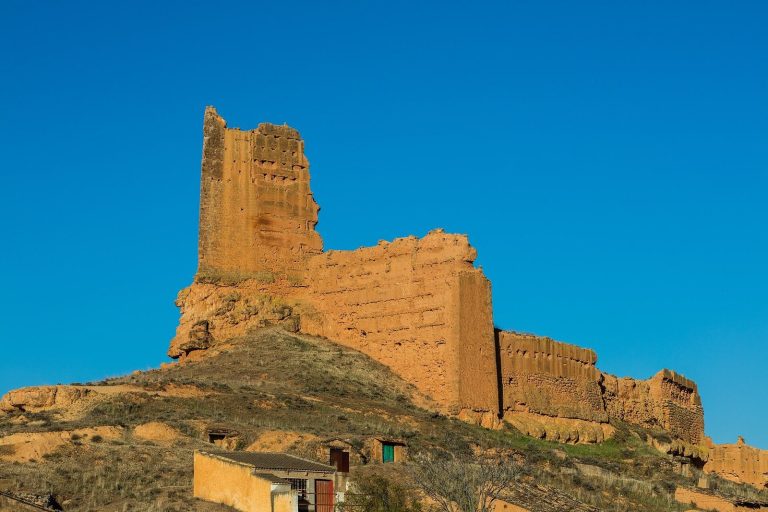
The castle of Peñalcázar is a fortified settlement in Spain, in the deserted settlement of Peñalcázar in the municipality of La Quiñonería, Soria. Occupied since ancient times, the site was first a Celtiberian city, formed by pre-Roman peoples of the interior of the Iberian Peninsula who combined Celtic and local traditions. It later became the Roman city of Centóbriga.
Islamic and Castilian frontier
Under Muslim rule, Peñalcázar served as a stronghold. After El Cid, the medieval Castilian military leader Rodrigo Díaz de Vivar, conquered Alcocer, Peñalcázar was said in the Cantar de Mio Cid to have paid him parias, or tribute payments made to a stronger power. Ateca and Terrer were associated with the same episode. This connection with El Cid later placed Peñalcázar on the modern Camino del Cid, a cultural route linking locations associated with his historical and literary traditions.
Following the Christian reconquest, Peñalcázar became part of the Kingdom of Castile and stood near the frontier with the Kingdom of Aragon. During the fourteenth-century War of the Two Peters, a conflict between Peter I of Castile and Peter IV of Aragon that affected territories between the two kingdoms, the settlement was involved in the difficulties that affected the surrounding region. The castle itself is generally dated to the thirteenth or fourteenth century.
Later settlement and protection
The settlement remained inhabited into the eighteenth century. The Ensenada Cadastre, an eighteenth-century survey of population, property, and economic resources in Spain, recorded 92 inhabited houses. Stone from the fortifications was later reused in parts of these houses. The remains are protected by Spain’s general legal protection for castles, established by the Decree of 22 April 1949, and by Law 16/1985 on Spanish Historical Heritage.
Remains
Highland settlement and surviving fortifications
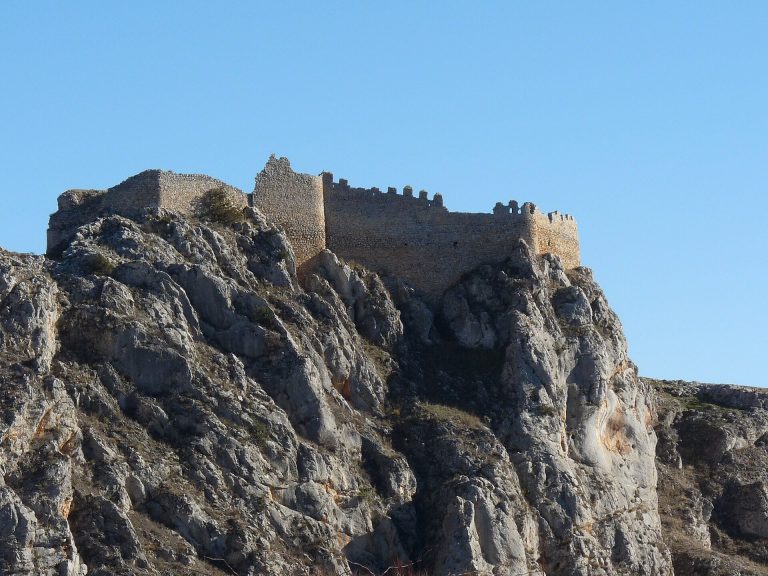
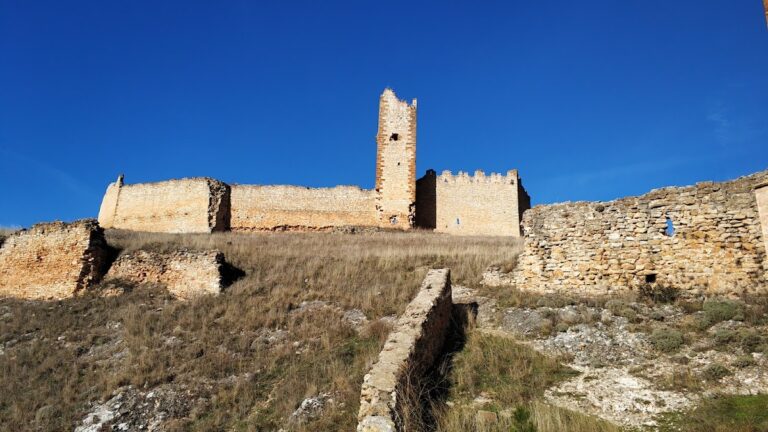
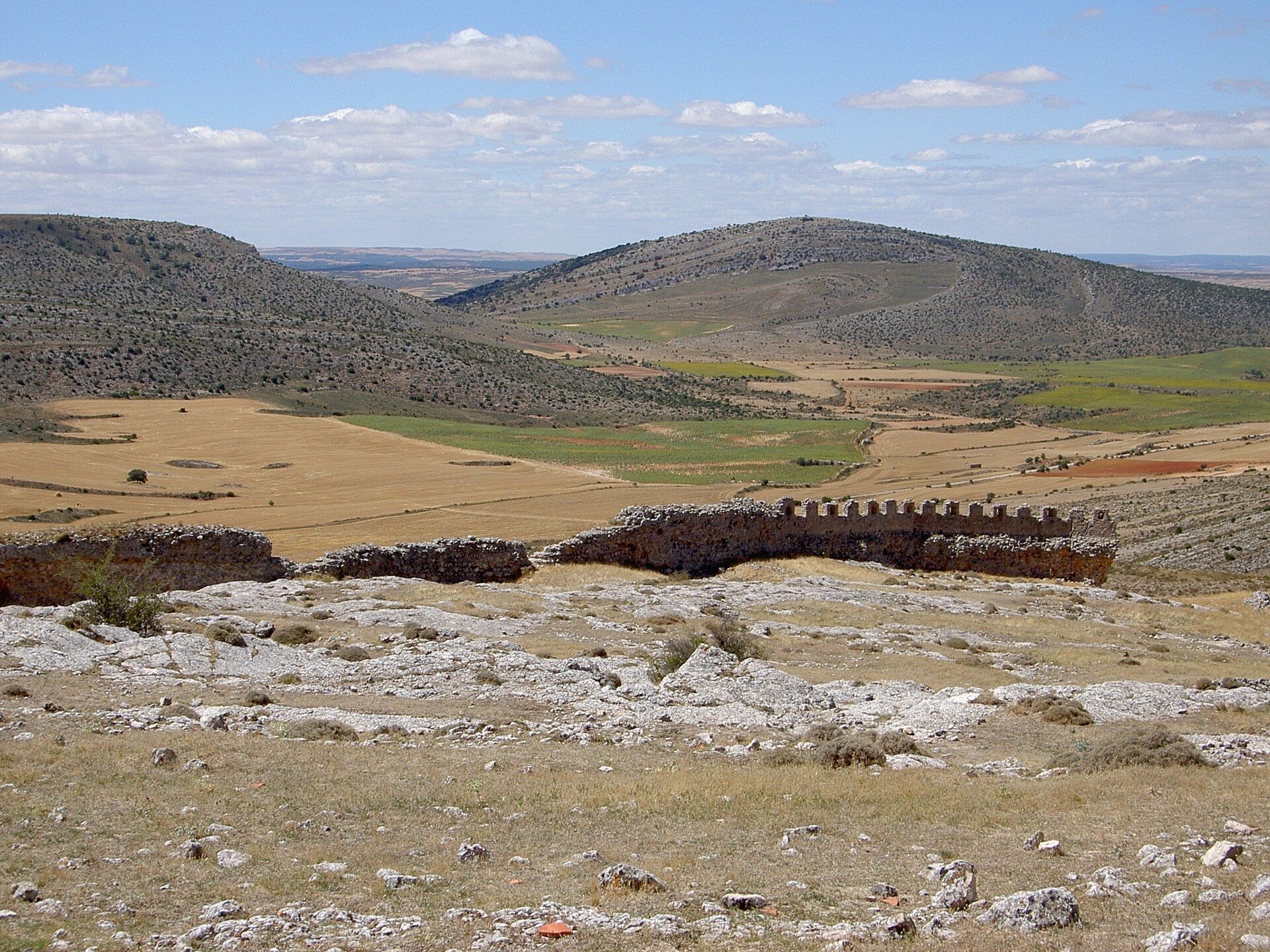
Peñalcázar occupies a large mesa at approximately 1,249 metres above sea level, in the foothills of Moncayo within the Iberian System. The Iberian System is a mountain system in eastern and central Spain, while Moncayo is a prominent massif associated with it. The settlement was enclosed by walls, and its surviving remains include two stretches of that enclosure, parts of the alcázar, and the entrance gates. An alcázar is a fortified palace or citadel associated with Islamic or later Christian military architecture.
Enclosing walls
Only two sections of the settlement wall remain standing. Their stone was reused in the construction of parts of the houses at Peñalcázar, linking the surviving defensive fabric with the later settlement built within and around it.
Alcázar and entrance gates
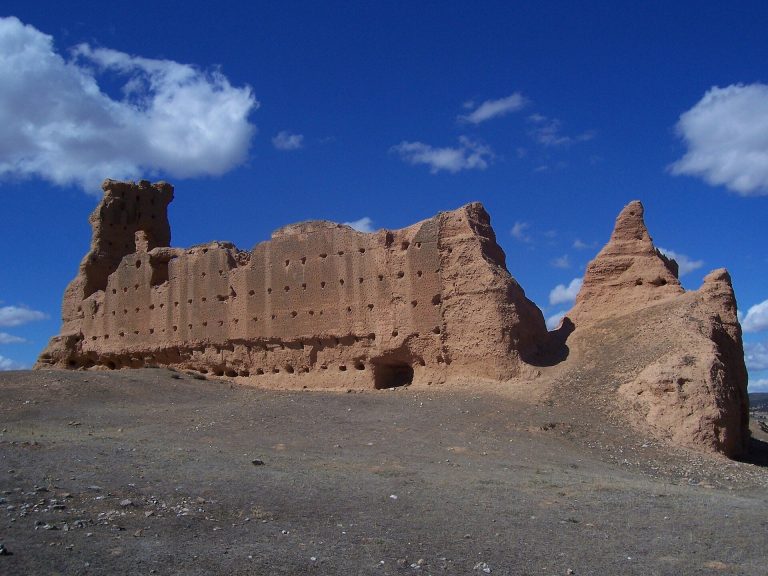
Remains of the alcázar and of the settlement’s entrance gates are also preserved. The site contains identified Celtiberian, Roman, and Arab constructions, reflecting the successive occupation of the mesa before and during the development of the medieval stronghold.